Bombardier sales in the United States face a new threat after President Donald Trump said the Canadian aircraft manufacturer will lose access to the U.S. market unless it begins building jets in the country, escalating the trade dispute between Washington and Ottawa.
President Donald Trump has threatened to stop Bombardier sales in the United States unless the Canadian manufacturer begins producing its jets in the country, opening a new aerospace front in the escalating U.S.-Canada trade dispute.
Trump announced the move Monday, September 7, in a Truth Social post, declaring, “NO MORE SELLING BOMBARDIER IN THE UNITED STATES!”
He added that if Bombardier wants access to the American market, it must manufacture aircraft in the United States.
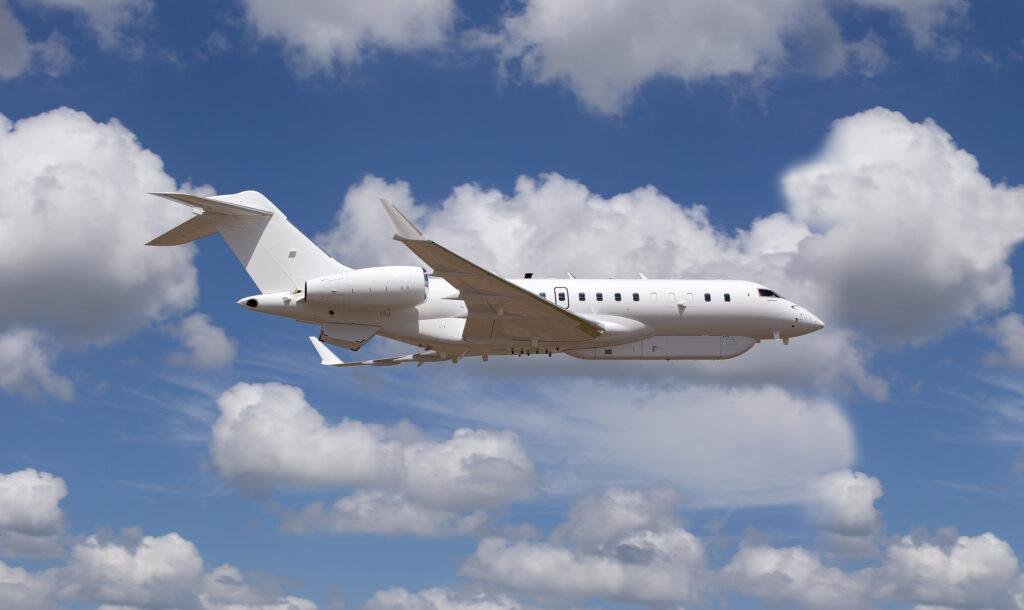
The statement poses a potentially significant threat to Montreal-based Bombardier, whose Challenger and Global business jets have an extensive customer base in the United States.
However, Trump’s announcement does not yet amount to an implemented U.S. ban on Bombardier aircraft.
The White House had not publicly explained how the administration would prevent Bombardier sales or deliveries when the announcement was made. Bombardier aircraft remain approved by the Federal Aviation Administration, and the company’s jets comply with the United States-Mexico-Canada Agreement, according to Reuters.
Table of Contents
Bombardier Sales Threat: Trump Targets Canadian Jetmaker
Trump’s September 7 announcement directly tied Bombardier’s future access to the U.S. market to where the company manufactures its aircraft.
The president criticized Bombardier’s products and accused the Canadian company of benefiting from the American market without doing enough manufacturing inside the United States.
“If they want our Market, they must build here.”
President Donald Trump, in a Truth Social post announcing the Bombardier threat
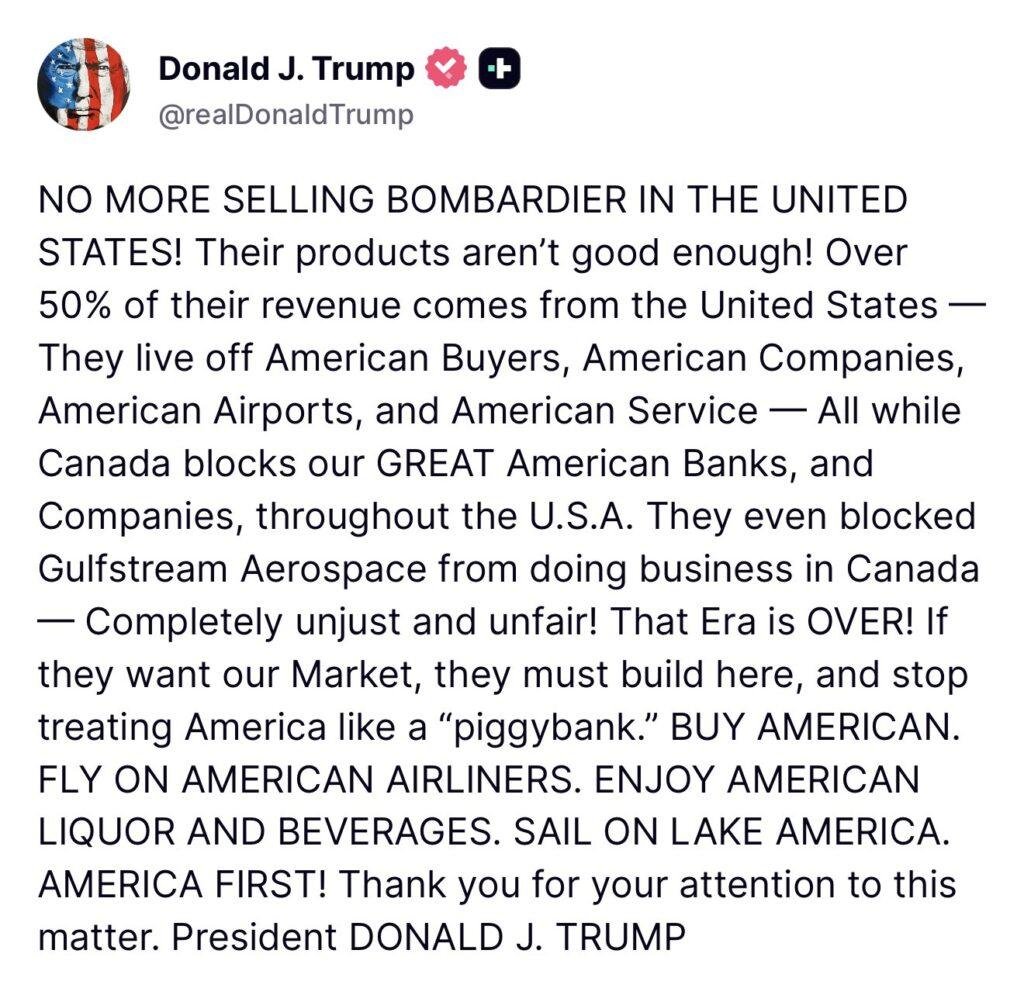
The announcement came as relations between Washington and Ottawa deteriorated further following the collapse of trade talks in August.
Canada began imposing retaliatory tariffs Tuesday on approximately $20 billion worth of American goods, with rates of 15%, 25% or 50% on hundreds of products.
The Canadian government says those measures are intended to match U.S. trade actions dollar-for-dollar and rate-for-rate, according to Associated Press reporting.
Bombardier’s Large U.S. Footprint
Although Bombardier is headquartered in Montreal and conducts final aircraft manufacturing in Canada, the company already has a significant economic presence in the United States.
Bombardier employs approximately 3,500 people in the United States and works with around 2,800 American suppliers.
The company says it spends more than $2.5 billion annually with U.S. suppliers and operates factories and service facilities across the country, including a defense operation in Kansas, where Canadian-built Bombardier aircraft are modified and prepared for special-mission applications.
The company is also producing wings for its flagship Global 8000 business jet in Texas and is adding a sixth U.S. service center.
In its response following Trump’s announcement, Bombardier said it intends to continue investing in its employees, customers and communities across the United States.
A Deeply Integrated Aerospace Supply Chain
Any effort to restrict Bombardier sales could have consequences extending beyond the Canadian manufacturer itself, since the North American aerospace industry operates through a highly integrated supply chain in which aircraft assembled in one country often contain engines, avionics and other systems manufactured across the border.
Most Bombardier business jets use American-made engines supplied by companies including GE Aerospace and Honeywell Aerospace.
That means a reduction in Bombardier production or U.S. deliveries could also affect American suppliers that provide components for those aircraft.
The United States is particularly important to Bombardier: approximately half of the roughly 5,100 Bombardier aircraft operated by customers worldwide are located in the United States, according to Reuters.
That makes America one of Bombardier’s most important markets while simultaneously making Bombardier an important customer for parts of the U.S. aerospace industry.
Aerospace analyst Richard Aboulafia told Reuters he did not expect business-jet customers to immediately cancel Bombardier orders and questioned how the administration could stop sales of aircraft that already hold U.S. regulatory approval.
The Earlier Gulfstream Dispute
Trump’s latest statement is not the first time Bombardier has become part of the U.S.-Canada trade dispute: in January, Trump said the United States would decertify Bombardier Global Express business jets and threatened a 50% tariff on Canadian-built aircraft.
The dispute centered partly on Canada’s certification of aircraft manufactured by Bombardier’s major American competitor, Gulfstream Aerospace.
Neither the threatened Bombardier decertification nor the proposed 50% aircraft tariff ultimately took effect, and Canada subsequently certified several Gulfstream aircraft the following month.
The September announcement therefore revives a dispute involving two of the world’s most prominent manufacturers of large-cabin business jets, with Bombardier’s Global family competing directly against Gulfstream aircraft at the upper end of the business aviation market.
U.S.-Canada Trade Tensions Escalate
The Bombardier dispute is unfolding within a much larger confrontation between the United States and Canada: Canadian retaliatory tariffs took effect at 12:01 a.m. Tuesday, September 8, covering approximately $20 billion in American products.
The affected goods include steel, aluminum, cheese, appliances, clothing, cosmetics and agricultural equipment.
Canada says its tariffs are designed to mirror measures imposed by Washington, even as Trump has simultaneously threatened additional measures against other Canadian industries, including automobiles, auto parts and steel.
The aerospace industry had largely avoided the most disruptive effects of the tariff fight before the latest Bombardier announcement — that may now be changing.
What a Bombardier Restriction Could Mean
If the Trump administration turns the president’s announcement into an enforceable policy, the consequences could be substantial for Bombardier, aircraft buyers and the broader North American aerospace supply chain.
The United States is one of the world’s largest business aviation markets, and Bombardier’s Challenger and Global aircraft are operated by corporations, charter companies, private owners, fractional operators and government customers throughout the country.
Blocking Bombardier sales or new aircraft deliveries could therefore affect both the manufacturer and customers already planning fleet acquisitions, but the exact mechanism remains unclear.
As of the announcement, the White House had not publicly identified whether a restriction would involve:
- Import rules
- New tariffs
- Federal procurement restrictions
- FAA certification action
- Trade enforcement measures
- Another regulatory mechanism
There had also been no announced FAA action withdrawing the existing U.S. approvals for Bombardier aircraft — a distinction that matters.
Trump has announced his intention to prevent Bombardier from selling aircraft in the United States unless it manufactures them domestically, but the regulatory steps necessary to implement that policy have not yet been publicly established.
What Happens Next
The next major development will be whether Trump’s announcement becomes formal U.S. policy, and actions from the White House, U.S. Department of Commerce, Office of the U.S. Trade Representative or Federal Aviation Administration could clarify what authority the administration intends to use and whether aircraft already ordered by U.S. customers could be affected.
Bombardier, meanwhile, has indicated that it intends to remain deeply involved in the U.S. market, continuing to expand its American service network while maintaining a substantial U.S. workforce and supplier base.
For now, Bombardier sales remain legal in the United States, and the situation is a threatened market restriction rather than an implemented prohibition — though that could become much more consequential if Washington follows Trump’s announcement with formal regulatory or trade action.
Frequently Asked Questions
Has the United States banned Bombardier sales?
Not yet. President Trump announced that Bombardier should no longer be allowed to sell aircraft in the United States unless it manufactures them there, but no enforcement mechanism had been publicly announced when the statement was made.
Are Bombardier aircraft still FAA-approved?
Yes. Reuters reported that Bombardier aircraft remain approved by the Federal Aviation Administration, and no new FAA decertification action had been announced.
Does Bombardier manufacture anything in the United States?
Yes. Bombardier has thousands of U.S. employees, approximately 2,800 American suppliers, a defense operation in Kansas, service facilities across the country and Global 8000 wing production in Texas.
Why is Trump targeting Bombardier?
The announcement is part of a wider U.S.-Canada trade confrontation. Trump argues that companies benefiting from access to the American market should manufacture more products in the United States.
Could American companies also be affected?
Potentially. Bombardier purchases billions of dollars of goods and services from U.S. suppliers annually, and its aircraft use major American-made systems, including engines supplied by GE Aerospace and Honeywell Aerospace.
Looking Ahead
The Aviation Diary will continue monitoring the dispute for any formal action affecting Bombardier aircraft, including new tariffs, import restrictions, FAA certification changes or other regulatory measures.
The key question is no longer what President Trump wants Bombardier to do — that much is clear: build aircraft in the United States or risk losing access to the American market. What remains open is whether, and how, the administration turns that demand into enforceable U.S. policy.
Sources
- Reuters — “Trump says Canada’s Bombardier cannot sell in U.S. unless it builds there” (September 7, 2026): reporting on President Trump’s Bombardier announcement, Bombardier’s U.S. operations, FAA certification status, U.S. supplier network and the earlier Gulfstream-related dispute.
- Associated Press (September 8, 2026): reporting on Canada’s retaliatory tariffs and the wider U.S.-Canada trade dispute.