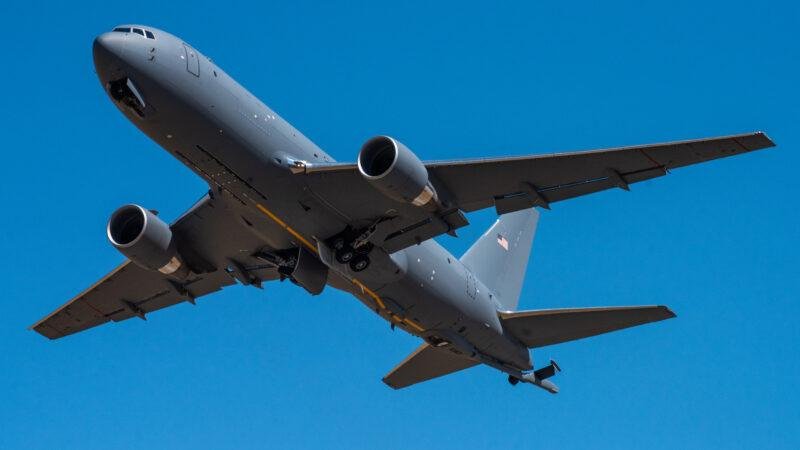
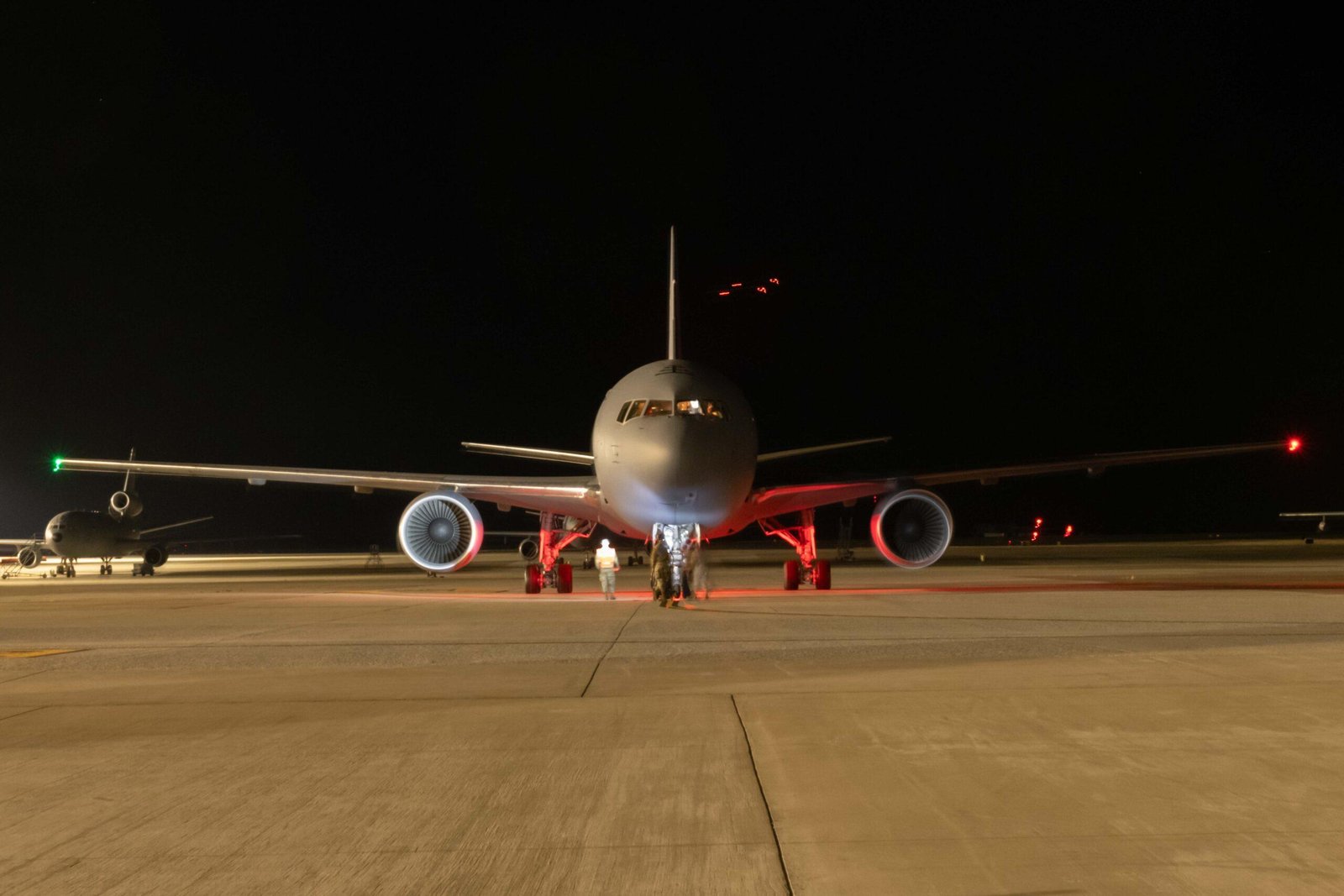
The KC-46A contract ceiling jumped by $13.4 billion on September 11, 2026, rising from $5.7 billion to $19.1 billion under a modification to Boeing’s existing tanker contract with the U.S. Air Force. The change expands the contract’s capacity for Foreign Military Sales work on the KC-46A Pegasus, adding room for allied customers Japan and Israel, along with unnamed future partner nations.
No funds were obligated at the time of the award, and the modification does not order any new aircraft. It raises the ceiling on an existing contract vehicle so that future Foreign Military Sales requests can move through it without renegotiating the underlying agreement from scratch.
Table of Contents
What the Sept. 11 Modification Actually Does
The modification, designated P00008, applies to contract FA8609-19-D-0007, the vehicle Boeing has used for KC-46A Pegasus production and sustainment since 2019. The Air Force Life Cycle Management Center at Wright-Patterson Air Force Base, Ohio, is the contracting activity, and work under the modification will be performed in Seattle, Washington, with an estimated completion date of April 28, 2035.
The Pentagon’s daily contract announcement for Sept. 11 describes the added scope as Foreign Military Sales work, meaning the higher ceiling exists to accommodate potential orders placed by allied governments rather than the U.S. Air Force itself. Japan and Israel are named directly, and the notice states the contract also reserves capacity for future FMS partner nations that have not yet been identified.
Japan and Israel’s KC-46A Orders
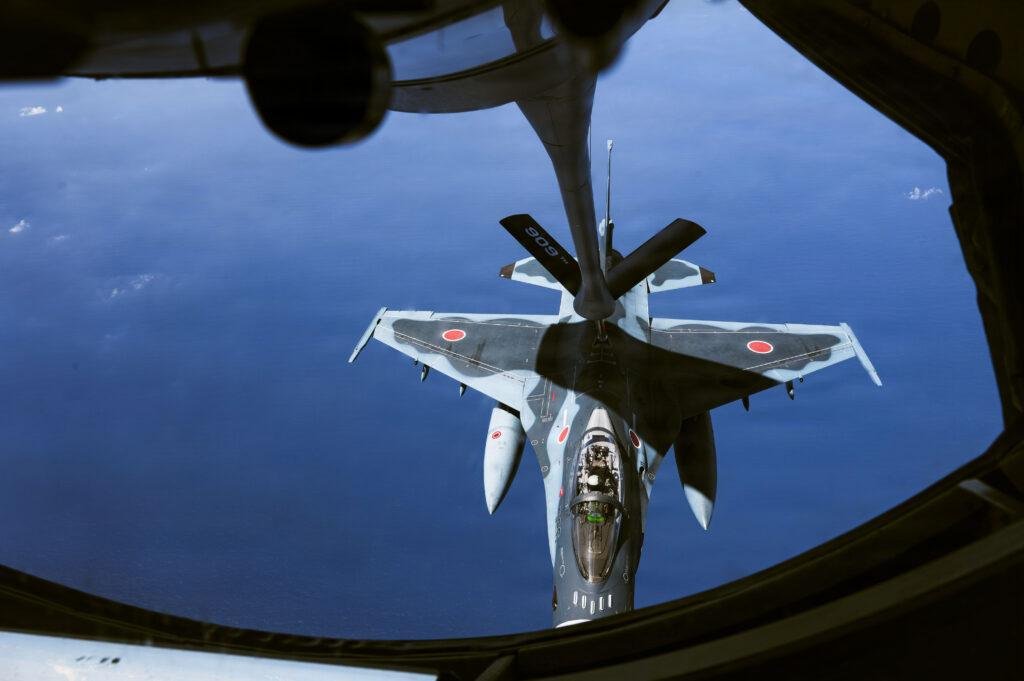
Japan was the KC-46A’s first export customer, selecting the tanker in October 2015. The Japan Air Self-Defense Force received its first Pegasus in October 2021 and a second in February 2022, and a November 2022 contract added two more aircraft, bringing Japan’s total under contract to six. A separately approved option could grow that fleet to 15 aircraft.
Israel’s path has moved faster in the past year. The U.S. State Department approved a Foreign Military Sale of up to eight KC-46As to Israel in March 2020, valued at roughly $2.4 billion, and Boeing was awarded a $930 million contract in 2022 covering the first four aircraft.
The Israeli variant, named “Gideon,” made its first flight in the United States in May 2026, and the Israeli Air Force received its first Gideon tanker at Nevatim Airbase on May 27, 2026, followed by a second aircraft on August 20, 2026. The Gideon is compatible with the boom and probe-and-drogue refueling needs of Israel’s F-35I, F-15I, and F-16I fleets, and is intended to replace the country’s six aging Boeing 707 “Re’em” tankers.
“The unmatched versatility and multi-mission capabilities of the KC-46A tanker further support JASDF’s air mobility mission.”
James Burgess, Boeing KC-46 program vice president, on Japan’s November 2022 order for two additional tankers
Why a Ceiling Increase Isn’t a New Order
A contract ceiling sets the maximum value the government may order through a given contract vehicle over its life. Raising the KC-46A contract ceiling, as the Sept. 11 modification does, does not itself commit any money or authorize the purchase of a single aircraft. Actual KC-46A sales to Japan, Israel, or any future partner still require their own government-to-government Foreign Military Sales agreements, State Department approval, and individual delivery orders placed against the contract.
What the modification does is remove an administrative bottleneck. Without room under the ceiling, the Air Force would need to renegotiate the underlying contract vehicle each time a new FMS order approached the existing limit. With $19.1 billion of headroom instead of $5.7 billion, the Air Force Life Cycle Management Center can process additional Japanese, Israeli, or future allied orders against the same contract without reopening it.
- Sets a maximum dollar value for the contract, not a spending commitment
- No funds were obligated at the time of this award
- Reserves capacity for Japan, Israel, and unnamed future FMS partners
- Individual aircraft orders still require separate FMS agreements and delivery orders
FAQ: KC-46A Contract Ceiling
What does the $13.4 billion modification actually buy?
Nothing yet. It raises the ceiling on Boeing’s existing KC-46A contract from $5.7 billion to $19.1 billion so Foreign Military Sales orders can be processed without renegotiating the contract vehicle. No funds were obligated at the time of the award.
Which countries are covered by the expanded contract?
Japan and Israel are named directly in the Sept. 11 announcement. The modification also reserves capacity for future FMS partner nations, though none beyond Japan and Israel are specified.
How many KC-46As have Japan and Israel ordered so far?
Japan has six KC-46As under contract, with a separately approved option to expand that to 15. Israel has ordered six aircraft under an FMS approval covering up to eight, with deliveries of its “Gideon” variant beginning in May 2026.
Looking Ahead
The expanded KC-46A contract ceiling positions the program to absorb its next likely FMS customer without a fresh contracting round. The State Department approved a possible $4.5 billion sale of four KC-46As to Qatar on August 20, 2026, a request that has not yet converted into a signed order. The Aviation Diary will track whether that sale, or any other allied KC-46A request, moves forward under the newly expanded contract ceiling.
Sources
- ClearanceJobs — “Boeing Lands $13.4B Air Force Contract Boost for Foreign Military Sales”
- Investing.com — “Boeing wins $13.4 billion contract modification from US military”
- The Defence Blog — “Boeing KC-46A Export Deal Ceiling Jumps to $19.1 Billion”
- Armada International — on Israel’s Gideon tanker deliveries and Qatar’s pending FMS request
- The Aviationist — “Israel’s KC-46 ‘Gideon’ Tanker Conducts Maiden Flight”
- Boeing — announcement of Japan’s November 2022 order for two additional KC-46A tankers
- Army Recognition — KC-46 Pegasus program background, including Japan’s fleet-expansion option and Qatar’s FMS approval