SpaceX CRS-35 is targeting a launch on October 13 to deliver more than 6,300 pounds of equipment and experiments to the International Space Station, NASA announced in its October 7 mission advisory.
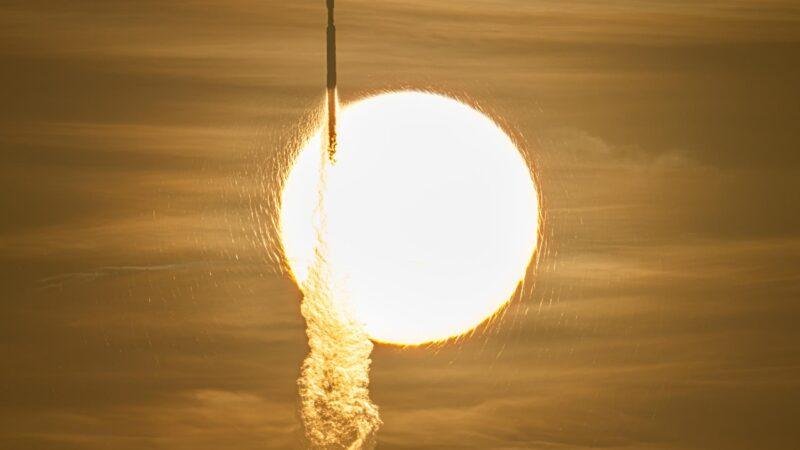
The cargo Dragon is scheduled to lift off aboard Falcon 9 at 6:33 a.m. Eastern time from Cape Canaveral Space Force Station in Florida. NASA plans an autonomous docking on October 15 at the space-facing port of the station’s Harmony module, provided flight and rendezvous conditions allow.
The manifest includes the final set of ISS Roll-Out Solar Arrays and research equipment for artificial retinas, human-heart tissue models, specialized glass and brain organoids. These are planned research deliveries, not scientific results already obtained.
Table of Contents
SpaceX CRS-35 Will Bring Power-System Hardware to the Station
NASA identifies the final set of ISS Roll-Out Solar Arrays as a major cargo item. The arrays add generating capability to the orbital laboratory’s electrical-power system, supporting a station that must continuously operate life-support equipment, scientific payloads, communications and other systems while passing through daylight and darkness.
SpaceX CRS-35 uses an uncrewed Dragon spacecraft and a Falcon 9 rocket. NASA names Space Launch Complex 40 as the planned departure site, separating this commercial cargo service from astronaut rotation missions flown by crew-configured Dragons. The cargo mission is the thirty-fifth SpaceX resupply flight under NASA’s commercial services program.
NASA’s advisory also specifies Harmony’s space-facing docking port as the intended destination. Approach, docking and hatch-opening events are separate operational steps; an on-time launch alone would not prove that supplies had already reached astronauts inside the station.
Microgravity Experiments Range From Vision to Glass
One study will deliver hardware used to manufacture artificial retinas in microgravity. Such research investigates whether weightlessness offers a useful production environment for delicate materials; NASA does not claim this cargo has already produced a treatment that restores vision to patients.
Another investigation involves three-dimensional heart tissue models intended to support drug-testing work. Additional materials will examine how a new type of glass forms without the effects normally associated with gravity. Experiments using brain organoids are designed to explore potential treatment targets for neurodegenerative diseases.
The common theme is using the orbital environment as a laboratory. Results depend on experiments being carried out, samples being returned or data being transmitted, and later analysis on Earth. Payload shipment should therefore be reported as a research opportunity, not a demonstrated medical or manufacturing breakthrough.
Dragon’s Mission Continues After the October Docking
NASA expects the cargo spacecraft to remain at the station until mid-November. Its planned return will bring completed experiments, time-sensitive research materials and other cargo back to Earth, where the scientific teams can examine samples with equipment unavailable in orbit.
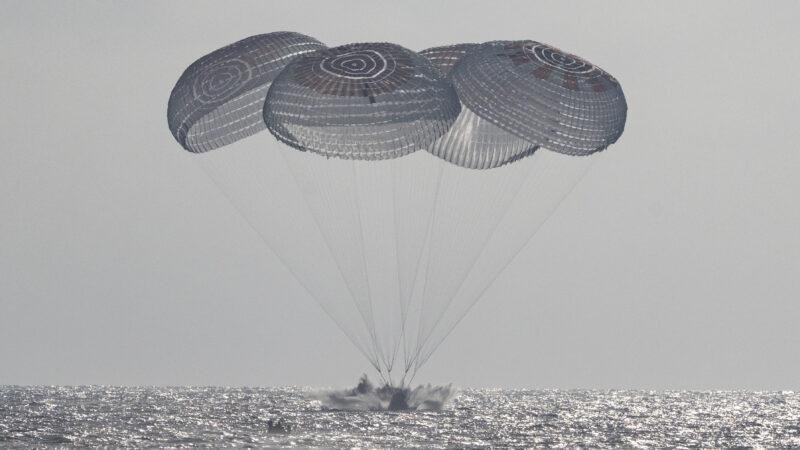
The targeted return is a splashdown off California, according to the October advisory. Launch, docking, departure and splashdown are all subject to change; NASA lists launch coverage beginning shortly before the October 13 target and arrival coverage ahead of the October 15 docking window.
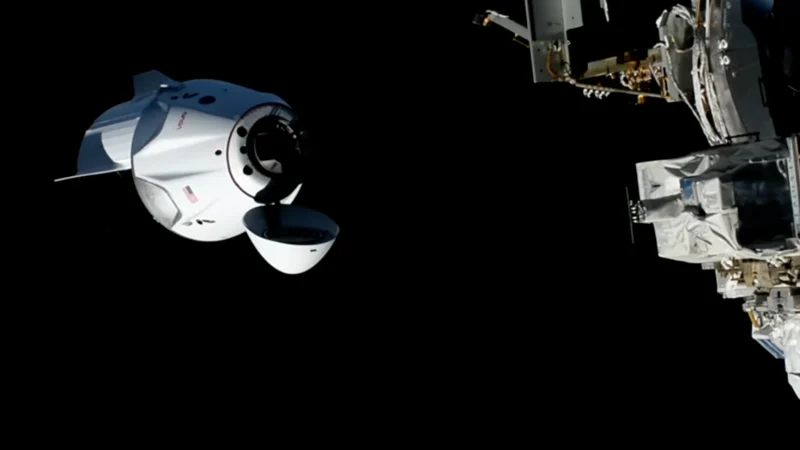
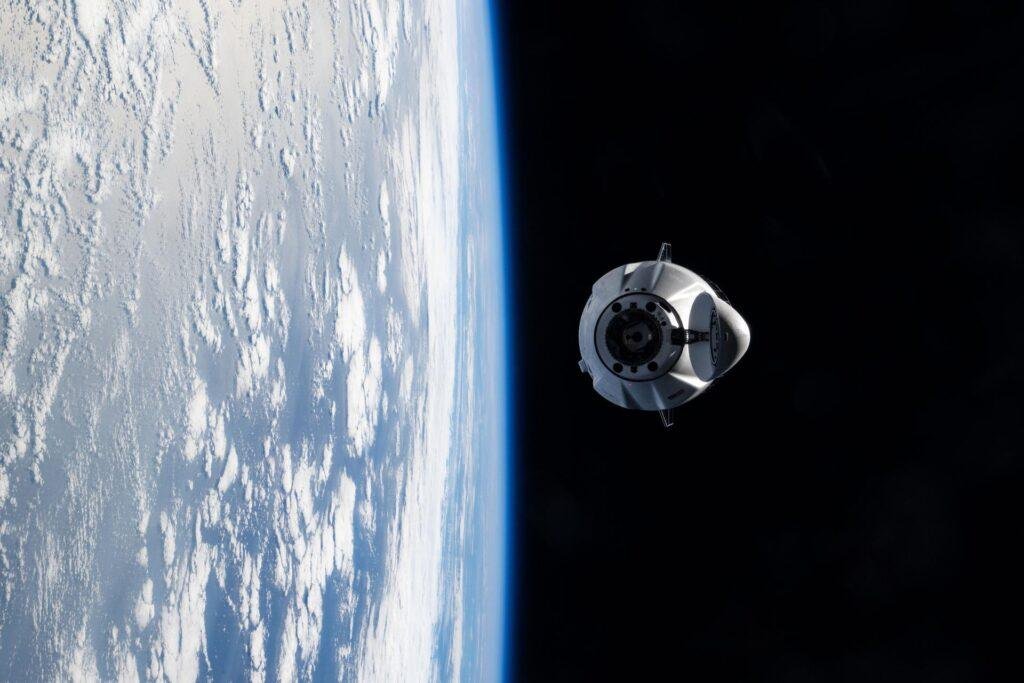
Readers should also distinguish imagery of a previous Dragon departure from photos of the upcoming launch. NASA’s article includes an archival image of a Dragon leaving the station in June. It illustrates the spacecraft system but does not depict CRS-35 already in flight.
FAQ: SpaceX CRS-35
When is the SpaceX CRS-35 launch scheduled?
NASA targets October 13 at 6:33 a.m. Eastern time from Cape Canaveral Space Force Station, subject to change.
What is SpaceX CRS-35 carrying to the ISS?
The manifest includes final roll-out solar arrays and research equipment for artificial retinas, heart tissues, glass and brain organoids.
When will the Dragon dock and return?
NASA targets docking on October 15 and a return with research cargo around mid-November.
Looking Ahead
For SpaceX CRS-35, NASA’s next scheduled milestones are the October 13 launch and October 15 docking. Mission planners may change these times based on weather, range, spacecraft or station operations, so confirm the final countdown and arrival updates before publication.
Sources
Image credit: NASA (NASA-EDITORIAL; reuse terms). Featured image is an archival or contextual illustration, not the reported event.