The SM-3 interceptor contract announced October 8 gives Raytheon a multiyear agreement valued at up to $6.3 billion to build and sustain Block IB ballistic-missile interceptors. The company described a five-year contractual term with two additional option years.
Raytheon said the award is intended to replenish missile-defense inventories and provide longer-term production stability. The maximum value is a ceiling that includes potential options, not proof that the full amount has been spent or every optional year exercised.
The SM-3 interceptor contract concerns an established interceptor used by missile-defense systems at sea and on land. It is separate from Raytheon’s recent contract for Standard Missile-6, which serves a different role within the broader missile family.
Table of Contents
SM-3 Interceptor Contract Sets a Multiyear Framework
Under the SM-3 interceptor contract, Raytheon said the October 8 agreement provides five years of production and sustainment with the possibility of extending work by two more years. Its statement gives a total potential value of $6.3 billion but does not specify a publicly confirmed total missile count under the award.
Breaking Defense, citing the Pentagon’s announcement, reported a base value of approximately $4.4 billion and nearly $2 billion in possible options. That more detailed breakdown is attributed to the outlet because the government release linked by the publication could not be opened during this review.
The company ties the contract to a wider set of recent arrangements intended to expand critical-munitions manufacturing. For readers, the key purchasing distinction is between an announced contractual framework and actual production deliveries, which will occur on a separate timetable.
What the Block IB Interceptor Is Designed to Do
The SM-3 interceptor contract covers a weapon Raytheon describes SM-3 Block IB as a defensive weapon intended to intercept short- and intermediate-range ballistic missiles during the midcourse portion of flight. That mission differs from ordinary air-defense engagements against aircraft or low-flying cruise missiles.
The interceptor can be employed from ship-based and land-based missile-defense installations. Its role places it within a layered defense architecture, alongside other interceptors and sensors; it should not be confused with the newer SM-3 IIA variant or the multi-role SM-6.
According to Raytheon, SM-3 Block IB first entered combat use in 2024. That assertion comes from the manufacturer’s statement and does not establish the operational details of any particular classified interception. No new test launch was announced with this October contract.
Production Work and Unanswered Delivery Questions
For the SM-3 interceptor contract, Raytheon identified its facilities in Tucson, Arizona, and Huntsville, Alabama, as the primary sites for work under the award. It said recent investments have targeted capacity expansion across the Standard Missile family, with manufacturing throughput and supply-chain coordination central to the new production effort.
The October announcement does not set out delivery dates, annual output targets or a breakdown between newly manufactured interceptors and sustainment activities. Those omissions limit any attempt to convert the maximum contract value into an exact price per missile.
The Pentagon’s interest in replenishing inventories has been discussed publicly, but neither Raytheon’s release nor the reporting reviewed for this story supplies a verified schedule for how quickly individual military units will receive missiles. The contract may improve purchasing continuity without guaranteeing an immediate change in deployed inventory.
FAQ: SM-3 Block IB Contract
Is the SM-3 interceptor contract already fully funded?
No. Raytheon describes $6.3 billion as the contract’s potential value across a five-year term and two additional option years.
Does the SM-3 Block IB intercept aircraft?
Its stated principal purpose is to engage short- and intermediate-range ballistic missiles during their midcourse flight, rather than act as a general-purpose fighter-aircraft interceptor.
How many SM-3 Block IB missiles will be delivered?
A specific production quantity and delivery schedule were not disclosed in the company’s October 8 statement reviewed for this article.
Looking Ahead
For the SM-3 interceptor contract, the next concrete information to watch is whether and when the optional contract years are exercised and what delivery quantities are disclosed through future government or company updates. No dated first-delivery milestone was confirmed in the October 8 Raytheon announcement, so a faster replenishment timetable should not be assumed.
Sources
- Raytheon — $6.3 Billion Multiyear SM-3 Block IB Contract
- Breaking Defense — Pentagon and Raytheon Contract Terms
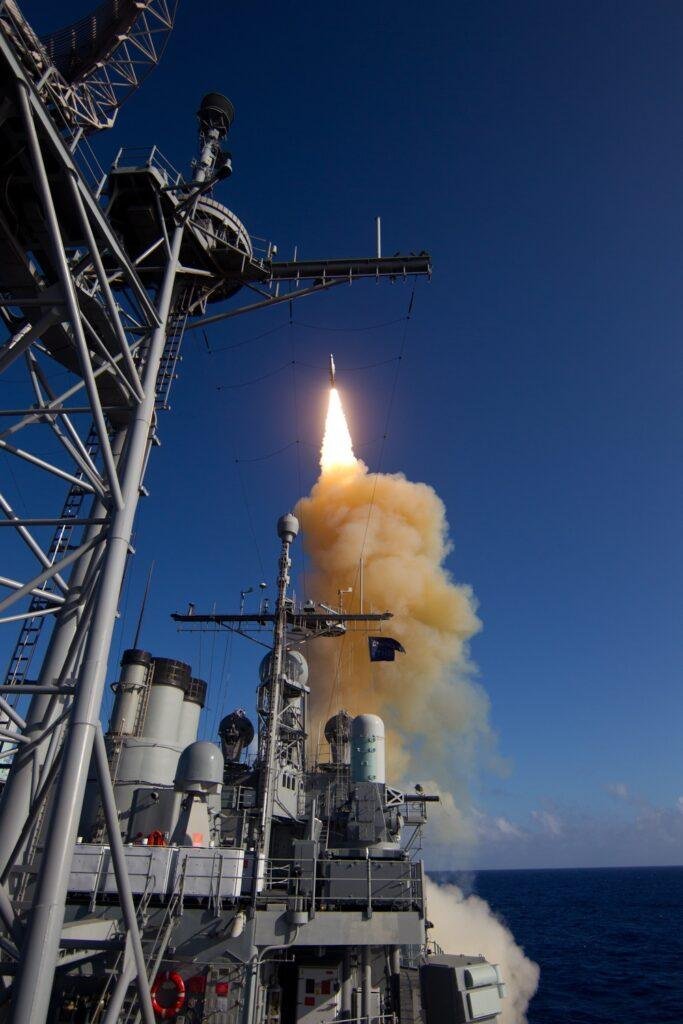
Featured image: FILE PHOTO: An SM-3 Block IB missile launches from USS Lake Erie during a test on May 16, 2013. U.S. Navy photo via DVIDS. Not an image of the 2026 contract award. Photo source · Reuse terms.