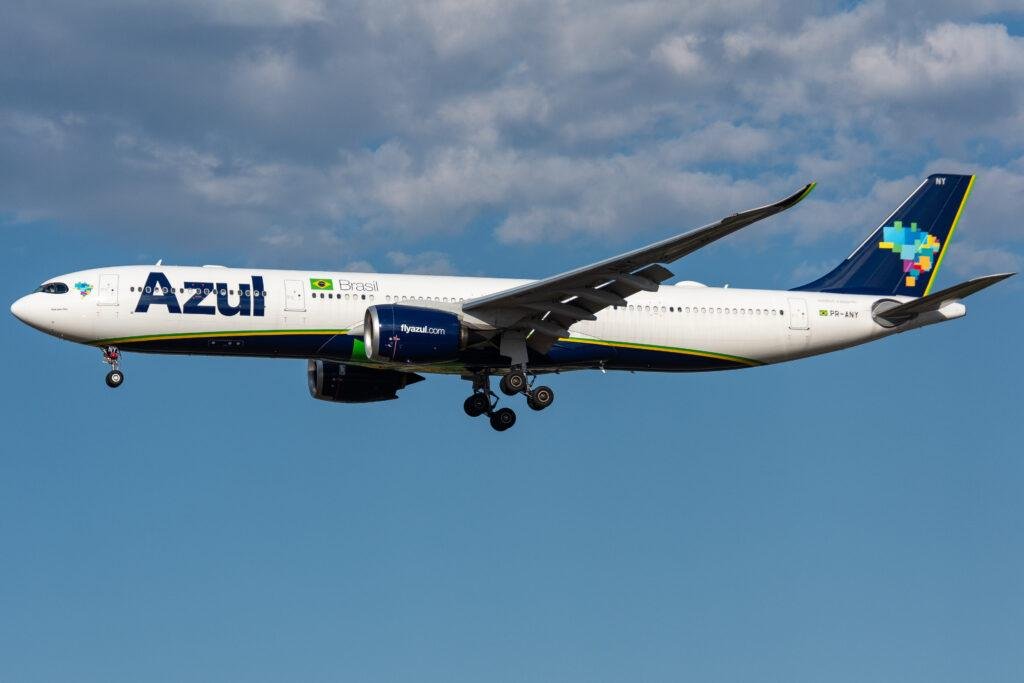
American Azul investment plans received a conditional green light from Brazil’s competition authority on October 7, 2026, clearing a proposed $100 million purchase of approximately eight percent of Azul’s equity.
The Administrative Council for Economic Defense, known as CADE, approved the minority stake through a merger-control agreement imposing protections for sensitive business information, governance independence and future disclosures.
The decision is a regulatory approval for a proposed equity transaction linked to Azul’s financial restructuring. It is not proof that the funds have transferred or that the airlines have combined their businesses.
Table of Contents
How CADE Approved the American Azul Investment
CADE said the decision came after its tribunal considered the relationship between airlines competing on Brazil–United States routes. Azul’s restructuring under US Chapter 11 provided the setting for the proposed American Airlines investment.
The regulator examined whether a shareholder with an economic interest in a competitor could influence market behavior even without full ownership or formal control. The review considered the ownership interest, governance rights and commercial information access.
CADE concluded that the proposed minority stake did not give American unilateral power to determine Azul’s commercial policy. The agency nevertheless identified risks from the potential sharing of nonpublic forecasts, fares, capacity, costs and network information.
The American Azul investment was therefore approved with an enforceable agreement intended to preserve independent decisions and allow regulators to monitor changes to the arrangement.
What the Competition Safeguards Cover
CADE describes three broad safeguards: rules governing access to commercially sensitive information and influence over Azul decisions; monitoring of certain future American acquisitions involving Brazil–US airline markets; and notifications when American’s political or governance rights change.
These conditions recognize that airlines can compete independently while holding minority interests in one another. Information barriers matter because rivals may otherwise gain knowledge about future prices, schedules or commercial plans.
The regulator also considered how existing airline investments and commercial relationships might affect incentives on transatlantic routes. It said the evidence did not establish that this proposal would make sustained coordination likely across the market.
That is a narrower conclusion than saying there is no competitive concern. CADE specifically imposed safeguards to manage residual risks identified in its review.
What the Ruling Does and Does Not Change for Flyers
A shareholder investment does not by itself merge airline schedules, create a joint venture, authorize coordinated pricing or introduce a new route. No such passenger-facing changes follow automatically from the CADE decision.
Azul’s financial recovery and American’s involvement may be important to the carriers’ longer-term strategies, but operational implications require separate company announcements and any further approvals that apply.
For TAD readers, the immediate news is Brazil’s approval with safeguards. Claims of imminent network integration or fare changes would go beyond the regulator’s October statement.
FAQ: American Azul investment
How much is the proposed American Azul investment?
CADE describes an American Airlines investment of $100 million for roughly eight percent of Azul.
Did Brazil approve the minority stake?
Yes. CADE approved the transaction subject to a binding merger-control agreement.
Does the approval merge American and Azul?
No. It concerns a minority investment and conditions intended to preserve separate competitive decisions.
Looking Ahead
Watch for the companies to confirm any financial closing and for disclosures under CADE’s governance safeguards. The American Azul investment approval does not itself establish that the transaction has closed.
Sources