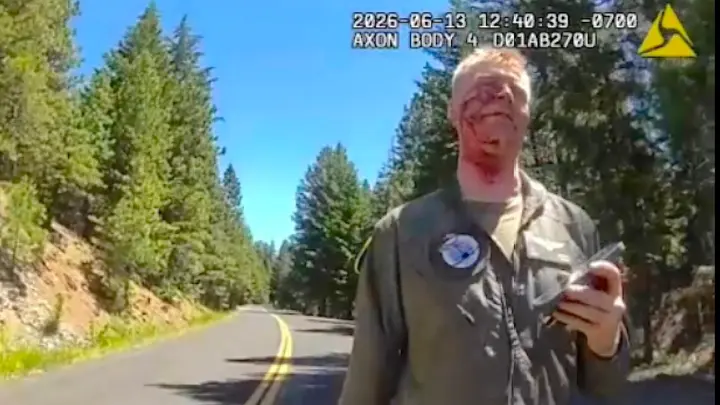
An F-18 pilot survives crash near Rimrock Lake, Washington, and newly released body camera footage shows just how calm he stayed in the aftermath. The Yakima County Sheriff’s Office released the video on August 14, showing the bloodied but composed Marine aviator walking out of the woods, phone in hand, already on the line with 911 — more than two months after the actual crash occurred.
The footage has circulated widely since its release, offering a rare, unscripted look at how this F-18 pilot survives crash aftermath unfolded on the ground.
Table of Contents
Bodycam Footage Reveals F-18 Pilot Survives Crash
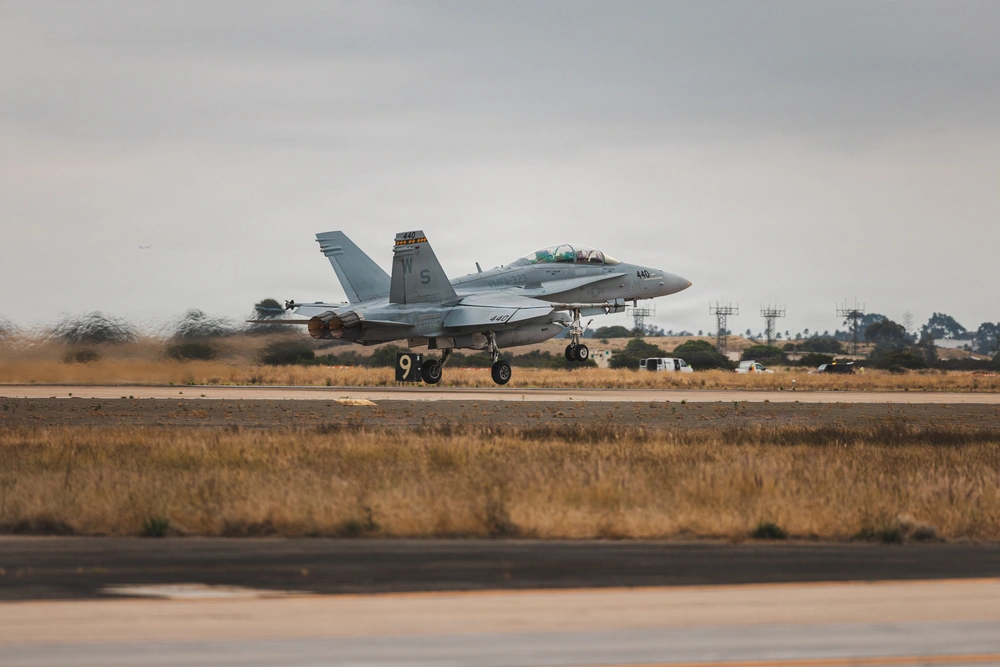
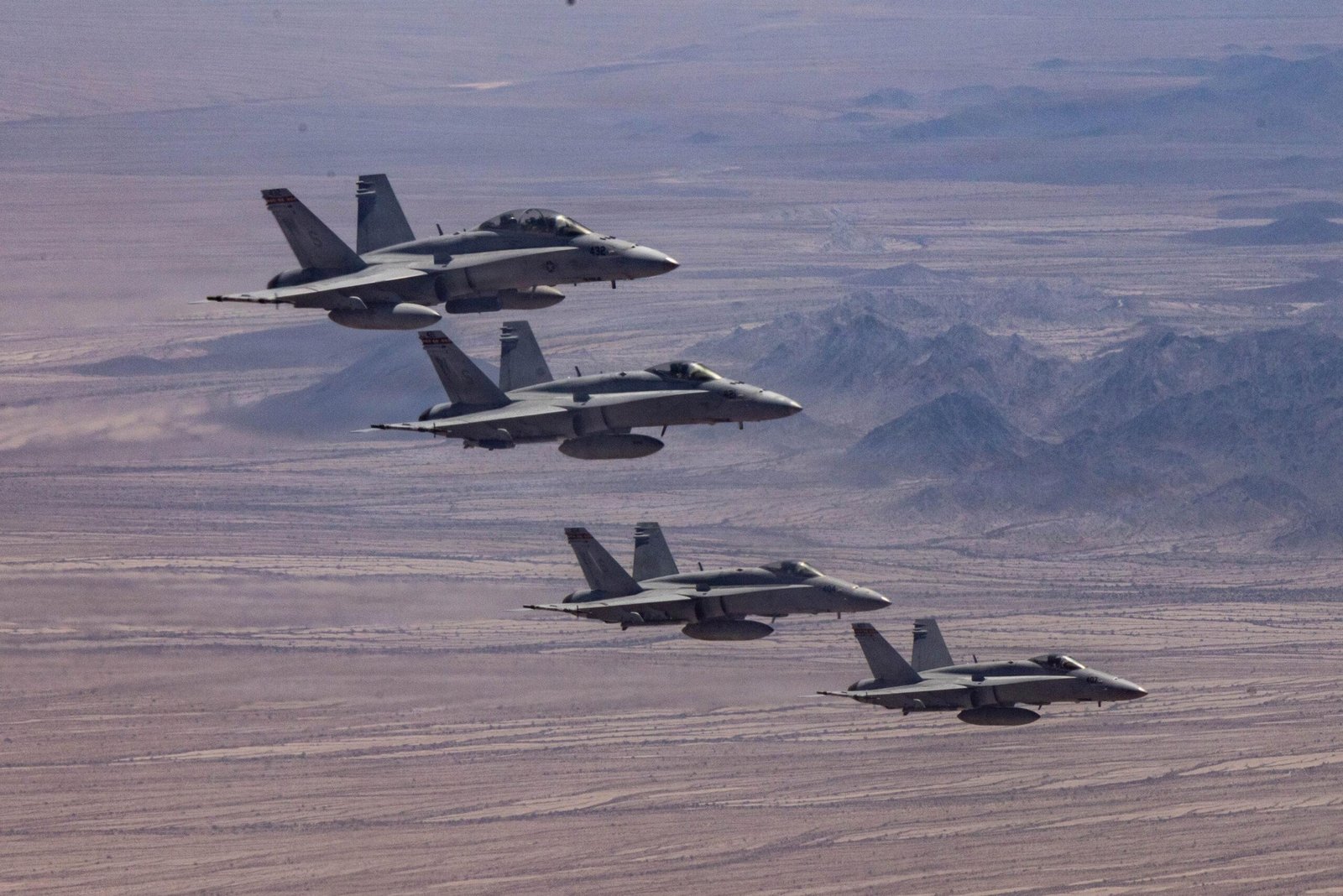
The Yakima County Sheriff’s Office released body camera footage on August 14 showing the moment deputies first encountered the pilot of a U.S. Marine Corps F/A-18D Hornet assigned to VMFA-323 “Death Rattlers,” a squadron under Marine Aircraft Group 11, 3rd Marine Aircraft Wing at MCAS Miramar, California, that crashed into a mountainside near Rimrock Lake, Washington, roughly 55 miles southeast of Seattle. The pilot ejected safely before the aircraft went down and suffered only minor facial lacerations. The incident is documented under Yakima County case number 26C08237.
The crash itself happened on June 13, but it wasn’t until the sheriff’s office released the bodycam video more than two months later that the full extent of the pilot’s composure under pressure became public.
What Happened Near Rimrock Lake
According to a statement from the 3rd Marine Aircraft Wing, the VMFA-323 F/A-18D Hornet was conducting a “routine training flight” near Rimrock Lake around noon on June 13 when the incident occurred. Bystanders on the ground captured cell phone video of the aircraft circling the area before it suddenly went down, throwing up a plume of black smoke that sparked a wildfire on the mountainside.
In the bodycam footage, the pilot describes the moments leading up to the crash:
- The flight was conducting low-level training circles over the lake
- The pilot ejected shortly before impact and came down under his parachute, which snagged in a tree
- He passed through the tree canopy during descent, resulting in facial lacerations
- He walked out to the road and made contact with a Yakima County Sheriff’s Office deputy, still on the phone with 911
Multiple witnesses also called 911 to report the crash, including one caller who was audibly shaken as she described the fireball and smoke. The resulting wildfire, dubbed the Pine Tree Fire by local officials, burned roughly two acres before ground and air crews contained it. The Naches Fire Department and U.S. Forest Service responded to contain the blaze, later confirming they had completed structure protection near nearby cabins.
“That’s an F-18. Well, That WAS an F-18.”
The bodycam video’s most-shared moment comes when a deputy, still trying to make sense of the smoke and wreckage, asks Maj. Simon what kind of aircraft he had been flying.
That’s an F-18. Well — that was an F-18.
Marine Maj. Jackson Simon, Yakima County Sheriff’s Office bodycam footage
Despite the blood visibly smeared across his face, the pilot remains lucid throughout the exchange, walking deputies through what he remembers: “We were doing circles over the lake, doing some low-level training. And then I tucked in, and I’m not sure exactly. Honestly, I’m a little frazzled.” He later tells the responding officer he was “very, very lucky to be alive” — to which the deputy replies, “That’s about as close as it gets.”
The Marine Corps has not officially confirmed the pilot’s identity, though Fox News has since identified him as Marine Corps Maj. Jackson Simon. The responding deputy’s incident report noted that Simon was found on the hillside already removing his flight harness and stacking his gear before sliding down the embankment to meet responders, who performed a “buddy check” for injuries.
Watch the Bodycam Footage
The Yakima County Sheriff’s Office has published the full body-worn camera footage from the incident directly through its public records portal, alongside a documented redaction log covering the release. The clip below captures the moment deputies first located Maj. Simon.
The Moment of Impact
Separate footage of the crash itself — how this F-18 pilot survives crash from the air to the ground — was first shared by The Aviation Diary’s own Instagram account on June 14, before the Yakima County bodycam release, capturing the smoke plume and fireball from a distance as the aircraft went down.
A follow-up clip includes radio chatter from the moment, capturing another aircraft in the area reacting in real time as the Hornet went down: “Is it going to fall off? Oh no. You want to jump out? Yeah. Oh—”
Part of a Difficult Stretch for Military Aviation
The Rimrock Lake crash is one of several U.S. military aviation mishaps within a four-month span in 2026. In the weeks surrounding the incident, an F-35B from the same Marine Corps unit crashed in Southern California, a B-52 crash at Edwards Air Force Base killed three civilians and five airmen, and an AH-64 Apache helicopter crash in Texas killed two soldiers.
Against that backdrop, the Rimrock Lake incident stands out as a rare fully survivable outcome — the pilot’s quick ejection decision, combined with a functioning parachute and a short walk to help, meant the mishap ended with minor injuries rather than tragedy.
FAQ: F/A-18 Rimrock Lake Crash
When did the F/A-18 crash near Rimrock Lake actually happen?
The crash occurred on June 13, 2026. The Yakima County Sheriff’s Office didn’t release the body camera footage of the pilot’s rescue until August 14, more than two months later, which is why the video is circulating widely now.
How badly was the F/A-18 pilot injured?
The F-18 pilot survives crash with only minor facial lacerations, believed to have resulted from passing through tree branches during his parachute descent. He was hospitalized as a precaution and released.
What caused the F/A-18 to crash?
The Marine Corps described it only as a “non-combat aviation mishap” during a routine low-level training flight. The exact cause has not been publicly released, and any formal safety investigation findings have not yet been published.
Looking Ahead
The Rimrock Lake crash and its bodycam aftermath have renewed attention on training safety amid a string of military aviation mishaps in 2026. That this F-18 pilot survives crash with only minor injuries stands as a striking reminder of both the risks Marine aviators accept during routine training and the split-second decisions — like a well-timed ejection — that can turn a catastrophic crash into a survivable one.
The Aviation Diary will continue following developments in Marine Corps aviation safety, F/A-18 fleet operations, and official findings as they’re released — alongside other ongoing Navy and Marine Corps aviation coverage.
Sources
For additional information about this story:
- Yakima County Sheriff’s Office — Aircraft Incident 26C08237, official body-worn camera footage release
- Military Times — ‘As close as it gets’: Bodycam footage shows Marine pilot walking away from crashed F/A-18 Hornet
- ABC News — ‘Hey, buddy, I just crashed’: Dramatic new video footage shows pilot walking away from fighter jet crash
- Task & Purpose — Body cam footage shows Marine after ejecting from F-18: ‘Hey buddy, I just crashed’
- NBC News — Pilot ejects before fighter jet crashes into mountain in Washington state woodlands