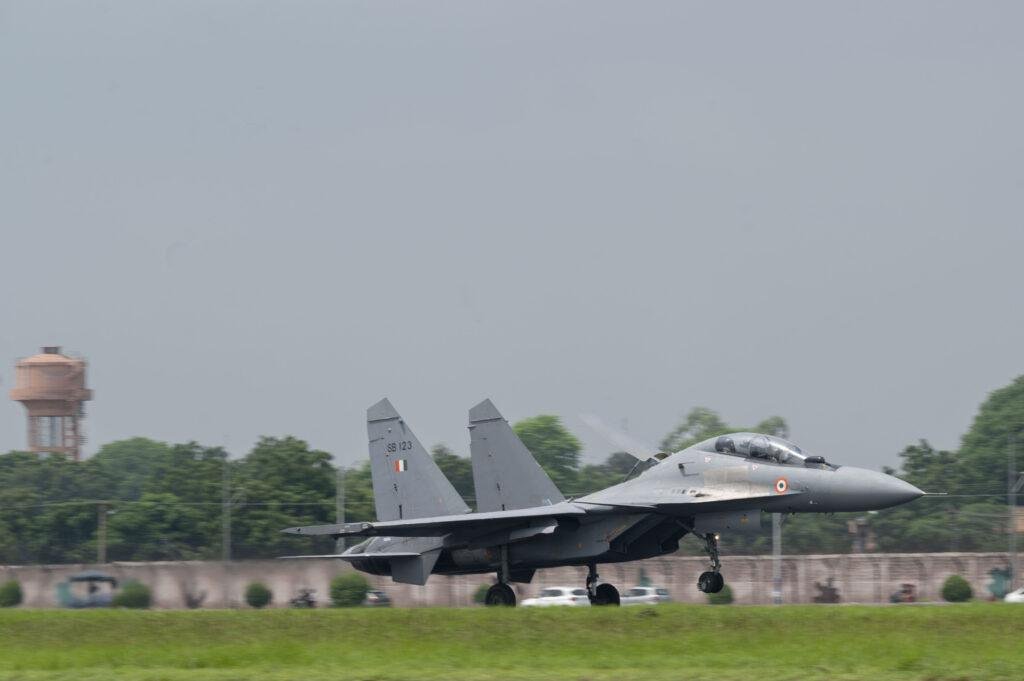
An Indonesian Su-30 runway overshoot at Sultan Hasanuddin International Airport left a Su-30MK2 fighter jet resting on the grass beside the runway on August 24, after a braking system failure during a post-maintenance test flight. The Indonesian Air Force confirmed the crew walked away unharmed, though the aircraft sustained visible damage.
The incident, which unfolded on a joint civil-military runway near Makassar, South Sulawesi, quickly circulated on social media before the Air Force issued an official explanation two days later.
Table of Contents
Indonesian Su-30 Runway Overshoot: What Happened
The incident occurred at approximately 11 a.m. local time on Monday, August 24, at Sultan Hasanuddin International Airport in Maros District, near Makassar, South Sulawesi. A Sukhoi Su-30MK2, registration TS-3011, was conducting a high-speed taxi-and-braking test on Runway 13 as part of a verification sequence following major overhaul work.
Airport operator spokesperson Taufan Yudhistira confirmed the aircraft left the paved surface on the runway’s western side, startling passersby on a nearby public road and quickly drawing attention on social media before officials commented publicly.
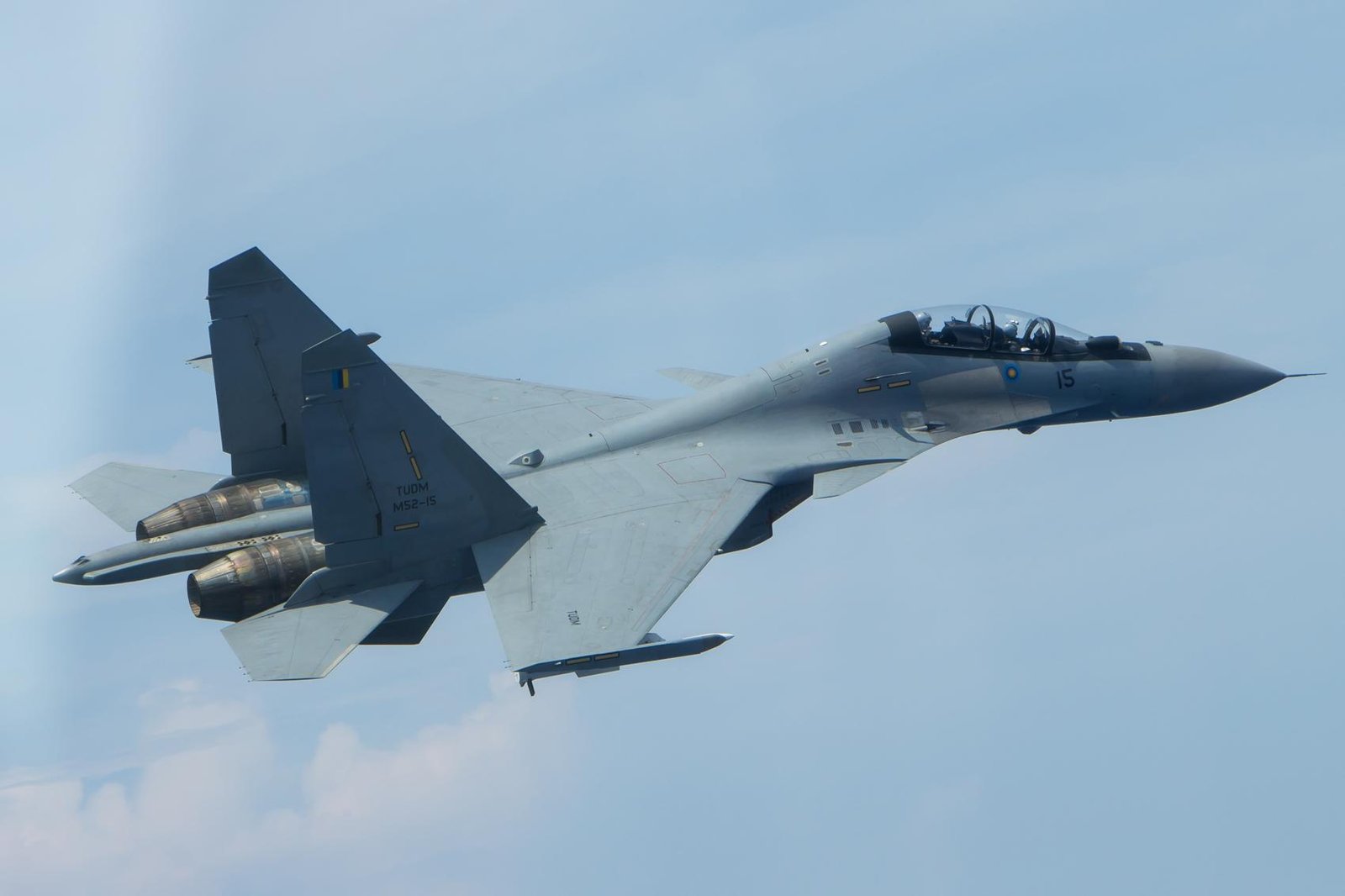
The braking system failed to function optimally, causing the aircraft to slide 30 meters past the end of the runway.
First Marshal I Nyoman Suadnyana, TNI-AU Information Service
What Caused the Overshoot
Two days after the incident, the Indonesian Air Force’s Information Service confirmed the cause was a technical failure in the aircraft’s braking system during a simulated takeoff check. The jet was undergoing testing after completing a major overhaul, part of the verification process before returning to active service.
Key details confirmed so far include:
- Aircraft: Sukhoi Su-30MK2, registration TS-3011
- Cause: braking system anomaly during a post-overhaul verification test
- Aircraft overran the runway by approximately 30 meters
- No injuries reported among the crew
A braking system anomaly of this kind is a known issue that has affected other Su-30 variants, including aircraft delivered to Vietnam, though Indonesian officials have not said whether this incident points to a broader fleet concern.
A Second Incident the Next Day
Sultan Hasanuddin International Airport saw a second runway excursion just a day later. On August 25, a CN-235 Cassa-type aircraft belonging to the Indonesian Navy skidded off Runway 03-21, the airport’s separate north-south strip, at approximately 11:25 a.m. local time.
That aircraft was evacuated from the runway by mid-afternoon, and as of this writing, Indonesian authorities have not released an official cause for the Navy aircraft’s excursion. The two incidents involved different services, different aircraft types and different runways, and officials have not linked them.
Indonesia’s Su-30 Fleet and What Comes Next
The Su-30MK2 has served with Indonesia’s air force since the early 2000s, flying alongside Su-27s as part of the country’s Flanker fleet. Sixteen Su-27 and Su-30 airframes, delivered between 2003 and 2013, are assigned to Skadron Udara 11 at Sultan Hasanuddin, where they remain Indonesia’s principal air defense fighters pending the arrival of newer aircraft.
Indonesia has ordered 42 Rafale fighters from France’s Dassault Aviation, with the first batch covered by a 2022 contract and a further batch under a 2025 letter of intent, alongside participation in South Korea’s KF-21 program. Until those aircraft arrive in numbers, the aging Flanker fleet’s readiness depends heavily on the kind of overhaul and verification work underway when this incident occurred.
FAQ: Indonesian Su-30 Runway Overshoot
Was anyone hurt in the Su-30 overshoot?
No. The Indonesian Air Force confirmed the crew was unharmed and no injuries were reported in connection with the incident.
What caused the aircraft to leave the runway?
Officials attributed the overshoot to a failure in the aircraft’s braking system during a post-overhaul verification test, which kept the jet from stopping within the expected distance.
Where did the incident take place?
The overshoot happened on Runway 13 at Sultan Hasanuddin International Airport in Maros District, near Makassar, South Sulawesi, Indonesia.
Looking Ahead
With the crew safe and the cause identified, attention now turns to how quickly the Su-30MK2 can be repaired and returned to service, and whether Indonesia’s investigation into the braking system fault leads to wider inspections across its Flanker fleet. The Aviation Diary will continue tracking developments in Indonesia’s fighter fleet modernization, including the incoming Rafale and KF-21 programs.
Source
- Tempo: Indonesian Air Force Reveals Cause of Sukhoi Jet Runway Skid
- ANTARA News: TNI AU confirms no injuries on Sukhoi jet off runway in S Sulawesi
- AeroTime: Indonesian Sukhoi Su-30 fighter runs off runway in Makassar