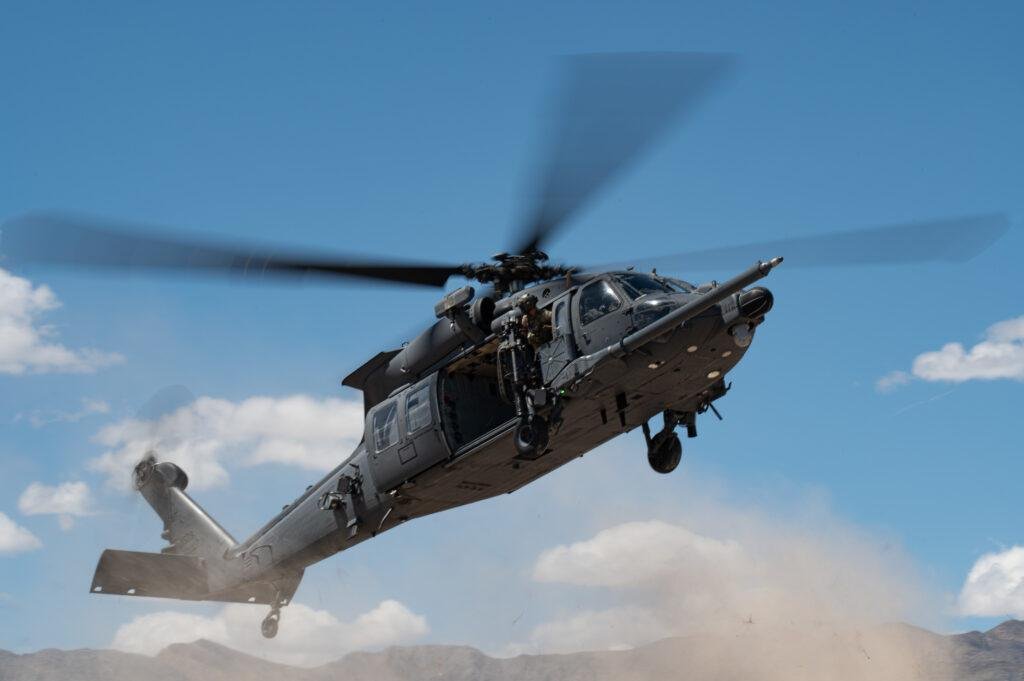
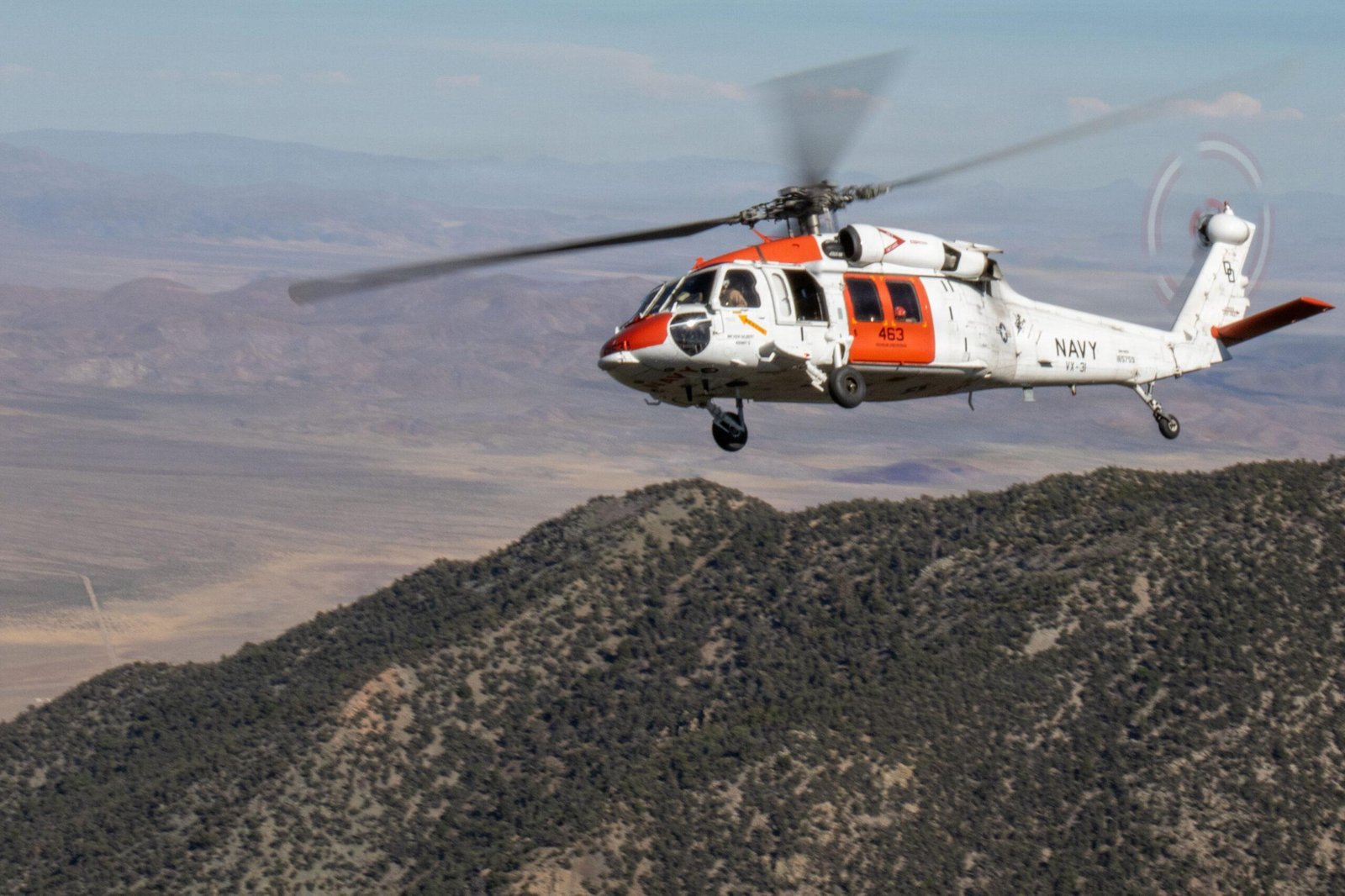
An HH-60W Jolly Green II rescue pulled five Navy sailors out of the mountains near Naval Air Weapons Station China Lake, California, on August 10, after their MH-60S Seahawk made a hard landing during a high-altitude training flight. Two Jolly Green IIs from Nellis Air Force Base, Nevada, launched within the hour and had the entire crew safely extracted by mid-afternoon.
The Air Force detailed the mission in a release published more than a week after the event, crediting rapid maintenance work and close coordination between multiple units for the fast turnaround.
Table of Contents
HH-60W Jolly Green II Rescue: How the Mission Unfolded
The Air Force Rescue Coordination Center received word at about 11:30 a.m. on August 10 that a Navy MH-60S Seahawk had made a hard landing in mountainous terrain during a high-altitude training mission near Naval Air Weapons Station China Lake. The Navy unit involved was not named in the Air Force’s release.
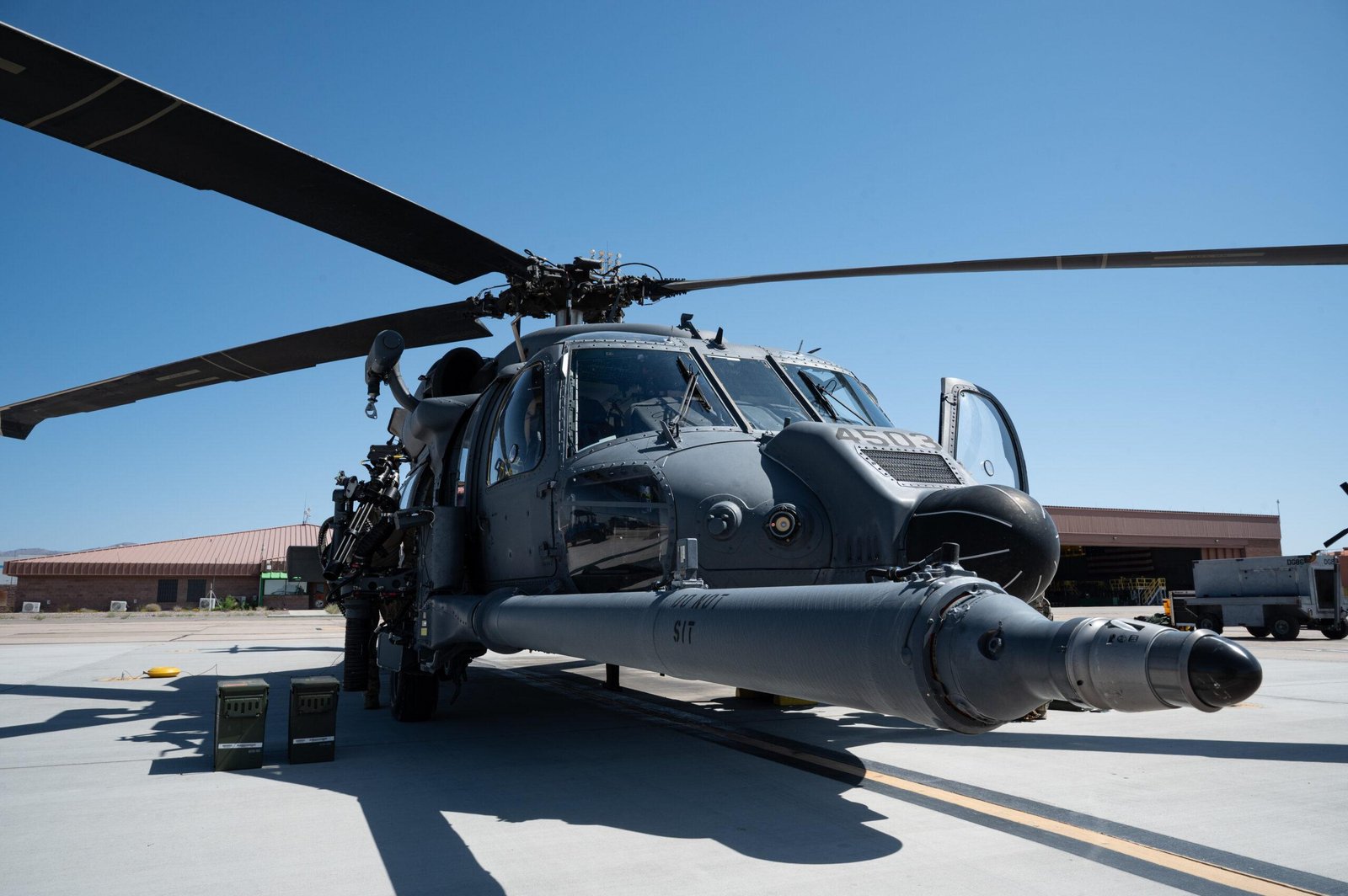
Airmen from the 88th Test and Evaluation Squadron immediately initiated a recall and began coordinating with the 355th Aircraft Maintenance Squadron, geographically located at Nellis but assigned to the 355th Wing, to get two HH-60W Jolly Green II helicopters ready to launch.
Within five minutes, I knew we had tails. Within 30 minutes, they were ready for us to go out.
Air Force maintenance lead, 355th Aircraft Maintenance Squadron
A Circuit-Breaker Problem, Solved in Minutes
The 355th Aircraft Maintenance Squadron generated both HH-60Ws in under 30 minutes despite a circuit-breaker issue on one aircraft, with no spare parts on hand to replace the faulty component. Maintainers traced the problem to a specific switch and found a way to keep the aircraft flightworthy without it.
Key details from the maintenance response include:
- Recall and generation completed in under 30 minutes
- A circuit-breaker fault traced to the master caution warning press-to-reset button
- No spare parts available, requiring an in-the-moment workaround
- Both HH-60Ws departed Nellis at 1 p.m., roughly 90 minutes after notification
Staff Sgt. Cody Adams, an avionics craftsman with the squadron, said the team diagnosed the press-to-reset button as the source of the fault and gave aircrew a workaround to keep the system operational for an on-time takeoff.
Finding and Recovering the Downed Crew
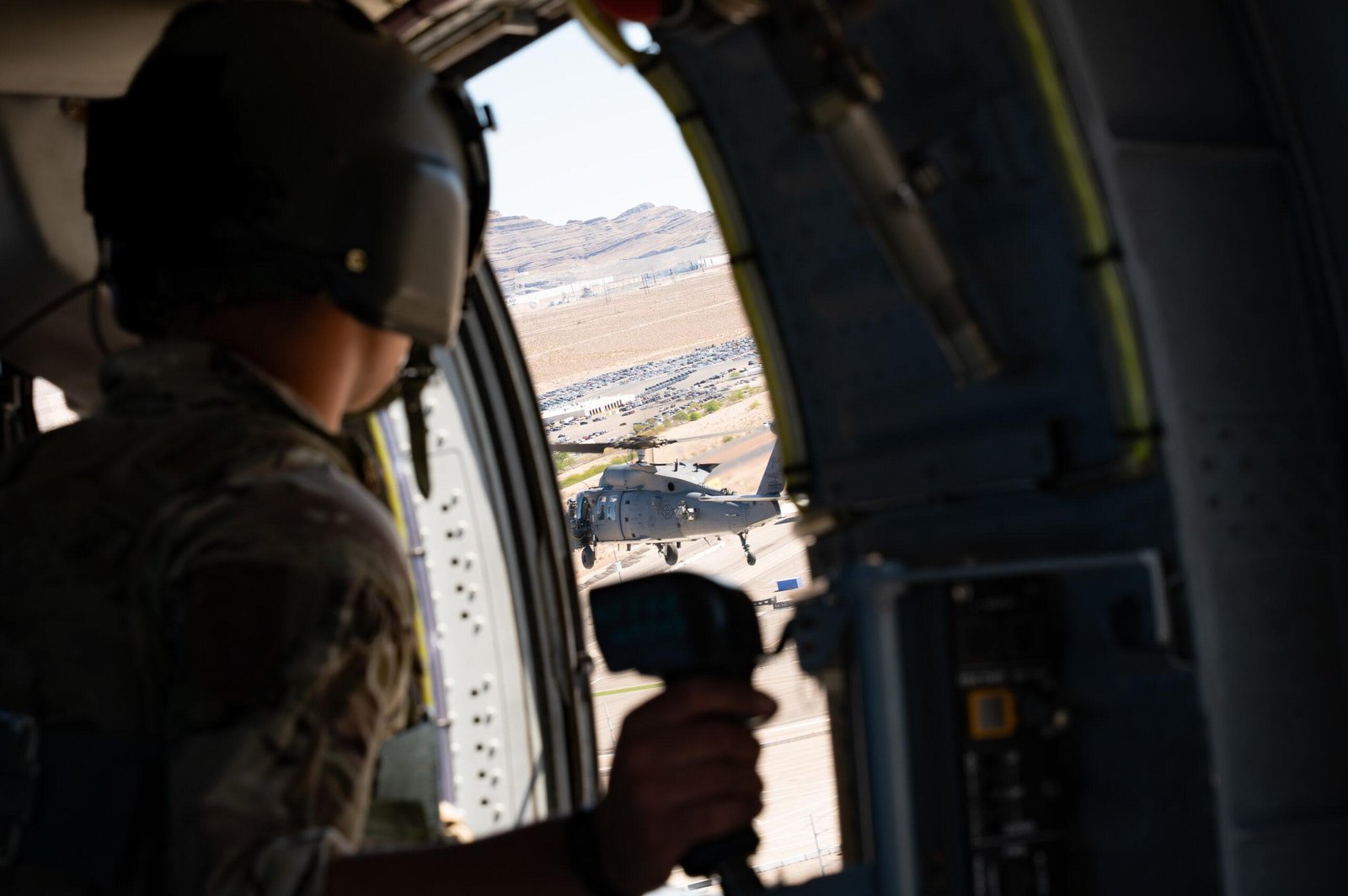
The two HH-60Ws established two-way radio contact and visually identified the downed Seahawk’s crew by 3 p.m., about two hours after departing Nellis. Capt. John Howe, an 88th Test and Evaluation Squadron combat rescue officer, led a pararescue team to the landing zone to assess the five sailors.
The team found no injuries among the crew, but determined the helicopters should reposition to a closer landing area to reduce the physical exertion required of the sailors before extraction. All five were safely aboard and transferred to Naval Air Weapons Station China Lake by 3:50 p.m., roughly four and a half hours after the initial hard landing.
The ability to have that impact is fulfilling.
Capt. John Howe, 88th Test and Evaluation Squadron
The Aircraft Behind the Rescue
The HH-60W Jolly Green II is the Air Force’s newest combat rescue helicopter, built by Lockheed Martin Sikorsky on the UH-60M Black Hawk airframe and named for the Vietnam-era HH-3 and HH-53 “Jolly Green Giant” rescue helicopters. It reached initial operational capability in September 2022 and is gradually replacing the aging HH-60G Pave Hawk fleet across Air Combat Command, Air Education and Training Command, the Air National Guard and other major commands.
Compared to the Pave Hawk, the HH-60W offers improved hot-weather and high-altitude performance, a fully digital glass cockpit and extended range with aerial refueling capability, qualities well suited to the desert and mountain terrain surrounding both Nellis and China Lake.
FAQ: HH-60W Jolly Green II Rescue
What happened to the Navy helicopter?
A Navy MH-60S Seahawk made a hard landing in mountainous terrain during a high-altitude training flight near Naval Air Weapons Station China Lake, California, on August 10.
Was anyone hurt in the incident?
No. All five Navy sailors aboard the Seahawk were uninjured and were extracted safely by the Air Force rescue team.
Which units carried out the rescue?
The 88th Test and Evaluation Squadron and the 355th Aircraft Maintenance Squadron, both based at Nellis Air Force Base, Nevada, generated and flew the two HH-60W Jolly Green II helicopters used in the rescue.
Looking Ahead
The rescue underscores how quickly Air Force combat search and rescue units can respond when other services need help in remote terrain. The Aviation Diary will continue covering HH-60W operations, combat rescue missions, and other developments across the Air Force’s search and rescue community.
Source
- Stars and Stripes: Air Force rescues Navy crew from damaged helicopter in California desert
- Air & Space Forces Magazine: Nellis HH-60Ws Rescue Navy Helicopter Crew in California Mountains
- Nellis Air Force Base: U.S. Air Force Airmen conduct rapid rescue of Navy helicopter crew