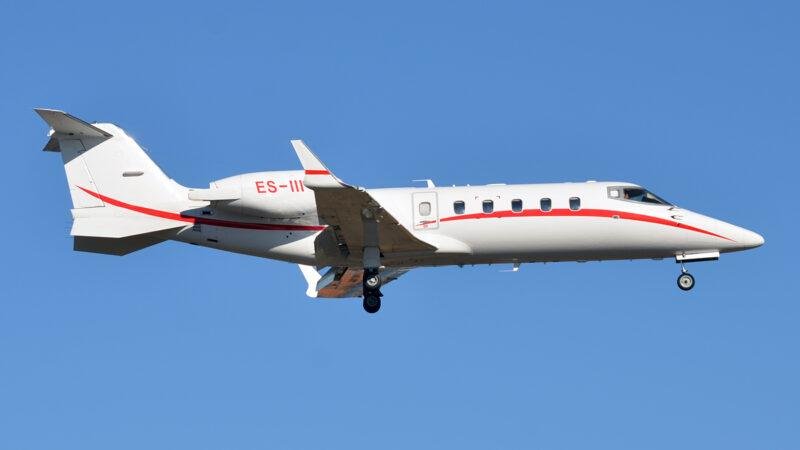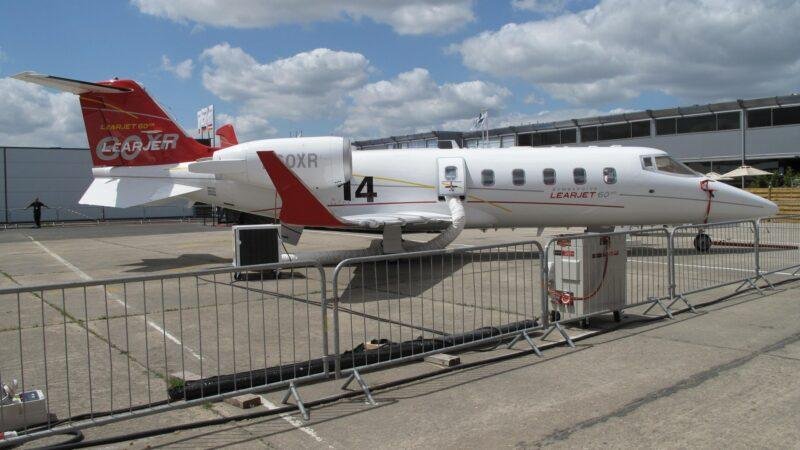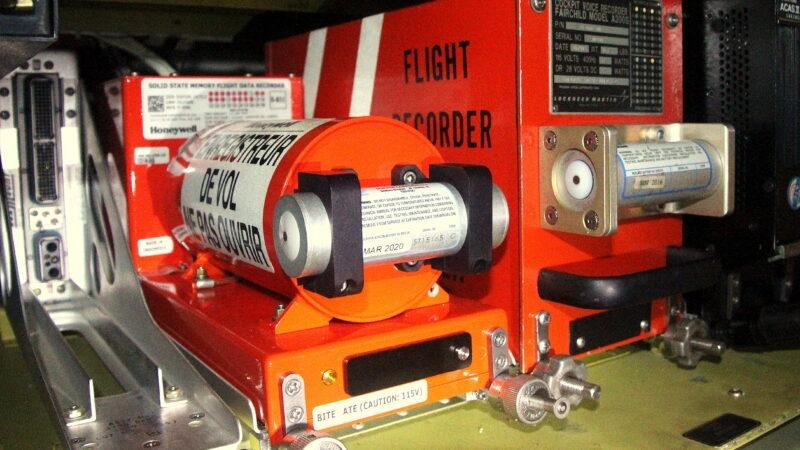
Learjet crash recovery entered a new phase on Nov. 8 after the National Transportation Safety Board said it had completed most work at the scene of the Nov. 1 Learjet 60 accident near Greenacres, Florida. Excavation of the main impact area was the remaining on-scene investigative activity, the agency said.
The latest NTSB case update identifies recovered parts of the aircraft’s wings, engines, flight deck, tail and control surfaces. Some components have been transferred to NTSB laboratories in Washington, D.C. for closer examination.
The development is about evidence collection and recovery-site access, not a conclusion about why the aircraft went down. The investigation remains open, and the agency has not announced a probable cause.
Table of Contents
Learjet crash recovery clears surrounding locations
The NTSB said its teams had finished on-scene investigative activities at the Green Acres Mobile Home Community, Reading Truck, Silver Oaks Plaza, Value Store It Self Storage and John I. Leonard High School. That statement defines areas cleared for investigative purposes, rather than guaranteeing when every affected property can return to normal operations.
Excavation of the principal impact site remains underway. The agency’s earlier Nov. 5 update described recovery activity in the excavation area and discovery of wreckage beyond it, including on or near buildings. Continued excavation reflects an effort to find additional material that could become relevant to the eventual reconstruction of the accident.
The NTSB’s Nov. 8 account does not say that all physical evidence has been recovered or that the field examination has definitively ended. Residents and property owners should continue to follow local recovery guidance for access and safety, rather than interpreting the investigative clearance as a blanket public reopening.
Recovered wings and engines are headed for analysis
Investigators identified material associated with both wings and both engines, along with pieces from the flight deck, vertical stabilizer, horizontal stabilizer, left elevator, aileron sections and several flap-track assemblies. Such a wide-ranging inventory permits specialists to examine different aircraft structures and systems rather than one isolated part.
The board has sent some recovered items to its Washington laboratories. Those examinations may help the investigative team document fracture features, component condition and damage patterns, but the NTSB has not publicly reported results from those tests. Finding a part at a particular location does not, by itself, prove when or why the part separated from the aircraft.
TAD’s earlier Learjet crash investigation report covered preliminary indications that some wreckage may have separated before impact. The newly published recovery inventory supplies more detail about what investigators have found. It does not establish the sequence of any separation or convert the earlier indication into a confirmed cause.
NTSB requests outstanding debris from the public
The agency is asking anyone who has found or collected possible aircraft debris not to keep, move, alter or discard it. Instead, people should email witness@ntsb.gov to arrange collection and include a photograph if one can be provided safely. This request applies even if a piece appears small or unrelated to a major aircraft component.
Recovering and documenting all available wreckage helps investigators maintain a fuller record of the accident. Publicly collected pieces may be material that the official search has not yet included. The NTSB’s notice asks people to coordinate recovery, not to approach restricted areas or undertake their own search at the impact site.
The Nov. 1 flight had departed Austin-Bergstrom International Airport in Texas for North Eleuthera in the Bahamas. It was operated by Aurora Aviation, doing business as Upper Jet. The NTSB investigation identifier is ERA27MA026, which provides a consistent reference for subsequent updates. Community information about recovery operations is available through Palm Beach County’s public portal.
FAQ: Learjet crash recovery
What did the NTSB find during Learjet crash recovery?
The agency listed parts from both wings, both engines, the cockpit area and several tail and control-surface assemblies. It has not announced results from the examination of those parts.
Is the Learjet 60 investigation finished?
No. The main impact-site excavation continues, laboratory examinations remain ahead, and the NTSB lists investigation ERA27MA026 as ongoing.
What should residents do if they find aircraft debris?
They should avoid disturbing or discarding it and contact witness@ntsb.gov, providing a photograph if possible, so the NTSB can arrange recovery.
Looking Ahead
Investigators will continue the impact-site excavation and assess recovered components, including those in the Washington laboratories. A date for a final probable-cause determination has not been announced. Any further reporting must distinguish verified examination findings from preliminary observations or untested theories.
Sources
- NTSB: Learjet 60 accident investigation ERA27MA026, Nov. 8 update
- WFLX: NTSB completes most on-scene work in Greenacres investigation