ARRW missile production is moving forward after Lockheed Martin announced a $694 million U.S. Air Force contract on October 27, 2026, to build the AGM-183A Air-Launched Rapid Response Weapon. The award changes the program conversation from whether additional development will occur to how the Pentagon and its contractor intend to establish a repeatable manufacturing effort.
Lockheed Martin said it is preparing a production line in Troy, Alabama, alongside further work to support aircraft integration. The announcement is consequential because the air-launched hypersonic program has faced scrutiny and an uncertain acquisition path after earlier flight tests. A production contract, however, should not be mistaken for an announcement that the missiles are already fielded.
Table of Contents
ARRW Missile Production and the Air Force Contract
The official announcement describes a $694 million production award for the AGM-183A. That is a contract value, not a count of delivered weapons or a disclosure of how many missiles will ultimately be bought. Lockheed Martin did not provide a public missile quantity in the announcement, so the procurement scale cannot be inferred from the dollar figure alone.
The manufacturer also cited a 47,000-square-foot production expansion at its Troy, Alabama, facility. This investment is separate from the contract amount and is intended to support manufacturing work. Facility preparations indicate that production capacity is being organized; they do not, by themselves, establish an operational delivery date or production rate.
What the AGM-183A Weapon Is Designed to Do
ARRW is an air-launched hypersonic missile developed to give the U.S. military a long-range, rapidly traveling strike option. Lockheed Martin describes the system as capable of speeds above Mach 5, although publicly released material does not provide a complete, independently verifiable performance envelope. The weapon is associated with bomber carriage and release rather than a ground-based launcher.
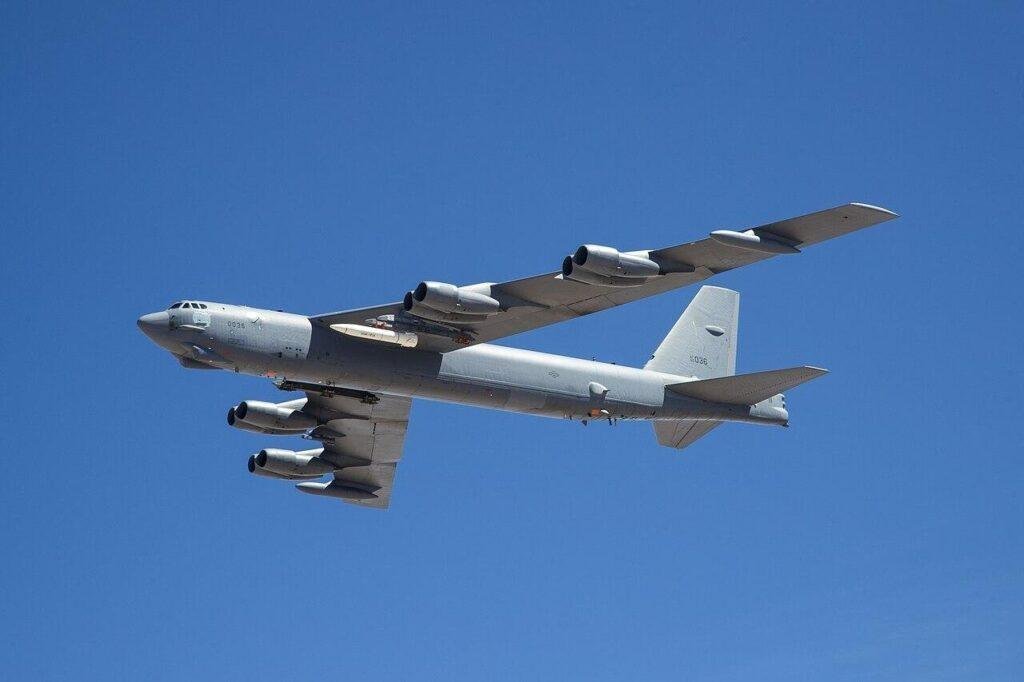
The Boeing B-52 has been central to the publicly visible testing and integration effort. Airborne carriage and flight-test achievements help engineers validate the interface between a missile and its launch aircraft, but they are not equivalent to certification of every operational configuration. Future units will also need to satisfy the Air Force’s production, reliability and acceptance standards.
How This Award Changes the Program
The new contract follows a period in which ARRW’s development results and future procurement were debated. A move to a production arrangement signals that the Air Force has made a new acquisition decision, yet the announcement does not explain every underlying requirement, test result or contingency. The contract should be reported as an award rather than proof that all previous technical questions have been resolved.
Lockheed Martin frames the decision as part of a broader effort to expand domestic missile manufacturing. That industrial angle matters because hypersonic programs require specialized materials, testing, assembly and quality assurance. earlier TAD coverage previously examined Lockheed Martin’s wider order backlog; this award adds a defined Air Force program to the company’s future manufacturing workload.
What Remains Unconfirmed
Neither the official release nor the contract announcement provides a public first-unit delivery schedule, inventory target or operational deployment location. Those details would be necessary to assess when commanders could use the new weapon rather than simply receive it from a supplier. Reporting an initial operational capability date now would go beyond the available evidence.
The Air Force has also pursued other hypersonic efforts, which makes it important to distinguish ARRW by program name and contract status. The manufacturer’s performance claims are useful context but should remain attributed. The immediate confirmed milestone is the manufacturing contract, with further verification needed as production milestones are announced.
FAQ: ARRW missile
What is the ARRW missile contract worth?
Lockheed Martin announced a $694 million U.S. Air Force award. The release did not state how many missiles that total buys.
Has the AGM-183A entered operational service?
The announcement establishes production activity, but it does not identify an operational deployment date or confirm a fielded inventory.
Which aircraft is associated with ARRW?
The B-52 has featured in public flight-test and integration material. The release does not certify every prospective launch platform.
Looking Ahead
Lockheed Martin is expected to continue production preparations at Troy and aircraft integration work under the Air Force arrangement. Officials have not announced a publicly confirmed initial delivery or deployment timeline in the material reviewed, so the next measurable milestone will be a documented manufacturing or acceptance update.
Sources
news.lockheedmartin.com — original announcement