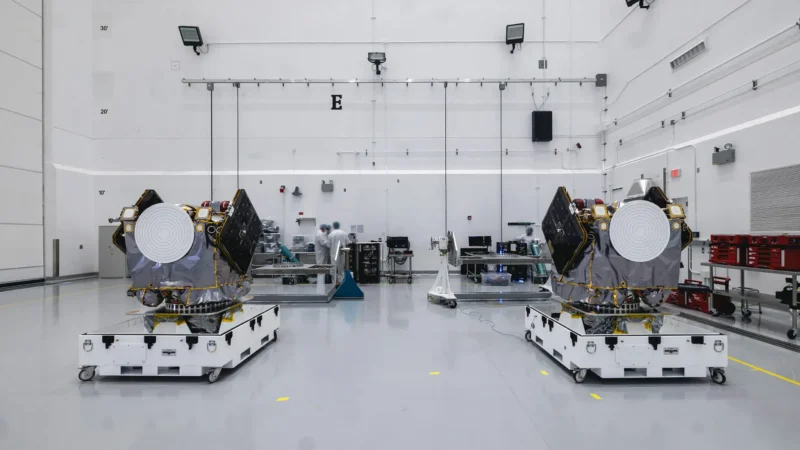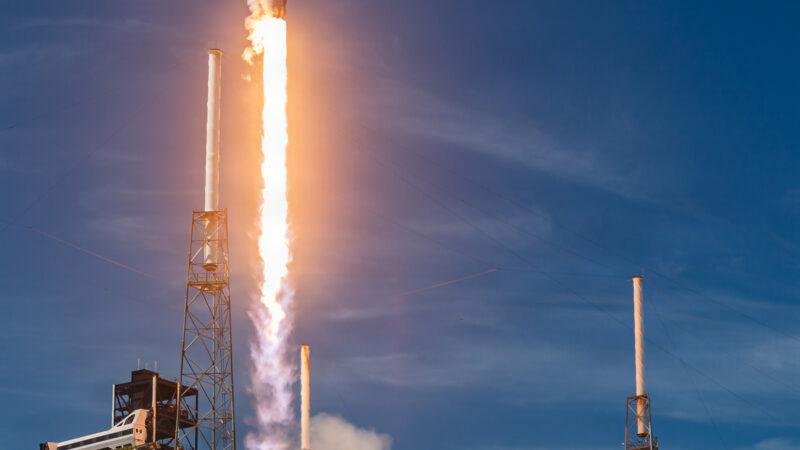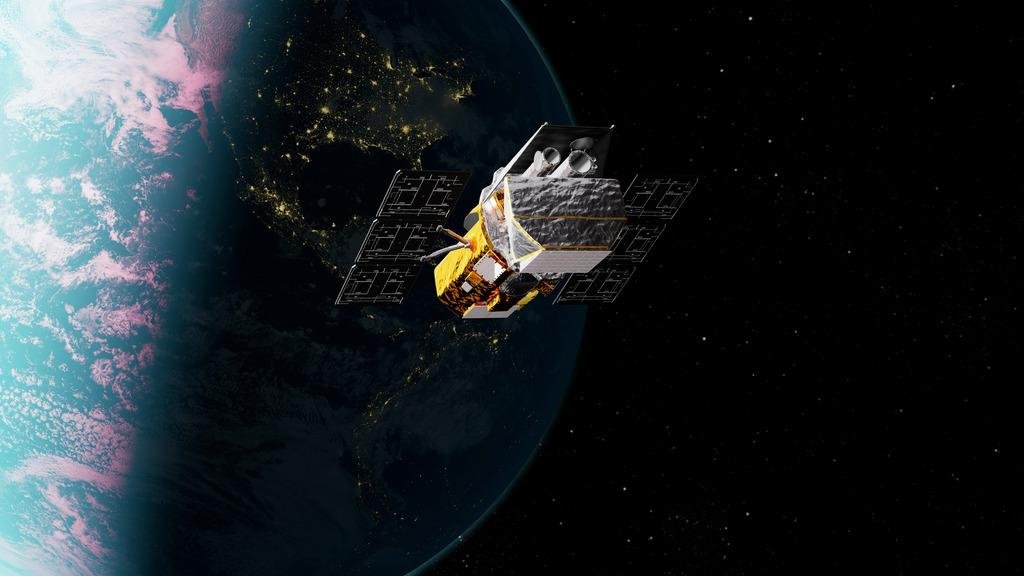
NASA Swift reentry is now expected on Nov. 4, with the U.S. Space Force forecasting that the Neil Gehrels Swift Observatory will return to Earth’s atmosphere nearly 22 years after its launch. NASA released the forecast on Nov. 2 and stressed that both the timing and the location remain uncertain.
The latest estimate placed reentry at about 3:30 a.m. Eastern time on Wednesday, with an 11-hour uncertainty window. NASA said most of the roughly 3,200-pound spacecraft should burn up, although some components could survive. The agency has not identified a specific impact location.
The forecast closes a long science mission rather than describing a planned landing. Space Force tracking and NASA updates will determine whether the prediction changes as atmospheric drag affects the satellite’s final orbits.
Table of Contents
NASA Swift reentry forecast and possible debris
NASA said any surviving material would be limited geographically by the spacecraft’s orbit. Because Swift’s orbital inclination is relatively low, the potential reentry zone extends between about 20.6 degrees north and 20.6 degrees south latitude. That is a broad equatorial band, not a forecast for a specific country, coastline or population center.
The agency estimated the chance of harm to any person at approximately one in 2,100. That risk estimate should not be confused with a probability that pieces will strike a particular home or city. The expected timing can also move as tracking observations and atmospheric conditions change.
Officials expect much of the vehicle to disintegrate under intense aerodynamic heating. NASA nevertheless acknowledged that some components could withstand the descent, a normal consideration in uncontrolled spacecraft reentries. Readers should rely on updated agency predictions rather than treating an early estimated time as the exact moment of return.
A mission built to investigate gamma-ray bursts
Swift launched in 2004 to study gamma-ray bursts, extremely energetic flashes associated with some of the universe’s most violent events. Its original prime mission was designed for about two years, but the observatory went on to work for more than two decades. That exceptionally long operating life allowed repeated observations of transient objects and follow-up science.
The spacecraft carried three telescopes designed to observe different kinds of light. Its ability to detect a short-lived event, rapidly turn toward it and alert other observatories was central to its scientific role. Coordinated observations matter because a fading burst may be invisible in one instrument by the time another facility is ready.
NASA also credits Swift with work on active galaxies, stars producing X-ray flares, supernovae and objects in the solar system. The observatory’s record therefore extends beyond the gamma-ray bursts for which it was originally developed. Its impending atmospheric return does not erase those archived observations or the research that continues to draw on them.
Why an exact reentry point cannot yet be identified
An orbiting spacecraft’s final descent depends in part on the resistance it encounters in the upper atmosphere. Small changes in that resistance can affect when it slows enough to return, even when its orbital track is being monitored continuously. A timing uncertainty of several hours can translate into a large distance along the ground track.
NASA’s Nov. 2 announcement gave a predicted time and orbital latitude bounds, but did not publish a landing point or debris footprint. Nor did it claim that the public would be able to observe a controlled descent. Those distinctions matter as maps and speculative reentry predictions circulate online.
For context about a different NASA spacecraft effort, The Aviation Diary previously covered the SR-1 Freedom nuclear Mars spacecraft program. That project is unrelated to Swift’s end-of-mission reentry and has its own development milestones.
FAQ: NASA Swift reentry
When is NASA Swift reentry expected?
As of NASA’s Nov. 2 update, the estimate was about 3:30 a.m. EST on Nov. 4, 2026, with an uncertainty window of 11 hours.
Will every part of the Swift spacecraft burn up?
NASA expects most of the spacecraft to burn up, but it said some components may survive atmospheric reentry.
Where could surviving Swift debris land?
NASA placed the possible latitude band between approximately 20.6 degrees north and 20.6 degrees south. It did not identify a precise location.
Looking Ahead
NASA and the U.S. Space Force will keep tracking Swift and adjusting the reentry prediction. The next report should be checked before publication, because the spacecraft may reenter earlier or later than the initial forecast. Confirmation of the actual reentry, rather than the current estimate, would warrant a separate short update.
Sources