Artemis III test planning gained new operational detail on Oct. 23, 2026, when NASA outlined how an Orion crew will attempt sequential docking demonstrations with lunar-lander test vehicles from Blue Origin and SpaceX during a mission planned for 2027.
The roughly 14-day flight will stay in low Earth orbit. NASA intends to rehearse critical spacecraft interactions before Artemis IV, which the agency identifies as the first planned crewed Moon landing in 2028. A successful test would provide engineering evidence, not a landing on the lunar surface.
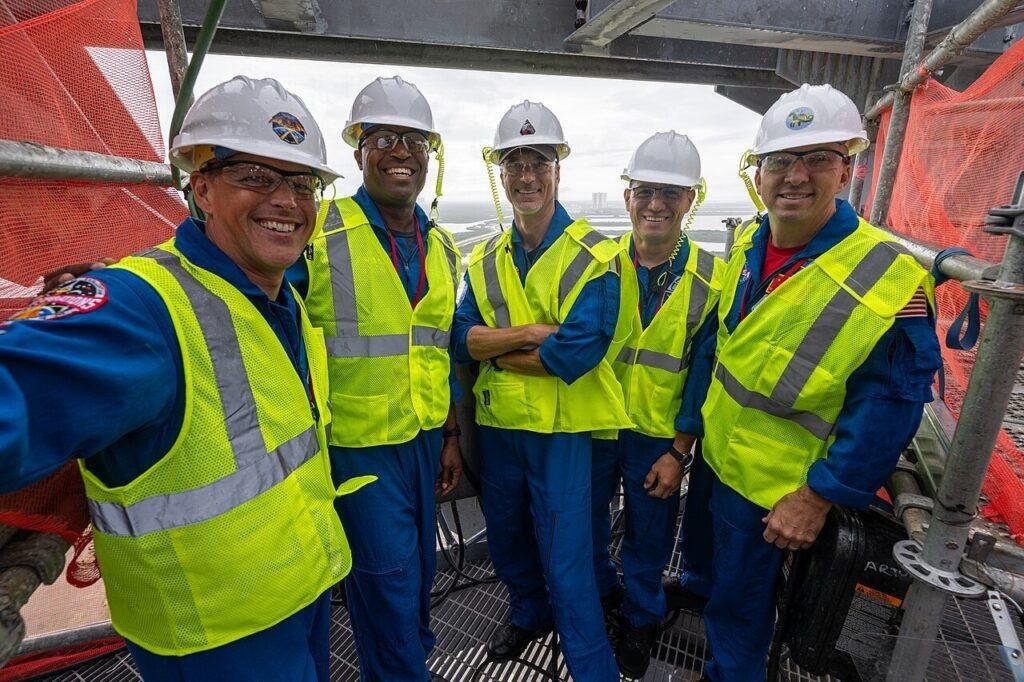
The four-person crew of Randy Bresnik, Luca Parmitano, Andre Douglas and Frank Rubio was announced in June, not today. The October update is about the proposed order, orbits and operational scope of the mission’s spacecraft demonstrations.
Table of Contents
Artemis III Test Begins With Blue Moon
NASA’s October 23 mission description calls for Blue Origin to send a Blue Moon Mark 2 lander test article into a circular orbit roughly 273 miles above Earth. NASA says the vehicle can remain available for up to 30 days, giving planners some launch flexibility.
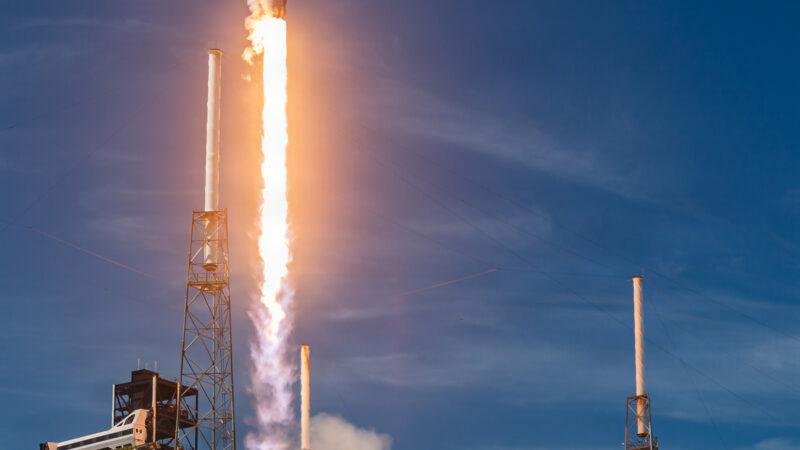
After confirming that the lander is in acceptable condition, NASA would launch the Orion spacecraft carrying four astronauts on the Space Launch System rocket from Kennedy Space Center. Orion would initially enter an elliptical orbit and conduct engine maneuvers to transition toward the lander.
The first two days are scheduled for Orion system checks and preparation for proximity operations. Astronauts and flight controllers would then practice meeting and docking with Blue Moon while assessing guidance software, communication links and the behavior of the joined spacecraft.
NASA describes these activities as a way to measure interactions that cannot be fully reproduced by ground-based simulations. A planned orbital sequence is not the same as a completed flight, and mission dates and the exact activities remain dependent on readiness.
SpaceX Starship Follows in a Second Docking
The Artemis III test concept includes a second encounter with SpaceX. NASA says a Starship Version 3 test article would enter a lower orbit than the Blue Moon vehicle, with launch timed later in the mission because its planned on-orbit lifetime is shorter.
Orion would undock from Blue Moon and adjust its trajectory before attempting a rendezvous with Starship. NASA expects the joined configuration to be evaluated for a shorter interval, with the docking demonstration lasting up to two hours according to the agency’s mission outline.
NASA says the astronauts will not enter Starship during this test. Instead, engineers will examine integrated software behavior, control of the spacecraft, communications, and how the docking systems function together in orbit.
The two landers use distinct docking approaches: NASA describes a connection near Blue Moon’s crew cabin and a forward-facing docking mechanism on Starship. Testing both in the same mission would give NASA comparative experience before lunar landers carry crews near the Moon.
Crew, Risks and the Planned Lunar Sequence
The crew announcement dated June 9 named Bresnik as commander, Parmitano as pilot, and Douglas and Rubio as mission specialists. The astronaut assignments are important background, but their selection is not an October 23 development.
Artemis III adds complexity because three vehicles would be launched on separate rockets within a coordinated campaign. Launch timing, orbit adjustments, docking interfaces and communications across several organizations all become parts of the overall risk picture.
TAD previously covered Artemis III launch-system preparations. The new mission outline adds the specific sequence for working with commercially developed lunar lander hardware, rather than a repeat of booster assembly reporting.
NASA continues to describe Artemis IV as the first planned crewed lunar landing mission in 2028. The schedule is a target; the next step is to validate the spacecraft and flight procedures, not to declare a launch or landing complete.
FAQ: Artemis III test
Will the Artemis III test land astronauts on the Moon?
No. NASA plans to keep the crew in low Earth orbit while it tests Orion interactions with lander test vehicles.
Will the crew board SpaceX Starship during Artemis III?
NASA says no crew transfer into Starship is planned during the short docking demonstration.
When was the Artemis III crew named?
NASA announced the assigned astronauts on June 9, 2026. Its October 23 update elaborates on the mission sequence.
Looking Ahead
The Artemis III test remains targeted for 2027, subject to flight readiness and coordination among NASA, Blue Origin and SpaceX. NASA says lessons from these demonstrations are intended to support a crewed lunar landing as early as 2028.
Sources