Artemis III booster stacking reached a new assembly milestone after NASA completed the final solid rocket booster motor segments on the mobile launcher at Kennedy Space Center, the agency reported Oct. 13. The work supports a short-stack configuration that NASA plans to use for a future propellant-loading test.
The update distinguishes completed booster assembly from the remaining steps needed before a rocket can be prepared for a flight. NASA said teams had also installed all four RS-25 engines on the Space Launch System core stage, but integration work on several other rocket elements remains underway.
NASA’s account describes preparation for testing and further assembly, not an announcement that the Artemis III rocket is ready to launch. The agency did not provide a specific tanking-test date in the update.
Table of Contents
Artemis III Booster Work Reaches Assembly Milestone
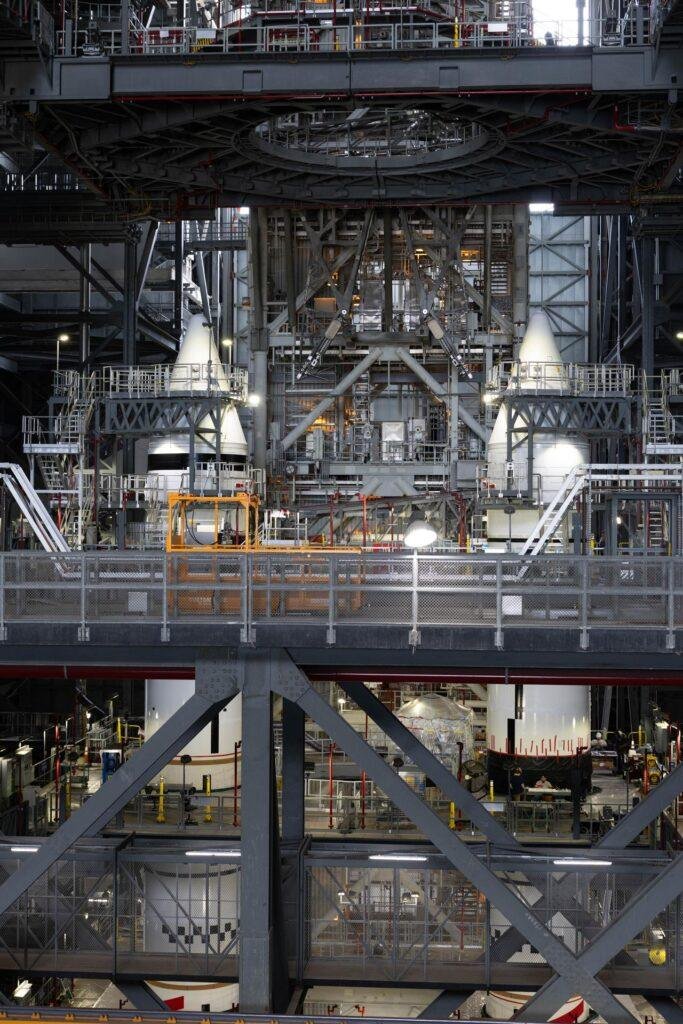
Inside Kennedy’s Vehicle Assembly Building, crews completed integration of the final solid rocket booster motor segments on the mobile launcher. NASA said the twin solid rocket boosters will provide more than 75% of the SLS rocket’s thrust during liftoff.
The agency described the build as a short-stack configuration because the forthcoming propellant-loading exercise will use the boosters and core stage rather than a complete flight-ready vehicle. That sequence enables ground teams to test relevant systems and procedures before all remaining spacecraft and upper components are installed.
According to NASA, the booster forward assemblies received their aerodynamic nose cones by Sept. 30. Each assembly includes structural and systems elements associated with booster separation. The agency’s October progress report treats those completed operations as part of the broader integration effort.
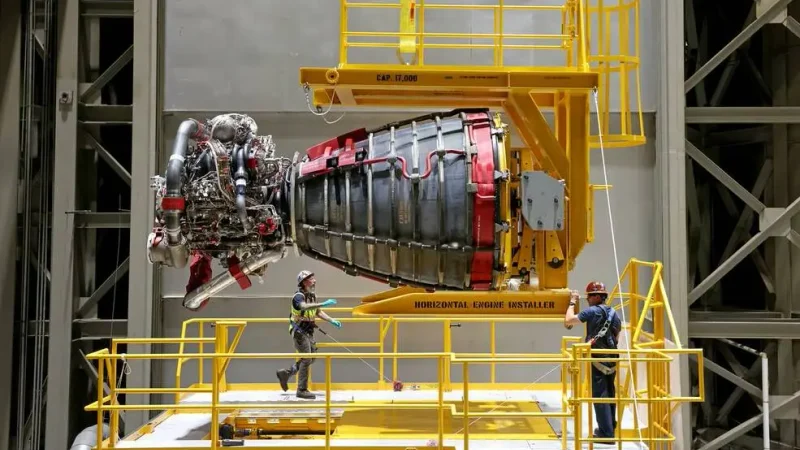
NASA also reported that all four RS-25 engines had been installed on the core stage. Engine installation is important preparation, but it is not equivalent to completion of every required launch preparation or qualification step.
Core Stage and Supporting Hardware Still Need Work
After the booster stacking milestone, technicians were scheduled to install the core stage’s systems tunnel, which routes pyrotechnic cabling along the stage. NASA said integration of the core stage with the boosters would complete the short-stack configuration.
The next major exercise described in the report involves rolling that configuration from the Vehicle Assembly Building to Launch Pad 39B for a tanking test. During the planned test, launch teams will rehearse procedures and timelines for loading propellant.
Other flight hardware is being prepared elsewhere. NASA reported work at Marshall Space Flight Center on a spacer intended to represent upper-stage dimensions during the mission, as well as modifications to two structural test articles for flight use.
The agency said primary structural work on the spacer had advanced while dimensional checks were underway. It also described inspections, painting and additional work required before the adapter hardware could be shipped to Kennedy.
These are separate elements of a complex rocket integration schedule. Progress on one component does not guarantee that every component is already ready, and the public update did not establish that all remaining work had been completed.
Orion Preparations Continue Alongside Rocket Assembly
NASA also reported spacecraft-related work and crew training. At Kennedy, technicians were inspecting solar-array wing hardware associated with Orion’s European service module. The agency described the panels as part of the system supplying spacecraft power during flight.
Crew preparations included equipment training and food-selection work. NASA’s report said astronauts practiced with a compact exercise device and sampled menu items, illustrating that readiness extends beyond assembling the launch vehicle.
These activities are not substitutes for upcoming ground tests, but they show parallel preparation streams involving rocket hardware, spacecraft systems and crew operations. The October update should therefore be read as a program status report rather than a single launch commitment.
For related TAD space coverage, the significant development is completion of a clearly described booster milestone, while the next integration and testing steps remain pending.
FAQ: Artemis III booster
What part of Artemis III booster assembly has been completed?
NASA said crews finished stacking the solid rocket booster motor segments and installed the forward assemblies’ nose cones.
Does Artemis III booster stacking mean the rocket is launch-ready?
No. NASA described further core-stage integration and a planned tanking test before later mission preparations.
Where will the next major ground test take place?
NASA plans to roll the short stack to Launch Pad 39B at Kennedy Space Center for a propellant-loading rehearsal.
Looking Ahead
NASA expects additional core-stage integration followed by a tanking test in the coming months, but its Oct. 13 update did not announce an exact test date. Progress reports should distinguish that rehearsal from a launch readiness review or flight date.
Sources