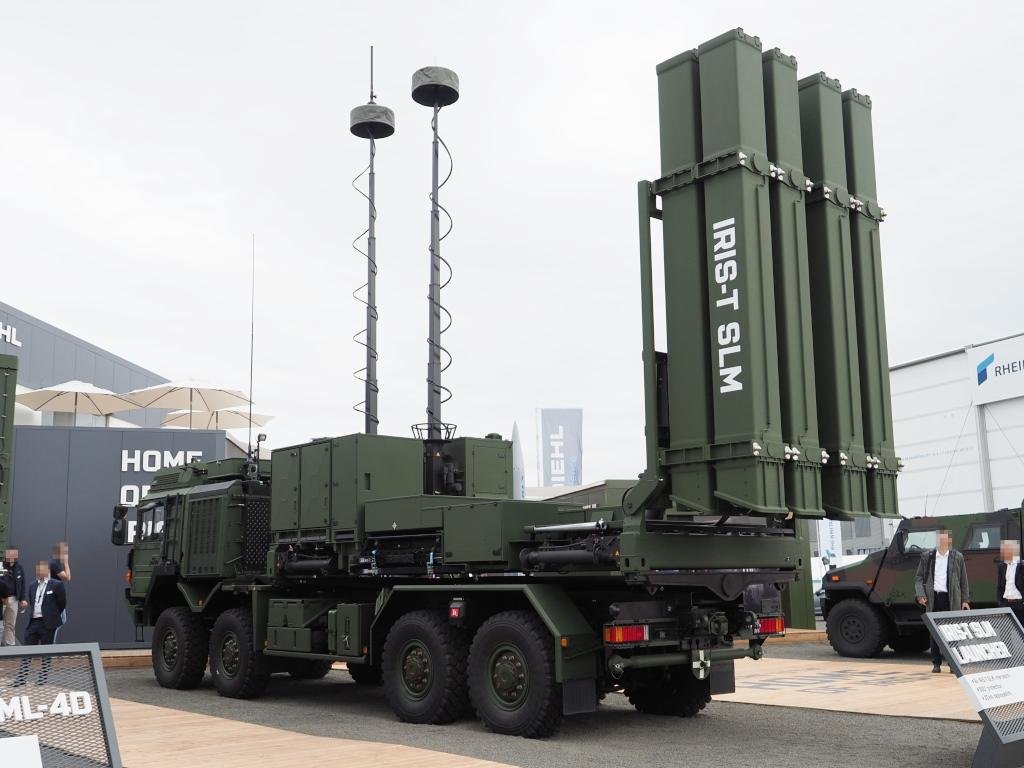
Airbus NATO air defense testing connected Germany’s IRIS-T SLM and Sweden’s Patriot systems through a shared command network during the SPARTAN ARROW 26 exercise in Crete. Airbus Defence and Space announced the multinational demonstration on Oct. 14, 2026.
The German Air Force conducted a live IRIS-T SLM firing coordinated through SAMOC, while Swedish forces carried out a Patriot live-firing event using the networked architecture, according to the manufacturer.
The exercise offers evidence of coordination between different national systems, but it does not show that a permanent NATO-wide missile-defense network has been deployed or that every possible threat was intercepted.
Table of Contents
Airbus NATO Air Defense Test Connects Two Allies
The Surface to Air Missile Operations Centre, or SAMOC, is a German command-and-control system used to coordinate ground-based air-defense assets. During the Crete exercise, it connected the German IRIS-T SLM and Swedish Patriot systems for the first time in the configuration described by Airbus.
The distinction matters because the two countries operate different missile systems with their own crews, equipment and procedures. Connecting them to a common command post allows participating personnel to coordinate information and responses without turning the systems into a single weapon or transferring every decision to software.
Airbus said the arrangement was designed to support defense against drones and cruise missiles under realistic exercise conditions. Its announcement describes network integration and live firings, not a complete public assessment of interception rates or performance against every category of target.
German and Swedish Crews Conduct Live Firings
Germany’s IRIS-T SLM firing was conducted with real missiles by an entirely German crew, with SAMOC providing coordination. Airbus called the event an important prerequisite for official NATO certification of the German capability, rather than saying all certification activity was finished.
The Swedish Air Force carried out its first independent Patriot live firing through the linked system. According to Airbus, the event marked NATO certification and validation of Sweden’s Patriot systems, while also demonstrating that the Swedish and German elements could work together in this exercise.
The German Army’s Light Air Defence System, known as LeFlaSys, was connected as another layer. LeFlaSys provides short-range protection, including against drones, while IRIS-T SLM and Patriot contribute capabilities at other ranges. The combined arrangement illustrates layered defense, with distinct systems contributing to a shared operational picture.
Airbus NATO air defense reporting should distinguish a successful demonstration from a completed force-wide deployment. Crews still need approved procedures, compatible communications and appropriate national authorities to operate together outside a controlled exercise.
Interoperability Data Will Guide Further Testing
Airbus said the exercise produced information on communications bandwidth, response times and resistance to jamming. Those measurements can help engineers identify how a network behaves when separate sensors, command posts and weapons must exchange information under demanding conditions.
The company did not publish detailed numerical results for those measurements in its release. Without that evidence, the demonstration should not be described as proof that every connection would work equally well in a different theater or against an unrestricted set of threats.
Airbus NATO air defense integration is therefore a development and validation story as much as a weapons story. The announcement concerns how existing national capabilities exchanged information during a particular NATO exercise, not the introduction of a completely new missile system.
Further national and NATO evaluations will determine how lessons from Crete affect training, software and future multinational exercises. Any wider fielding decision would need separate confirmation from the relevant military authorities.
FAQ: Airbus NATO air defense
Which systems were connected?
Germany’s IRIS-T SLM, Sweden’s Patriot and Germany’s short-range LeFlaSys were connected through SAMOC during the exercise.
Where did the demonstration take place?
Airbus said the live-fire exercise, SPARTAN ARROW 26, took place in Crete, Greece.
Did NATO deploy a new air-defense shield?
No. The Airbus NATO air defense announcement describes exercise integration and testing, not a newly fielded alliance-wide shield.
Looking Ahead
The next useful evidence will be official German, Swedish or NATO assessments describing certification progress, lessons from the live firings and any subsequent multinational demonstrations. Airbus has not published a schedule for permanent deployment of this specific network arrangement.
Sources
- Airbus Defence and Space — German and Swedish air-defense integration (Oct. 14, 2026)
- Air Data News — Airbus links German and Swedish air defense systems (Oct. 14, 2026)