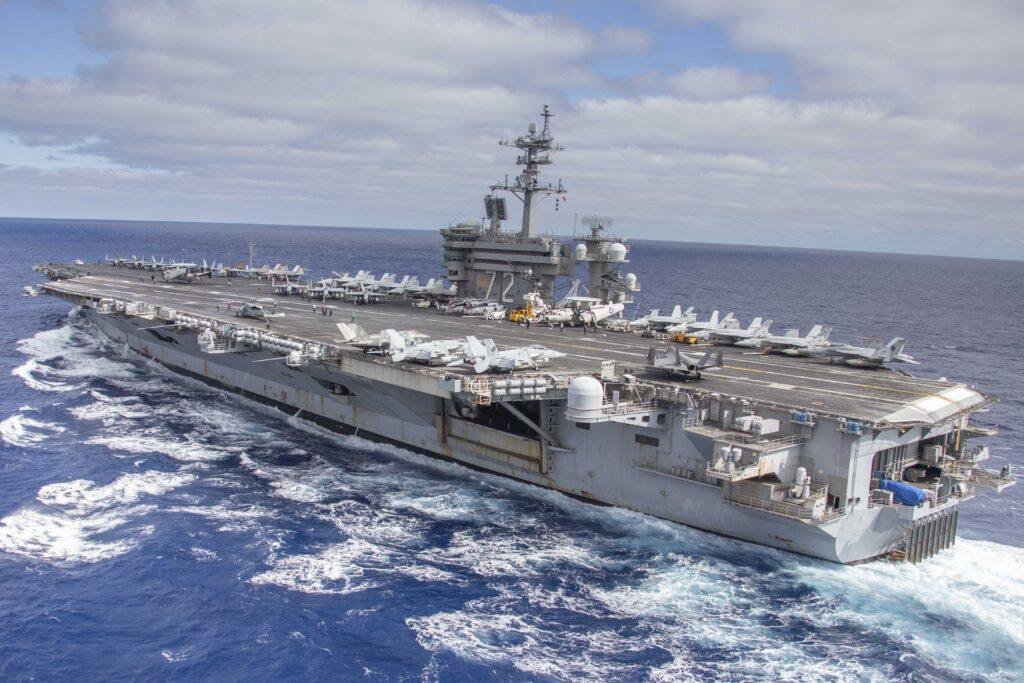
USS Abraham Lincoln returned to San Diego on Oct. 8, 2026, ending a 321-day deployment that took its carrier strike group from the Pacific into the war against Iran. The Nimitz-class aircraft carrier docked at Naval Air Station North Island following an extended mission in the Middle East.
A day before the homecoming, Defense Secretary Pete Hegseth presented the Abraham Lincoln Carrier Strike Group with the Presidential Unit Citation. Pentagon figures accompanying the recognition credited the group with 3,693 combat sorties, 450 Tomahawk cruise-missile launches and the sinking of 64 Iranian warships.
Those are U.S. military-reported operational results, not an independently audited account of each engagement. The deployment also drew scrutiny over its length, resupply difficulties and the wellbeing of sailors aboard the carrier and its escort vessels.
Table of Contents
USS Abraham Lincoln Ends an Extended Deployment
The carrier departed San Diego on Nov. 21, 2025, initially operating in the Indo-Pacific before being redirected toward U.S. Central Command. Its strike group entered the Middle East in late January, ahead of the start of U.S. and Israeli strikes on Iran on Feb. 28.
According to the Navy’s post-deployment account, USS Abraham Lincoln traveled more than 93,000 nautical miles and conducted 72 replenishments at sea. Its aviation operations depended on aircraft handlers, maintenance teams, fueling crews and escorts as well as pilots.
The mission included a lengthy period without a routine port visit. After leaving the Middle East in August, the carrier called in Thailand and made a logistics stop in Guam before returning to California.
Pentagon Reports 3,693 Combat Sorties and 450 Tomahawks
During the Oct. 7 award presentation, Hegseth said the strike group completed 3,693 combat sorties, delivered approximately 1.37 million pounds of ordnance and launched 450 Tomahawk land-attack missiles. The cited results also included 77 one-way attack drones shot down and 21 anti-ship cruise missiles destroyed.
The Navy attributed the sinking of 64 Iranian warships to the broader carrier strike group. That wording matters: Tomahawk missiles were launched by accompanying surface combatants, not from the aircraft carrier’s flight deck. The carrier air wing and escort ships performed different missions within the same operation.
The figures describe activity credited by the U.S. government to its forces. Public accounts do not supply independent verification of every target or an individual engagement-by-engagement breakdown. A subsequent Navy summary used a higher figure for the amount of ordnance delivered, making attribution and reporting dates particularly important.
Flight Operations Require Extensive Support at Sea
Beyond the combat tally, the Navy reported that Carrier Air Wing 9 supported more than 13,000 aviation sorties during the deployment. Those flights included a much wider range of operations than the combat sorties cited in the Presidential Unit Citation.
Aircraft aboard USS Abraham Lincoln included Super Hornet fighters and F-35C Lightning II aircraft, supported by airborne early-warning, electronic-warfare and helicopter units. Keeping those aircraft flying over months at sea required routine inspections, repairs, fuel and weapons handling, and coordinated launch-and-recovery cycles.
The Presidential Unit Citation recognized the group’s operational performance during Operation Epic Fury. It did not mean the carrier alone carried out every reported strike or that the military’s assessments of damage were independently confirmed.
Long Deployment Brings Crew Welfare Into Focus
The USS Abraham Lincoln homecoming followed reports about difficulties obtaining supplies and sustaining morale during the prolonged operation. In an August statement, acting Navy Secretary Hung Cao acknowledged that combat deployments disrupt normal routines while defending the decisions made to support the mission.
The Navy subsequently told lawmakers that eight service members in the strike group had attempted suicide during the deployment, according to reporting by the Associated Press and Stars and Stripes. That disclosure added urgency to questions about access to mental-health support and the strain on service members and their families.
Hegseth acknowledged the demanding deployment while rejecting descriptions of a failed mission. The ship’s return brought families back together, but it also left lessons to assess about sustained carrier operations, supply resilience and support for crews during future deployments.
FAQ: USS Abraham Lincoln
How long was the USS Abraham Lincoln deployment?
The Navy reported 321 days from departure on Nov. 21, 2025, to its return to San Diego on Oct. 8, 2026.
Did USS Abraham Lincoln launch 450 Tomahawks?
The Pentagon credited 450 launches to the carrier strike group. Tomahawk missiles were fired by escort warships, not by the carrier itself.
Are the reported combat results independently verified?
The figures are attributed to U.S. military officials. Public reporting does not independently verify every claimed engagement or target result.
Looking Ahead
The carrier is back at homeport, but officials have not announced a comprehensive public accounting of individual combat engagements or a final review of all crew-welfare concerns. Further Navy operational summaries and responses to congressional questions are the next documents to watch.
Sources
- U.S. Department of War — Hegseth Visits USS Lincoln Ahead of Homecoming (Oct. 7)
- U.S. Department of War — USS Abraham Lincoln Returns to San Diego (Oct. 9)
- USNI News — Abraham Lincoln Carrier Strike Group Returns (Oct. 8)
- Stars and Stripes — Abraham Lincoln Strike Group Receives Unit Award (Oct. 7)
- Associated Press — USS Lincoln Returns Home (Oct. 8)
- U.S. Navy — Statement from Acting Secretary Cao (Aug. 14)