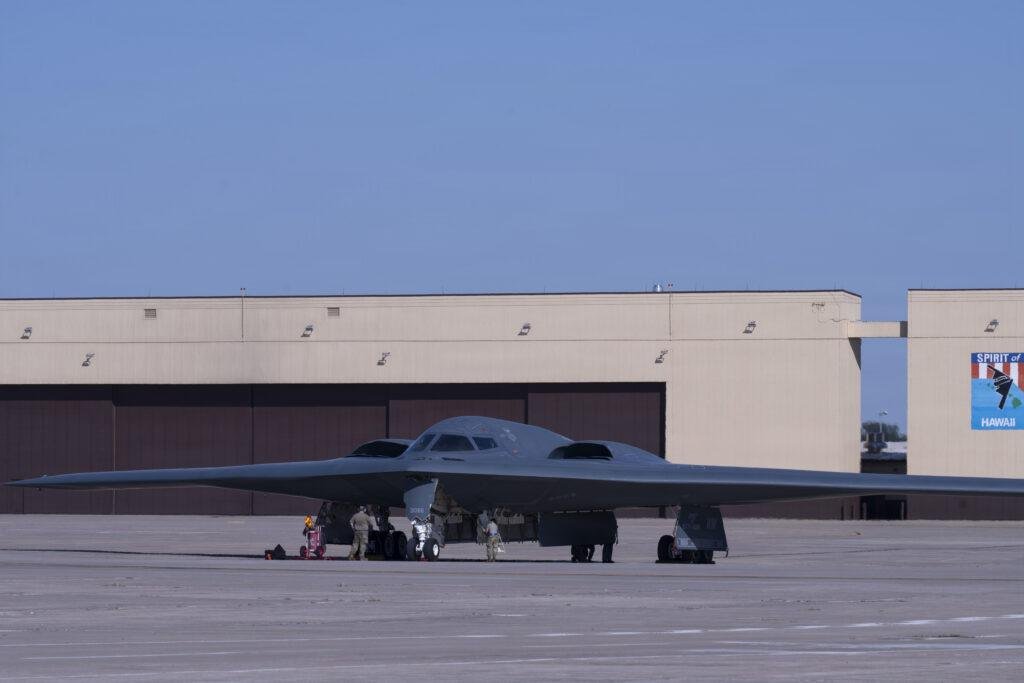
B-2 Kitty Hawk returned to Whiteman Air Force Base in Missouri on Oct. 7, 2026, following scheduled depot maintenance at Air Force Plant 42 in Palmdale, California. The aircraft, formally named Spirit of Kitty Hawk and identified by tail number 93-1086, is part of the U.S. Air Force’s small B-2 Spirit bomber fleet.
The Air Force Life Cycle Management Center confirmed the B-2 Kitty Hawk’s return in an Oct. 10 announcement. Its account describes structural repairs, restoration of low-observable surfaces and an unusually extensive replacement of a heat-exposed section of the bomber’s trailing edge.
The homecoming completed the depot phase, not the entire modernization schedule. The Air Force said the bomber would move into a 509th Bomb Wing modification line for further stealth and communications upgrades; it did not give a date for completion of that follow-on work.
Table of Contents
B-2 Kitty Hawk Completes Its Palmdale Depot Maintenance
Programmed depot maintenance, known as PDM, is a recurring process that allows teams to inspect and repair areas not ordinarily addressed during routine flight-line work. Northrop Grumman managed this cycle under the direction of the Air Force Life Cycle Management Center’s B-2 Program Office.
The work included heavy structural maintenance and attention to the coatings and surfaces that help reduce the B-2’s detectability. The Air Force also identified maintenance of blade seals as a normal part of the depot workload. These seals help close gaps around moving aircraft structures, including certain doors.
For a stealth bomber, surface condition is more than a cosmetic concern. Low-observable performance relies partly on the aircraft’s shape, materials and coatings. Restoring those characteristics requires specialized processes alongside conventional inspections of aging structures and systems.
Hot Trailing Edge Replacement Was a Key Repair
The most distinctive item in this visit was replacement of the B-2 Kitty Hawk’s hot trailing edge. The Air Force described it as a structural assembly exposed to thermal and acoustic fatigue associated with the bomber’s four engines. Replacing it addresses a specific sustainment requirement rather than introducing an entirely new aircraft design.
Depot personnel also encountered unexpected maintenance findings. According to the Air Force, they kept the work moving by arranging a part swap with another bomber arriving for maintenance and manufacturing an additional replacement component at the facility.
Those details show why an extended depot visit cannot be reduced to a fresh coat of paint. Technicians must inspect, identify problems, repair or replace components, and complete the necessary checks before an aircraft can leave the facility.
Further Stealth and Communications Upgrades Come Next
After landing at Whiteman, the B-2 Kitty Hawk was expected to enter the 509th Bomb Wing’s modification line during October. The announced follow-on work covers advanced low-observable improvements and communications systems. The Air Force did not release a detailed installation schedule or a date for the aircraft’s next operational assignment.
This distinction matters when reading headlines about aircraft returning to a base. A successful flight home demonstrates that the bomber completed its depot visit and made the transfer. It does not, by itself, establish that every scheduled modification is finished or that the aircraft has resumed normal mission tasking.
The Air Force’s wider B-2 modernization effort includes continuing hardware and software work to keep the fleet supportable as the B-21 Raider program progresses. The upgrades named for this airframe fit that broader sustainment picture, but specific equipment changes beyond the official description have not been publicly detailed.
Why the Return Matters for the Small B-2 Fleet
The Air Force described a B-2 inventory of 20 aircraft in its October announcement. That figure should not be read as a verified count of bombers immediately available for missions: inventory, maintenance status and operational readiness are different measures.
Whiteman is the B-2’s operational home, and each aircraft can spend substantial time in major maintenance. Lt. Col. Jeffrey Lembrick of the B-2 Program Office emphasized that completing PDM returns an airframe to the field, where follow-on work and operational preparation can continue.
The B-2 Kitty Hawk’s return is therefore a concrete fleet-sustainment milestone. It documents completion of a specified maintenance phase while leaving the final timetable for additional upgrades and future missions to later Air Force announcements.
FAQ: B-2 Kitty Hawk
When did the B-2 Spirit of Kitty Hawk return?
The B-2 Kitty Hawk landed at Whiteman Air Force Base on Oct. 7, 2026, after depot maintenance in Palmdale, California.
What was repaired during the depot visit?
Work included low-observable surface restoration, structural repairs and replacement of the hot trailing edge, according to the Air Force.
Is the B-2 Kitty Hawk back in operational service?
Its depot visit is complete, but the Air Force announced additional stealth and communications upgrades and has not specified a final return-to-tasking date.
Looking Ahead
The next confirmed milestone for the B-2 Kitty Hawk is completion of the 509th Bomb Wing’s modification work. Until the Air Force publishes an update, the bomber’s exact return-to-mission date remains unconfirmed.
Sources
- U.S. Air Force Life Cycle Management Center — Spirit of Kitty Hawk Returns After Depot Maintenance
- Air Force Global Strike Command — Official Depot Maintenance Announcement (mirror)
- Air & Space Forces Magazine — B-2 Returns After Depot Maintenance
- Air Force Materiel Command — Continuing B-2 Modernization