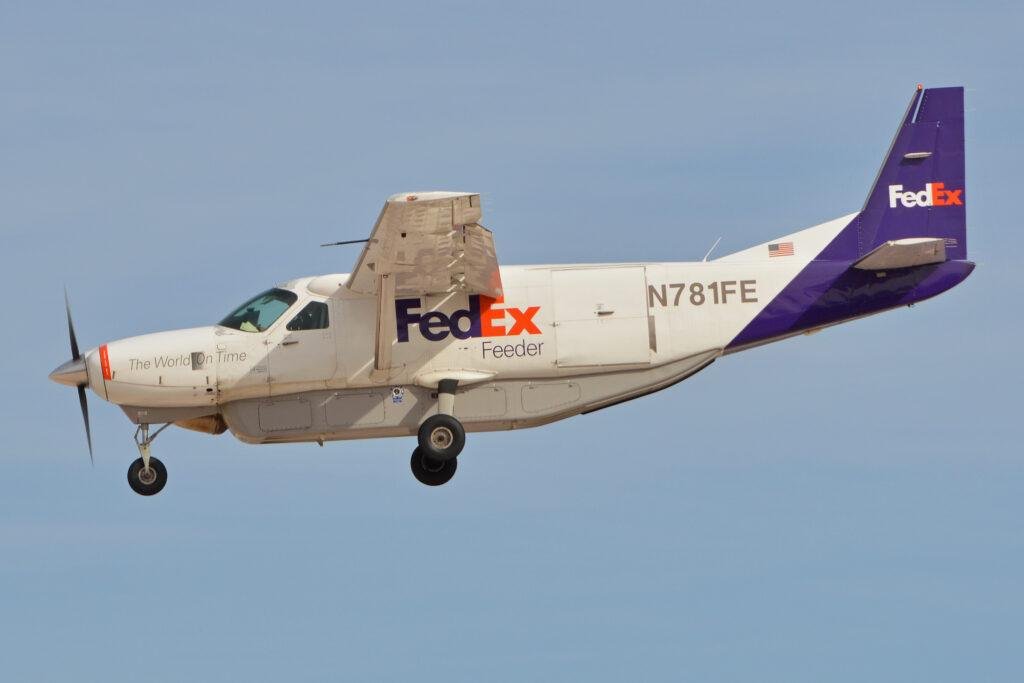
New Mexico Aviation entered a new phase of federal advanced-air-mobility testing after transportation officials announced a demonstration at Albuquerque International Sunport on October 19, 2026. The test was conducted the previous week by the City of Albuquerque Aviation Department and Reliable Robotics.
The aircraft was a remotely piloted Cessna 208B Caravan used in a cargo-delivery demonstration. Although the wider federal program includes electric vertical takeoff and landing aircraft, this flight used a fixed-wing airplane; it was not a passenger air-taxi operation.
The Federal Aviation Administration said New Mexico was the sixth location to begin demonstrations under the Department of Transportation’s eVTOL Integration Pilot Program, known as eIPP.
Table of Contents
New Mexico Aviation Test at Albuquerque Sunport
The Albuquerque demonstration brought local aviation officials and Reliable Robotics together to examine how remotely controlled cargo aircraft could operate in the airport environment. The federal announcement described the activity as a hybrid-electric demonstration involving the company’s remotely piloted Cessna 208B Caravan.
The Cessna Caravan is a conventional fixed-wing turboprop aircraft. Its presence at the event should not be mistaken for evidence that an electric vertical takeoff aircraft entered service in New Mexico. The test focused on autonomous-flight applications within a broader program that also supports other advanced aircraft designs.
The FAA said the flight was intended to generate practical information for integrating emerging aircraft capabilities into existing airspace. It did not announce authorization for regular uncrewed commercial cargo flights from Albuquerque.
City aviation director Manny Manriquez described participation as a chance for airport partners to provide evidence that will help inform future policies and requirements.
FAA Pilot Program Covers 8 Selected Projects
The federal eIPP program was unveiled in March 2026. According to the FAA, eight selected projects involve partners across 28 states and cover operating concepts ranging from air taxis and regional passenger links to cargo networks and medical-response services.
Autonomous flight technology is one of those categories. The Albuquerque project is therefore relevant to the program even though the aircraft does not have the vertical-takeoff characteristics usually associated with eVTOL air taxis.
FAA Administrator Bryan Bedford said demonstration flights would supply useful information for establishing an aviation system able to accommodate new operating models. The agency has not presented this demonstration as a certification decision.
The department expects pilot-project information to contribute to the development of future regulations. Any such rulemaking would be a separate process from the demonstration itself.
Remote Operations Bring Regulatory Questions
The New Mexico Aviation test also highlights the difference between aircraft capability and commercial authorization. A remotely piloted airplane may demonstrate a particular operation without establishing that the same service can be conducted routinely across the national airspace system.
Regulators need to understand how operators communicate with air traffic control, handle contingencies, coordinate airport movements and maintain safety oversight. These are operational questions, not proof that any specific certification obstacle has already been resolved.
Reliable Robotics and Albuquerque officials described the demonstration as part of a longer effort to explore autonomous cargo transportation. The project provides a real-world setting for collecting information, rather than a timetable for launching scheduled cargo deliveries.
No commercial start date, route network or passenger service was announced with the October 19 release.
Additional Flights Planned for 2026
The FAA said Albuquerque’s aviation department and other eIPP participants intend to conduct additional test flights during the rest of 2026. Those demonstrations may explore different operational conditions and technologies depending on the participating project.
New Mexico Aviation is one of several programs intended to give federal officials operational evidence before broader deployment decisions. The program’s range of participants also means results from one site should not be generalized to every advanced-air-mobility aircraft.
The latest announcement establishes that New Mexico participated in a demonstration flight; it does not establish passenger-service certification, unrestricted remote cargo operations or final rules for autonomous aircraft.
FAQ: New Mexico Aviation
What aircraft did the New Mexico Aviation test use?
Reliable Robotics used a remotely piloted Cessna 208B Caravan at Albuquerque International Sunport, according to the FAA.
Was the test an electric air taxi flight?
No. The announced test involved a fixed-wing Cessna Caravan under a wider program that also includes eVTOL aircraft.
Does the demonstration authorize regular autonomous cargo flights?
No. The FAA described a pilot-program demonstration and did not announce a commercial-service authorization.
Looking Ahead
The FAA expects Albuquerque and other pilot-program partners to undertake further demonstration flights during 2026. It has not announced a date for approving routine autonomous cargo service under this project.
Sources