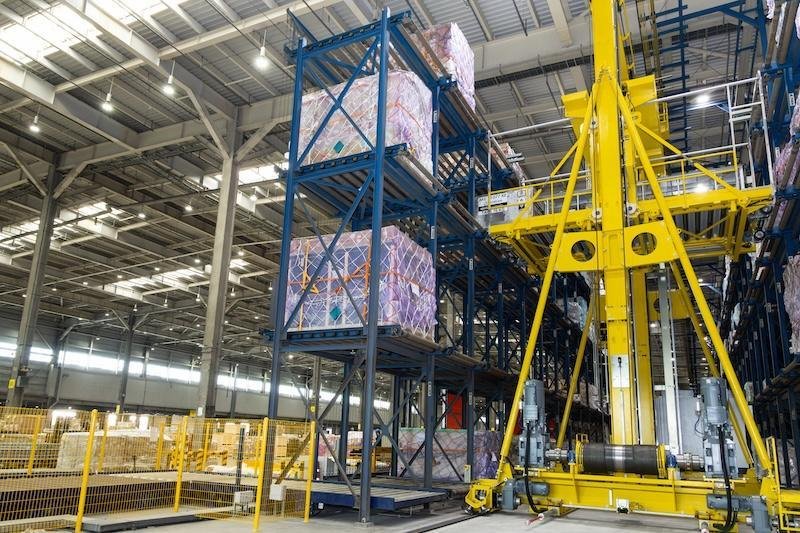
Korean Air Cargo operations at Incheon International Airport have received new automated terminal equipment following a modernization program completed in September 2026, according to trade reports published Oct. 21. The work introduces automated guided vehicles and upgraded equipment for moving air-freight containers and pallets inside the terminal.
Reporting based on the airline’s announcement puts the rate for a specified unit-load-device transfer process at 30 units per hour, up from 18 before the upgrade. Korean Air also projects an increase of more than 25% in the terminal’s overall cargo-handling capacity; that is a forecast, not a published independent measure of post-upgrade throughput.
The project affects cargo processing infrastructure rather than airline passenger check-in. Its significance depends on whether the installed equipment can maintain reliable handling during busy operations and how freight customers experience turnaround times.
Table of Contents
Korean Air Cargo Terminal Adds Automated Vehicles
According to Airline Suppliers’ October report, the modernization ran between June 2025 and September 2026. The airline introduced automated guided vehicles, or AGVs, to move freight within the facility. It also installed new elevating transfer vehicles used to reposition air-cargo unit load devices between different handling levels.
A unit load device, usually called a ULD, is the container or pallet system that lets airlines group and secure shipments for loading into an aircraft. Moving ULDs quickly is one part of cargo-terminal performance, but end-to-end handling also involves acceptance, inspections, customs, storage and aircraft loading.
The project converted a former single bypass line into a dual automated transfer arrangement, the trade report says. The increase from 18 to 30 hourly ULD transfers applies to that described handling system. It should not be reported as 30 aircraft movements an hour or as the airport’s total freight tonnage.
What the Incheon Handling Figures Actually Show
The reported 30-unit figure represents a roughly two-thirds increase in that particular transfer rate over the previous 18-unit baseline. However, a faster subsystem does not necessarily raise throughput across every terminal function by the same percentage. Other processes can become limiting factors, especially during irregular operations.
Korean Air’s broader estimate of more than 25% additional handling capacity is therefore best treated as a projection. Independent operating data after the modernization will be needed to show the actual effect on delays, manpower demands or cargo dwell times. Neither of the reports cited here publishes a comparable long-run performance dataset.
Automation also changes the division of work inside a cargo facility. Vehicle routing, maintenance, safety controls and coordination with workers become important as manual heavy-equipment handling is reduced. Reporting on the program describes improved handling precision and working conditions as objectives, without independently documenting a quantified reduction in injuries or operating costs.
JFK Work Extends the Terminal Modernization Program
The airline has a separate modernization effort underway at John F. Kennedy International Airport in New York, with a reported completion target during 2027. That project is not part of the completed Incheon installation and should not be described as already delivered.
Korean Air Cargo handles shipments in a business exposed to changes in international trade, aircraft capacity and pricing. Its upgraded terminal facilities could help manage time-sensitive freight, but future demand cannot be inferred solely from investments in warehouse equipment. The TAD report on Korean Air’s third-quarter results provides recent context on the airline’s cargo revenue.
This story relies on contemporary trade reporting about Korean Air’s announcement because an accessible, original Korean Air cargo-terminal press release could not be independently located. The stated figures have been attributed accordingly, and editor review of the original release remains advisable before publication.
FAQ: Korean Air Cargo
What equipment did Korean Air Cargo install?
Trade reports identify automated guided vehicles, new elevating transfer vehicles and a dual automated transfer-line arrangement.
Does the terminal now handle 30 aircraft per hour?
No. The 30-per-hour figure refers to the reported rate for a unit-load-device transfer process, not aircraft movements.
Is the New York cargo-terminal project completed?
No. Korean Air’s John F. Kennedy airport modernization was reported as continuing, with a 2027 target.
Looking Ahead
Korean Air Cargo will need operational experience to confirm the projected terminal-wide capacity gains. Work at its New York facility is also expected to continue toward 2027. A reliable public comparison of Incheon throughput before and after the new equipment remains to be published.
Sources