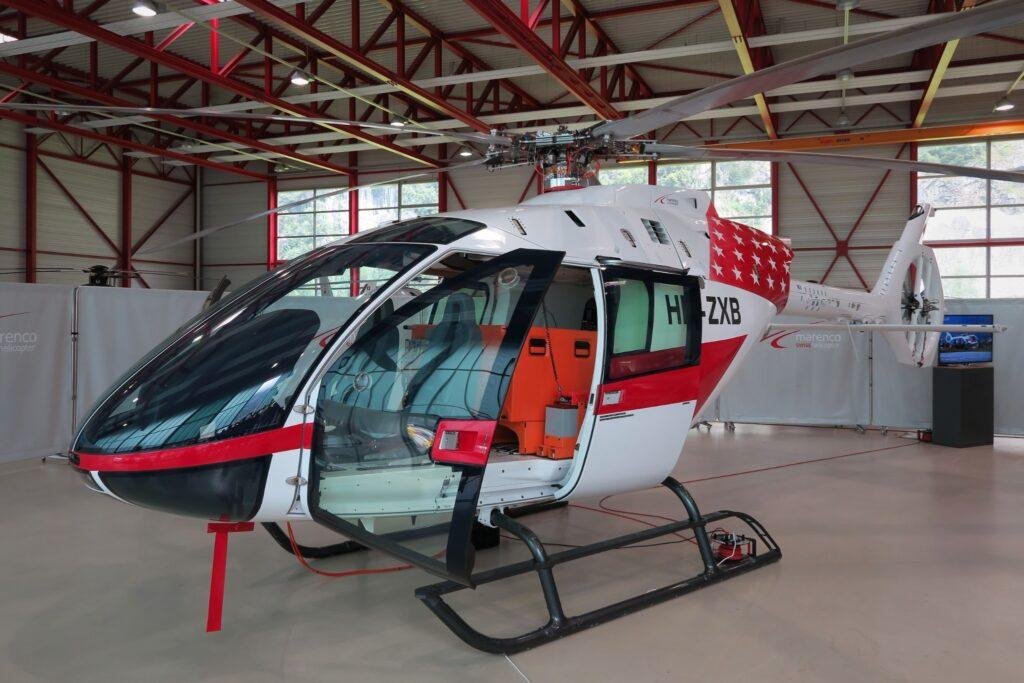
Leonardo Proteus autonomy research will expand under an agreement announced October 29 between the British arm of Italian aerospace group Leonardo and U.S. technology company Shield AI. Leonardo intends to use the Hivemind software development kit to build and integrate mission autonomy capabilities for Proteus, its experimental uncrewed helicopter.
The program supports research connected to future Royal Navy maritime aviation rather than an announced fleet purchase. The partners identified anti-submarine warfare, intelligence, surveillance and reconnaissance, and logistics in contested environments among potential application areas. Neither company said the software has completed operational qualification on Proteus.
Table of Contents
Leonardo Proteus Autonomy Development Scope
Shield AI said the agreement gives Leonardo engineers tools for creating and refining autonomy software rather than handing over a fixed set of missions. The Hivemind development environment is intended to support integration, testing and updates as sensors, platforms and military requirements evolve. This describes a development capability, not a certification that every envisioned function is ready for flight.
Proteus is a vertical-takeoff-and-landing uncrewed technology demonstrator developed with the Royal Navy and UK Defence Innovation. Its purpose is to test approaches that could inform the Navy’s maritime aviation plans. The project can therefore produce useful engineering results without becoming a production aircraft in its present form.
Leonardo and Shield AI said their cooperation could also support other rotorcraft programs in the future. That is a possible extension of engineering work, not a confirmed multi-platform integration contract. The immediate announced activity centers on the Proteus demonstrator and Leonardo’s ability to develop software itself.
The original announcement and its qualification details can be read in the primary source.
Maritime Missions Considered for the Rotorcraft
Leonardo describes Proteus as having a modular payload bay capable of carrying around one metric ton or two standard NATO pallets. The company has discussed potential use for anti-submarine warfare, early warning and movement of equipment within a theater of operations. Which sensors and loads will be demonstrated remains a matter for the test program.
The ability to take off and land vertically is attractive for ships where deck space is constrained. An uncrewed aircraft can provide a different operating model from a conventional piloted helicopter, although autonomy testing must address communications, detection, decision-making, supervision and reliable recovery.
A demonstrator should not be equated with a deployed weapon. The October announcement concerns the software environment and integration work. It does not report live maritime patrols, weapon release trials or approval to operate beyond the constraints of a development program.
For related reporting, see TAD’s earlier article, MQ-9B LoyalEye Radar Tracks Fighters in 2026 Flight Tests. That separate development provides context and should not be confused with the announcement reported here.
What the Agreement Means for UK Naval Aviation
The Royal Navy’s Maritime Aviation Transformation strategy examines how crewed aircraft, uncrewed systems and networked sensors might operate together over the coming years. Leonardo said Proteus contributes to this wider planning effort. The Shield AI agreement gives the program an additional software-development partner and potential autonomy toolset.
The engineering challenge is partly about keeping future capabilities adaptable. Software may need to respond to changing missions or sensors while maintaining reliable and reviewable behavior. Shield AI argues its approach lets customers own and sustain tailored capabilities, though measured performance will depend on testing.
This announcement illustrates investment in uncrewed rotorcraft without establishing an acquisition schedule, price or number of operational aircraft. The material distinction for readers is that a technology integration agreement has been signed, while flight-test outcomes still lie ahead.
FAQ: Leonardo Proteus autonomy
What is Leonardo Proteus autonomy work intended to achieve?
It aims to test and improve uncrewed rotorcraft mission capabilities using Shield AI development tools.
Is Proteus a Royal Navy operational helicopter?
No. It is an uncrewed technology demonstrator associated with research for future naval aviation.
Which missions could use the software?
The companies identified maritime surveillance, anti-submarine operations and contested logistics as development areas.
Looking Ahead
The next relevant milestones are demonstrated software integration and verified flight-test results on Proteus. No date for fleet introduction or a Royal Navy procurement decision was announced in this agreement.
Sources
Related profiles