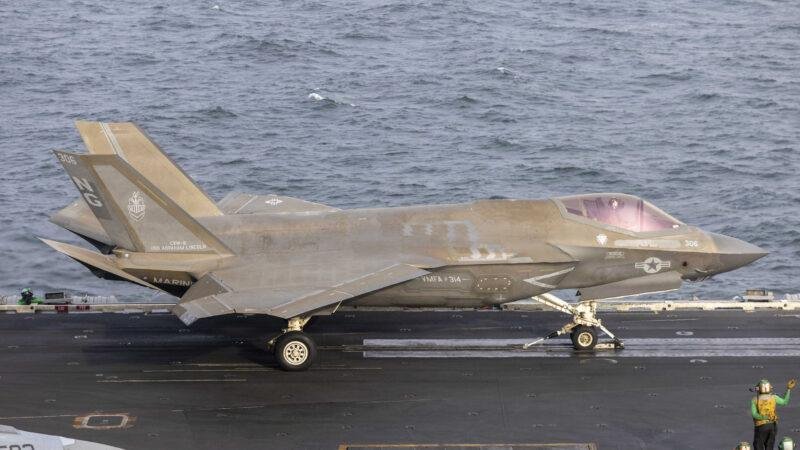
A U.S. Marine Corps F-35C Lightning II launched from USS Abraham Lincoln (CVN 72) as the carrier group enforces the U.S. naval blockade of Iran in the Arabian Sea, according to newly released official footage. The video offers a behind-the-scenes look at carrier flight operations while highlighting the continued role of fifth-generation stealth fighters in backing that enforcement effort.
Footage of the F-35C USS Abraham Lincoln launch, released by CENTCOM on August 2, comes as U.S. forces continue enforcing the blockade against Iran amid ongoing tensions in the Strait of Hormuz region.
Table of Contents
F-35C USS Abraham Lincoln Launch Captured on Video
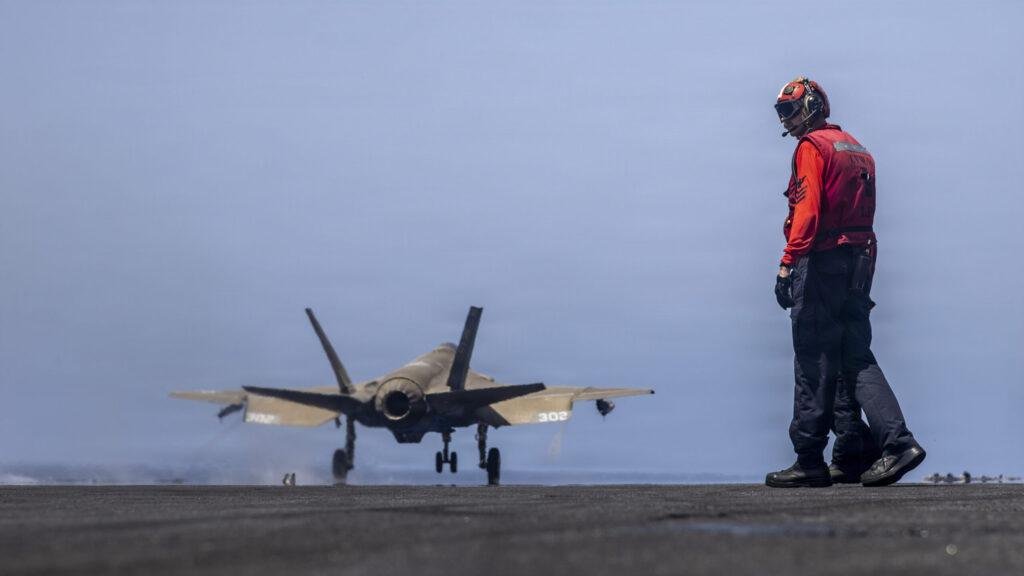
The newly released video shows a U.S. Marine Corps F-35C Lightning II assigned to Marine Fighter Attack Squadron (VMFA-314) preparing for launch aboard USS Abraham Lincoln. After final checks by the flight deck crew, the aircraft accelerates down the carrier’s catapult before lifting into the sky over the Arabian Sea.
The launch sequence demonstrates the demanding coordination required between pilots, maintainers and flight deck crews during carrier operations. Every launch is carefully choreographed to safely generate combat airpower from one of the world’s most capable aircraft carriers.
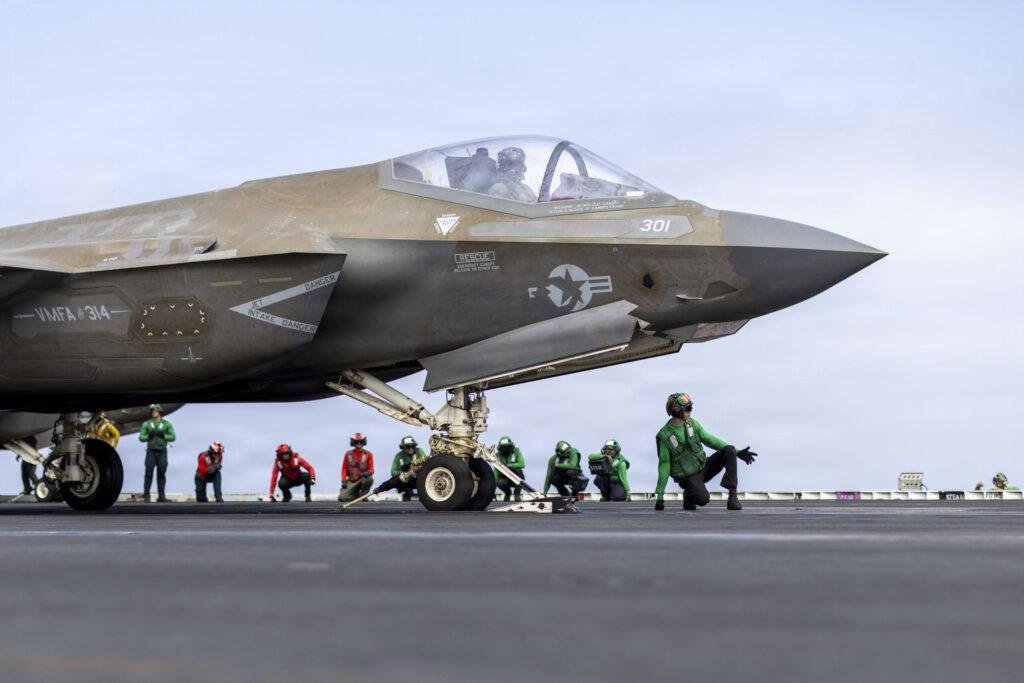
Fifth-generation stealth fighters remain central to how carrier strike groups project airpower across the Middle East.
CENTCOM Highlights Iran Blockade Enforcement
Alongside the video, CENTCOM released an operational update on its enforcement of the U.S. blockade against Iran. The blockade was first imposed in April 2026, briefly lifted in June under a ceasefire memorandum, and reinstated on July 14 following renewed Iranian attacks on vessels transiting the Strait of Hormuz.
According to the command, as of August 2, U.S. forces enforcing the blockade had:
- Redirected 35 commercial vessels
- Disabled 2 vessels
- Boarded 2 vessels
CENTCOM did not provide additional details about the vessels involved or the specific circumstances surrounding the operations.
The blockade remains a central point of dispute in ongoing U.S.-Iran negotiations. Iran has demanded an end to the blockade as a condition for fully reopening the Strait of Hormuz, while U.S. officials continue to tie enforcement to broader efforts to safeguard international shipping lanes through the waterway.
Why the F-35C Matters
The F-35C USS Abraham Lincoln launch also highlights the growing importance of fifth-generation aircraft in carrier strike group operations.
Unlike the F-35A used by the U.S. Air Force or the short takeoff and vertical landing F-35B operated by the Marine Corps, the F-35C was specifically designed for aircraft carrier operations. It features:
- Larger folding wings for improved lift
- Reinforced landing gear for catapult launches
- A strengthened tailhook for arrested landings
- Increased internal fuel capacity
- Longer operational range over maritime environments
These capabilities allow the aircraft to conduct air superiority, strike, intelligence, surveillance and reconnaissance missions while remaining difficult to detect thanks to its stealth design.
Operating from USS Abraham Lincoln, Marine Corps F-35Cs provide additional flexibility alongside Navy aircraft assigned to the carrier air wing.
The aircraft combines stealth, advanced sensors and networked data sharing, allowing it to gather intelligence while supporting both offensive and defensive missions during carrier deployments.
USS Abraham Lincoln Continues Regional Deployment
USS Abraham Lincoln (CVN 72) is one of the U.S. Navy’s Nimitz-class aircraft carriers and serves as the centerpiece of a Carrier Strike Group capable of projecting airpower across thousands of miles.
Carrier strike groups routinely support:
- Combat air patrols
- Intelligence, surveillance and reconnaissance missions
- Maritime security and blockade enforcement operations
- Regional deterrence
- Rapid response during emerging crises
The latest F-35C USS Abraham Lincoln launch illustrates how aircraft carriers continue to provide the United States with flexible, forward-deployed combat capability across strategically important regions.
Why the Aircraft Looks Weathered
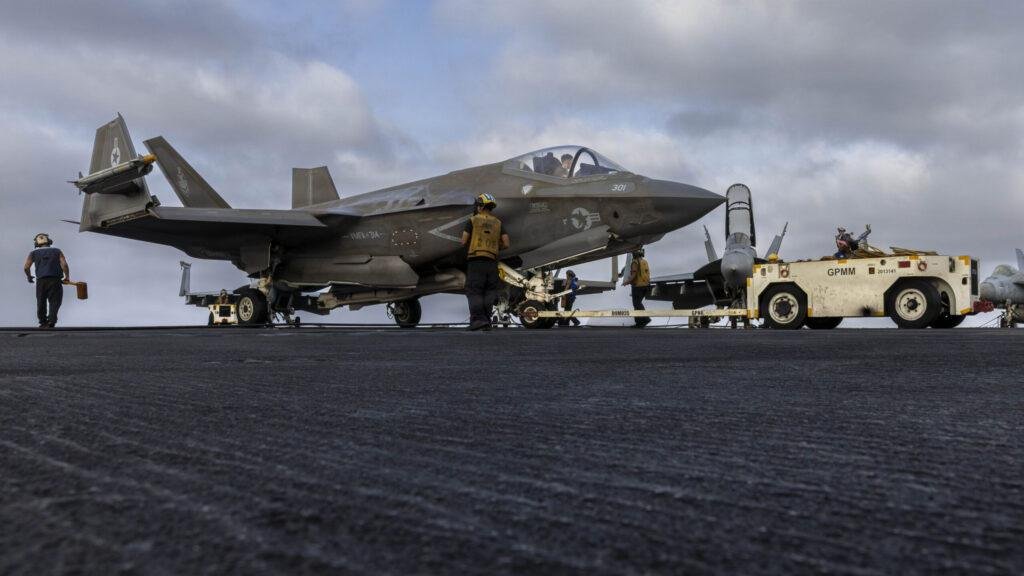
Some viewers noticed that the F-35C appeared heavily weathered in CENTCOM’s video and questioned whether the aircraft showed signs of rust.
The aircraft’s appearance is consistent with normal operational wear experienced by carrier-based aircraft and does not, by itself, indicate structural corrosion.
Carrier-based aircraft operate in one of the harshest environments in military aviation. Constant exposure to salt spray, humidity, hydraulic fluids, jet exhaust, catapult launches and arrested recoveries naturally causes staining, fading and discoloration over time.
The F-35’s radar-absorbing coatings also weather differently than conventional military paint, producing noticeable variations in color across the aircraft’s surface. Navy maintenance crews routinely inspect airframes for corrosion between deployments, and the released footage and official imagery show no obvious sign of it here.
Watch the Video
Carrier launches remain one of the most demanding operations in military aviation. Every departure requires precise coordination between pilots, flight deck crews, catapult operators and aircraft maintainers to safely launch high-performance aircraft from a moving ship at sea.
CENTCOM’s video provides aviation enthusiasts with a close look at carrier flight deck operations as an F-35C Lightning II launches from USS Abraham Lincoln during blockade enforcement operations in the Arabian Sea.
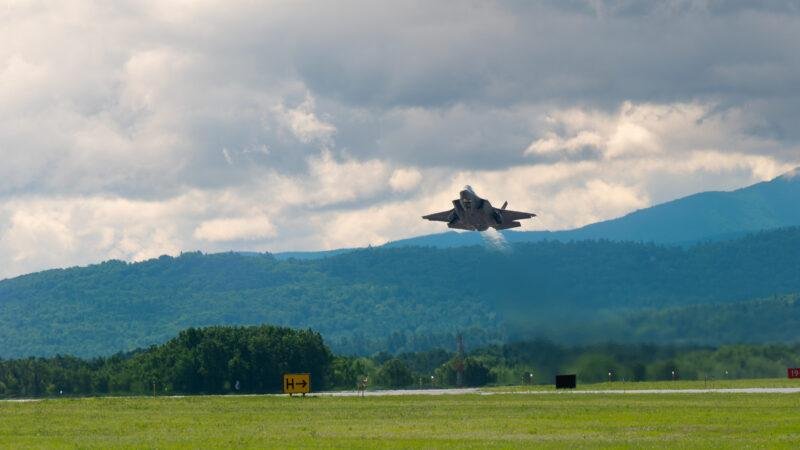
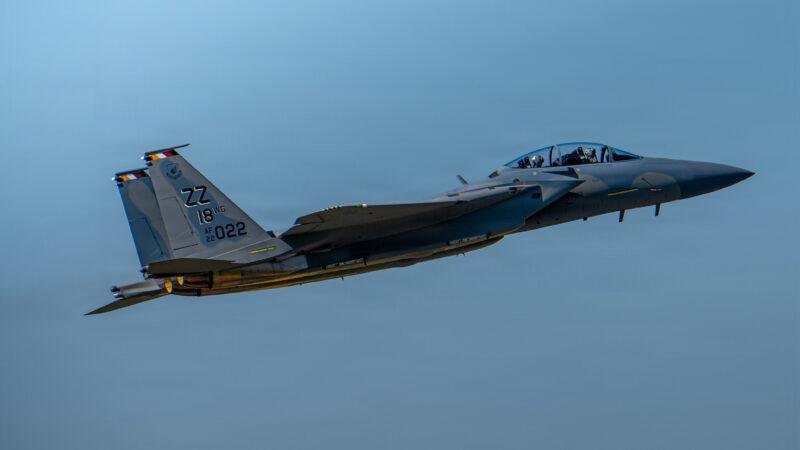
Editor’s Note: The embedded video was released by U.S. Central Command (CENTCOM). The accompanying photographs are official U.S. Navy images and may have been taken during separate operations involving USS Abraham Lincoln and Marine Fighter Attack Squadron (VMFA-314). They are included to illustrate carrier-based F-35C operations.
FAQ: F-35C Carrier Operations
What makes the F-35C different from the F-35A and F-35B?
The F-35C is the carrier variant, built with larger folding wings, reinforced landing gear, and a strengthened tailhook to handle catapult launches and arrested landings — features the land-based F-35A and the short-takeoff F-35B don’t need.
Why is USS Abraham Lincoln operating in the Arabian Sea?
USS Abraham Lincoln is deployed to the Arabian Sea to help enforce the U.S. naval blockade of Iran, part of an ongoing effort to pressure Tehran over Strait of Hormuz transit rules and shipping security. Carrier strike groups provide the flexible airpower needed to sustain that enforcement while responding quickly to emerging situations across the region.
Why does the F-35C look weathered instead of freshly painted?
Constant exposure to salt spray, jet exhaust, and catapult launches naturally fades and stains carrier aircraft over time. It’s a normal cosmetic effect of the deployment environment, not a sign of structural damage.
Looking Ahead
This F-35C USS Abraham Lincoln launch footage demonstrates the continuing importance of carrier aviation in enforcing U.S. policy in the Middle East. With Iran naming the blockade’s end as a condition for reopening the Strait of Hormuz and negotiations still unresolved, fifth-generation aircraft like the F-35C will remain central to how the U.S. Navy sustains pressure and projects power in the region.
The Aviation Diary will continue covering F-35 Lightning II, carrier aviation, and military aviation developments.
Sources
For additional information about this story: