Airport runway numbers tell pilots the approximate compass direction of a runway, not its length or the number of runways at an airport. A runway marked 18 points approximately south toward 180 degrees magnetic, while its opposite end is typically marked 36 because aircraft using that end head in the reverse direction.
The FAA’s Aeronautical Information Manual explains that runway designations correspond to the magnetic bearing of the runway centerline, rounded to the nearest ten degrees. Parallel runways add letters such as L, C, and R to distinguish separate strips with similar alignments.
The numbers look simple, but they connect the runway pavement, charts, weather information, pilot instructions, and air traffic control. Learning the system makes airport diagrams and takeoff videos much easier to understand.
Table of Contents
How Airport Runway Numbers Follow Magnetic Direction
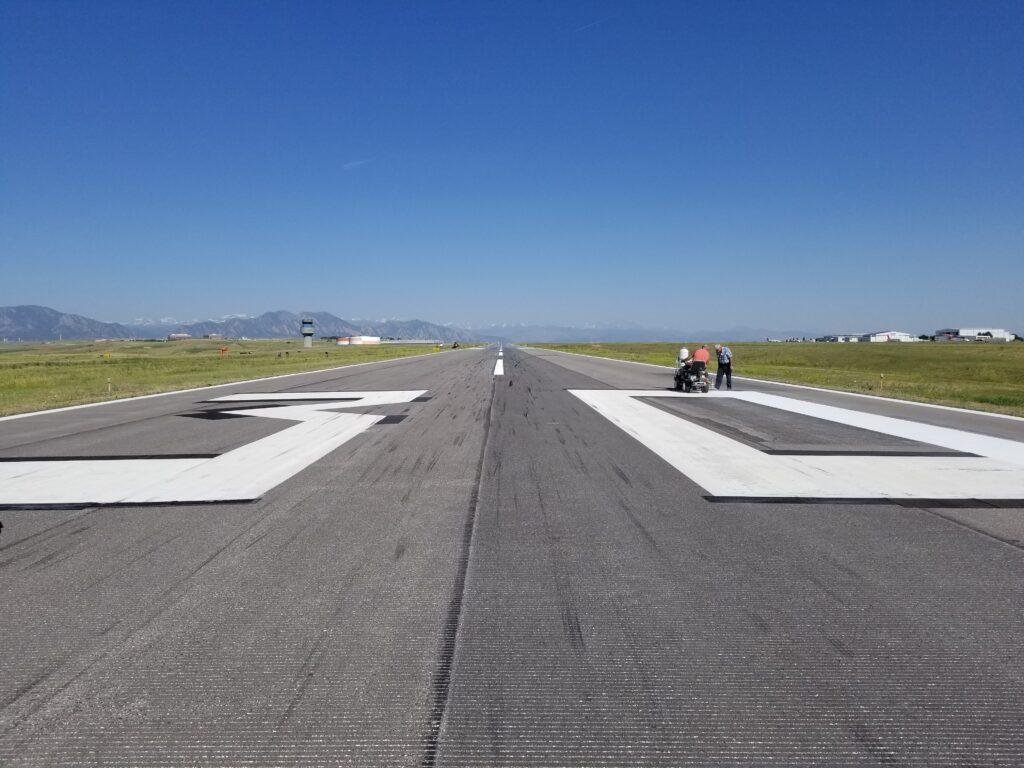
Imagine looking straight down a runway toward the direction an airplane would depart. If a runway points approximately east, its number in the United States is 9, representing about 90 degrees magnetic. Facing west along the same pavement gives a direction near 270 degrees, so the opposite end is marked 27.
The FAA states that numbers represent the nearest ten-degree increment of magnetic azimuth. That is why a magnetic direction of 183 degrees becomes Runway 18, while 87 degrees becomes Runway 9. A heading precisely halfway between two designations, such as 185 degrees, can receive either adjacent number under FAA guidance. The designation is an identification aid, not an instruction to fly exactly the painted number.
The opposite end is typically 18 numbers away because a half-turn is 180 degrees. Runway 4 faces the opposite direction from Runway 22, and Runway 15 from Runway 33. On U.S. runways, single-digit designations are painted without a leading zero, although international marking conventions can differ. Pilots rely on charts, instruments, and air traffic control clearances rather than painted numbers alone.
Why Parallel Runways Have L, C, or R Letters
At a busy airport, two or more runways may have nearly the same magnetic alignment. If both had the identical designation without a letter, controller instructions could become ambiguous. For a pair, L means left and R means right as viewed by a pilot approaching those runway ends. Three parallel runways may be labeled L, C, and R, with C indicating the center runway.
Those letters swap sides when the same runways are viewed from the opposite direction. A physical runway designated 18L at one end is commonly 36R at the other. The change is not a repainting mistake; left and right depend on which way an aircraft is approaching the airport.
When four or more parallel runways share a general alignment, airports can assign adjacent runway numbers to different pairs or groups. That does not necessarily mean their concrete centerlines point in substantially different directions. Current airport charts are essential for locating each specific runway, taxiway, and runway holding position; an aerial photograph alone is not an operational reference.
Why Runway Numbers Sometimes Change
Earth’s magnetic field changes over time, so the magnetic bearing of a runway can gradually shift even though its pavement stays in the same place. When that bearing approaches or crosses the point at which a different designation is appropriate, airport authorities may renumber the runway. Renumbering is not evidence that the runway has physically moved.
A renumbering affects far more than paint. Airport diagrams, approach charts, signs, published procedures, flight planning databases, and controller phraseology may all need coordinated updates. Airports and regulators manage those changes so flight crews do not encounter competing labels during the transition.
Runway numbers should not be confused with taxiway identifiers. Taxiways use separate lettering and signs, and air traffic control may give an aircraft a route through multiple taxiways before it reaches its assigned runway. Pilots must also distinguish a runway entrance from a holding position and receive the required clearance before entering or crossing a runway.
FAQ: airport runway numbers
What do airport runway numbers 18 and 36 mean?
They indicate opposite directions of the same runway: approximately 180 and 360 degrees magnetic.
Why do some runways have L, C, or R?
Those letters distinguish left, center, and right parallel runways from the direction of approach.
Can airport runway numbers change?
Yes. Changes in magnetic direction over time can require an airport to update runway designations and charts.
Looking Ahead
Runway designations are a compact link between pavement markings, aeronautical charts, weather reports, and controller instructions. If an airport changes a designation, its published charts and procedures should reflect the update. For travelers, a runway number is a useful clue to direction; for pilots, current official documentation and clearances remain essential.
Sources
- FAA — AIM 4-3-6: Use of Runways/Declared Distances
- FAA — AIM 2-3-3: Runway Markings
- FAA — AC 150/5340-1M: Standards for Airport Markings (active)