An Embraer ALADA agreement signed in Brasília on Nov. 25 opens a government-to-government sales route for the KC-390 Millennium transport and A-29 Super Tucano. Embraer and Brazil’s aerospace projects company signed the framework during the Mostra BID defense exhibition.
The Embraer ALADA agreement addresses how Brazil can offer two existing aircraft programs to governments that buy through arrangements between states. Embraer’s announcement describes a framework for future opportunities. It identifies neither a purchasing country nor a committed aircraft quantity.
Table of Contents
What the Embraer ALADA agreement changes
Governments use different legal routes to buy aircraft. Some procure directly from an aircraft maker. Others seek an arrangement with the exporting government, which gives the buyer a public-sector counterpart. A manufacturer can still build and deliver the aircraft under either route. The contract documents determine the roles each party plays.
The new framework is meant to make the second route available for the two named Embraer aircraft. A country’s interest and the procurement rules it follows will determine whether a specific offer advances. The Embraer ALADA agreement establishes the way an offer can be made, with individual purchase terms left to future agreements.
Why the KC-390 and A-29 represent different sales
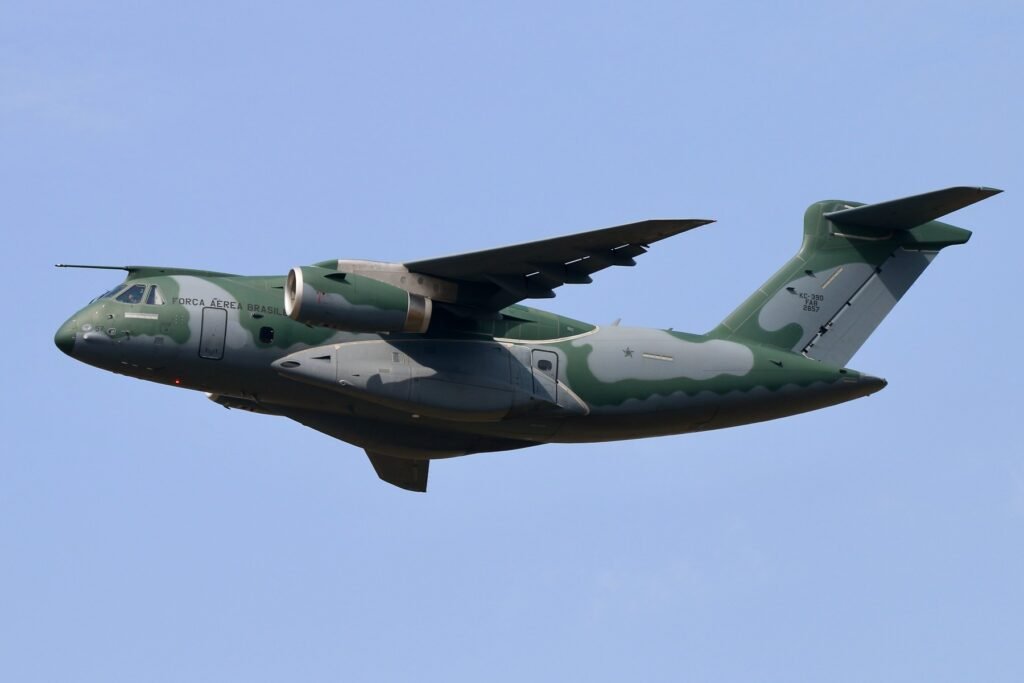
The KC-390 Millennium is a twin-engine jet airlifter. Its size and role make it suitable for carrying personnel, cargo or equipment. The A-29 is a turboprop used for training and other military roles. An air force evaluating a transport has a different requirement from one looking for a turboprop training fleet.
Putting both programs under one procurement framework gives Brazil a common way to offer them. It does not combine the aircraft into a single package. A prospective customer would still decide which aircraft fits its requirements and what training, spares or support should be included in any purchase.
What would turn the framework into a sale
The next meaningful step would be a government identifying a requirement and confirming that it intends to use the Brazilian framework. A signed customer agreement could then establish the buyer, the model, aircraft quantity and delivery schedule. The manufacturer’s release supplies none of those details for a specific customer.
The distinction matters when tracking Embraer’s order book. The agreement changes the routes through which a sale can be pursued. A later customer announcement or procurement document would establish whether an additional aircraft order has been signed and which program it covers.
Related coverage from The Aviation Diary includes South Korea’s first C-390 arrival.
FAQ: Embraer ALADA agreement
What does the Embraer ALADA agreement cover?
It covers government-to-government offers for the KC-390 Millennium and A-29 Super Tucano.
Did a country order aircraft at the signing?
The public announcement identifies a sales framework and leaves any future buyer, aircraft count and delivery dates open.
Why would a buyer use a government-to-government route?
It can suit a country whose procurement rules call for dealing with the exporting government. The contract would still set the aircraft and support terms for that buyer.
Looking Ahead
The next reporting milestone is a named government using the agreement. A signed procurement document or joint announcement would confirm what that customer plans to buy.
Sources
Feature photo by Colin Cooke (CC BY-SA 2.0). Resized for web.