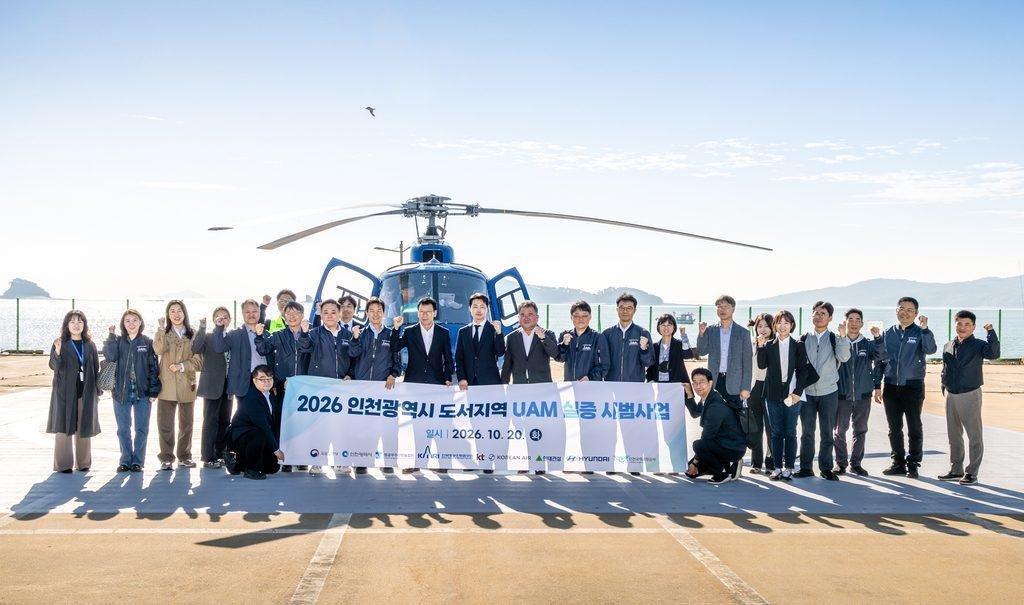
Korean Air UAM researchers completed an integrated flight demonstration across islands near Incheon on Oct. 20, the airline announced the following day. The activity tested traffic-management and flight-control procedures using the airline’s ACROSS coordination platform rather than carrying passengers aboard a commercial air taxi.
The demonstration involved the K-UAM One Team consortium, which includes Korean Air, Incheon International Airport Corporation, KT, Hyundai Motor and Hyundai Engineering & Construction. Korean transport authorities and the Incheon city government organized the project to study how urban air mobility could function in an island operating environment.
The airline describes the event as a local-government-linked demonstration involving multiple public and private partners. Its success relates to test procedures and systems integration, not certification or entry into scheduled service by a passenger eVTOL aircraft.
Table of Contents
How the Korean Air UAM Demonstration Was Conducted
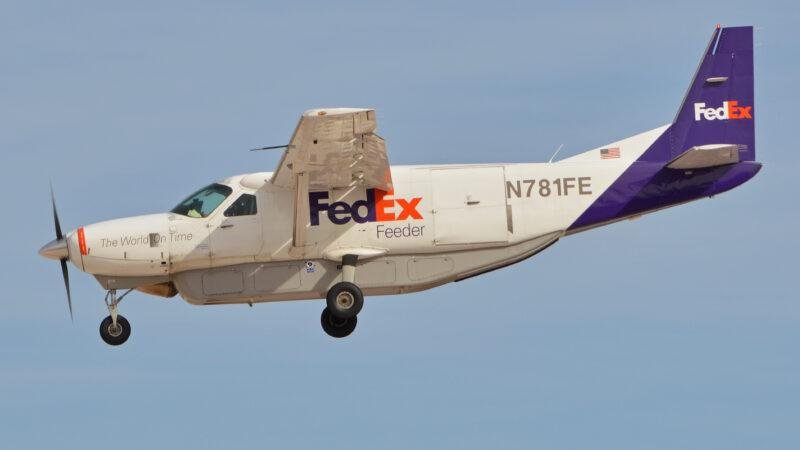
Korean Air said the test route began near Geojampo on Yeongjong Island, crossed to Deokjeok Island and continued toward Wangsan Marina. The flight used a substitute or surrogate aircraft, a critical distinction from a demonstration conducted with a purpose-built passenger eVTOL. The aircraft served as a platform to exercise operational procedures.
The airline’s official Korean-language announcement says its ACROSS system managed operational control and air-traffic coordination throughout the demonstration. The goal was to apply techniques developed in the K-UAM Grand Challenge to a route that crosses water and includes island operating constraints.
Island routes create planning questions different from flights over a compact city center. Operators must coordinate remote sites, communications and diversion procedures while working within existing controlled airspace. The October trial provides reported evidence of the team’s system-integration work; it does not by itself show how a future commercial fleet would perform in daily service.
ACROSS Builds on Earlier Grand Challenge Tests
Korean Air said its consortium had tested integrated operation among an aircraft, control systems and a 5G aeronautical communications network during the first K-UAM Grand Challenge phase in Goheung in April 2024. That earlier event supplied practical inputs for subsequent changes to its coordination software.
During a second phase in October 2025, the group worked in the Cheongna–Gyeyang area of Incheon. Korean Air reported exercises involving transfers of control responsibility between traffic-management participants and responses to abnormal situations. Those tests are the background for the company’s latest island demonstration.
The Oct. 20 operation is therefore part of a continuing series, not the first time Korean Air has explored integrated air-taxi procedures. Its claimed first-of-its-kind status concerns cooperation with a local government on this particular demonstration model, as described by the airline.
What Remains Before Passenger Operations
The ACROSS product is intended to coordinate multiple UAM aircraft in shared airspace. That is a software and operating-system challenge separate from developing the aircraft themselves. Korean Air says Incheon selected ACROSS for its urban air mobility management program and that the first implementation phase is scheduled to be completed in December 2026.
A deployed management platform would still need to be integrated with aircraft approvals, routes, landing sites, communications and oversight processes. The announcement does not identify a commercial opening date, a certified passenger air taxi or a final fare structure. The recent Archer Midnight demonstration coverage provides a separate example of how flight demonstrations should be distinguished from airline-style passenger operations.
Korean Air UAM work is significant because it explores an operating network rather than a single aircraft flight. Regulators and project partners will nevertheless need to assess how repeatable the procedures are under weather changes, varying traffic volumes and other operational demands.
FAQ: Korean Air UAM
Did Korean Air UAM use a passenger eVTOL?
No. Korean Air says the Oct. 20 demonstration used a surrogate aircraft to test integrated operating and traffic-management procedures.
Where did the demonstration take place?
The reported route connected the Geojampo area of Yeongjong Island, Deokjeok Island and Wangsan Marina near Incheon.
What is Korean Air’s ACROSS system?
ACROSS is the airline’s integrated flight-control and traffic-management platform for coordinating proposed UAM operations.
Looking Ahead
Korean Air expects to finish the first phase of Incheon’s ACROSS deployment in December 2026 while continuing automation and traffic-management development. The company has not announced a date for the start of fare-paying flights associated with this island trial.
Sources