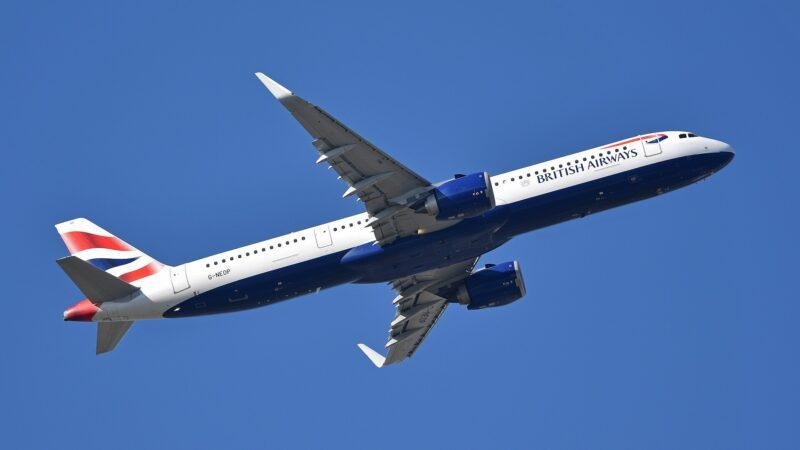
Kuwait flight reroutes affected civilian aircraft heading toward the Gulf on Nov. 26 after Kuwait’s military said it had intercepted drones in the country’s airspace. Euronews reported that its journalists were on a passenger flight that changed course during the disruption.
The onboard account documents a change in how at least some flights crossed the region. The report also cited indications of an airspace closure. Its published account did not establish how long restrictions lasted or give a complete tally of affected flights.
Table of Contents
What the Kuwait flight reroutes changed
Euronews reported that passenger aircraft were redirected before entering Kuwaiti airspace. Its journalists described a change of heading on their own flight, and the outlet published a flight-tracking image showing other aircraft altering course. The reporting puts the immediate disruption in the air, before those flights reached their intended destinations.
A change to an aircraft’s path can still leave its destination and flight number intact. A flight diverted to another airport has a different practical consequence for passengers. The reporting established reroutes and did not establish that every flight described landed somewhere other than its scheduled destination.
What the reporting establishes about the disruption
Kuwait’s military described a drone interception, according to Euronews. The same report carried the outlet’s observations of passenger traffic being redirected. The military statement describes what Kuwait said happened in its airspace. The onboard reporting describes how civilian traffic responded during the disruption.
An airport’s own schedule and the routes used by aircraft passing through nearby airspace describe different parts of the operation. A change aloft can affect a passenger flight serving another country. The report did not establish a suspension of all departures or arrivals at Kuwait International Airport.
Why a reroute matters to passengers
Travelers can use the airline’s itinerary updates to check whether a flight is still expected at the same airport and whether its estimated arrival has changed. An airborne track alone provides no booking-specific guidance about onward connections. Euronews reported that U.S. citizens in the region were urged to monitor carrier and airport operations.
Restrictions in the region have affected longer-distance planning before. In TAD’s earlier coverage of Air India’s routing, Air India described restrictions across parts of the Middle East as one factor shaping its options for North American routes. That earlier example concerns an airline’s route planning over time. Thursday’s report records changes made to flights already underway.
FAQ: Kuwait flight reroutes
What triggered the Kuwait flight reroutes?
The reroutes were reported during a disruption that followed Kuwait’s reported interception of drones. The available account does not establish the cause of every individual route change.
Did every affected aircraft change its destination?
Euronews documented changes of heading. It did not report a destination change for every aircraft it described.
Was there a confirmed duration for the restrictions?
The published account did not give a verified start-to-finish duration.
Looking Ahead
The next details to establish are how long the Kuwait flight reroutes lasted and any impact on individual airport schedules. The published reporting does not provide a verified reopening time or a comprehensive count of redirected flights.
Sources
- Euronews onboard reporting
- The Aviation Diary’s Air India routing coverage
- Featured image by Dhaval Surana (CC BY 4.0)
Related profiles
This article may include links to travel booking partners. If you book through them, The Aviation Diary may earn a commission at no extra cost to you.