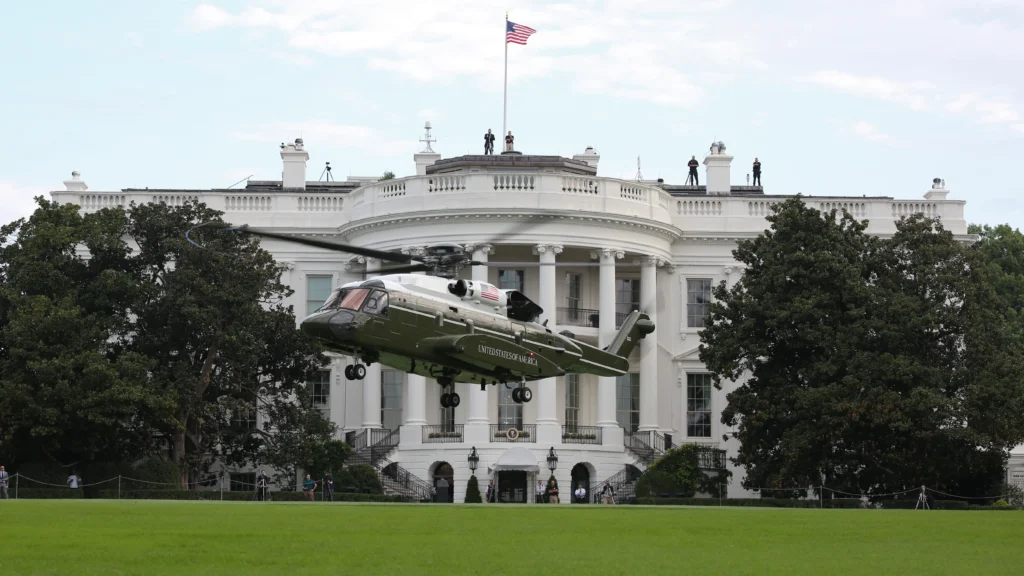
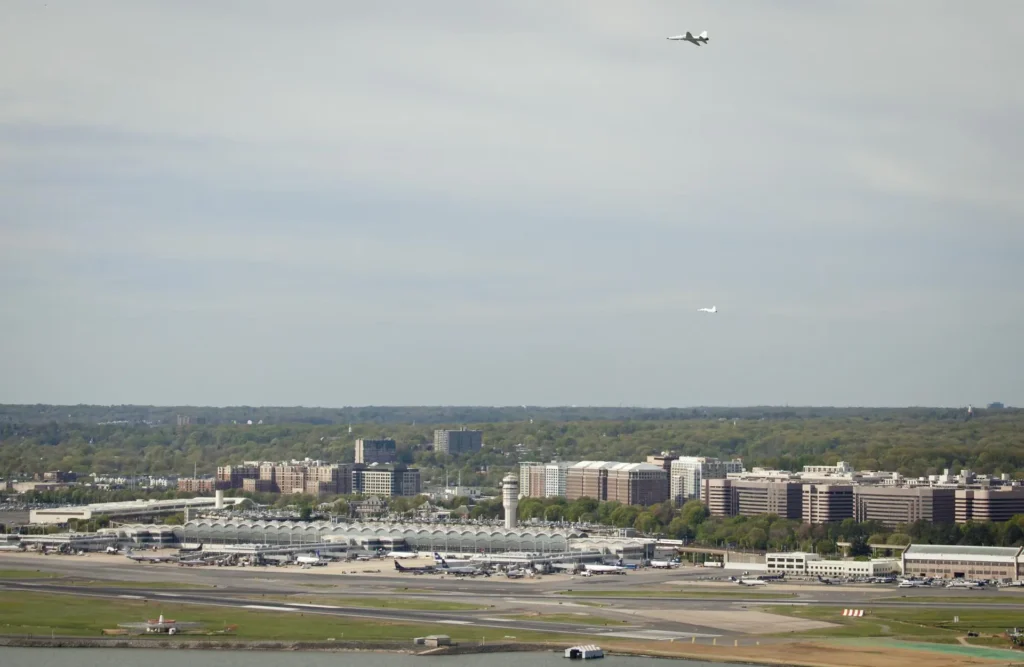
The FAA is investigating the Marine One Reagan National incident after an apparent loss of separation between the presidential helicopter and an Envoy Air regional jet near Ronald Reagan Washington National Airport (DCA). The agency says the two aircraft were not converging and that the event did not appear to be a dangerous close call, and both flights continued safely — but it has raised new questions about whether post-2025 safety procedures were properly followed during presidential helicopter operations.
The incident occurred Tuesday afternoon as Marine One departed from the Ellipse near the White House en route to Joint Base Andrews, where President Donald Trump was scheduled to continue his trip aboard Air Force One. At nearly the same time, an Envoy Air regional jet departed Reagan National Airport, prompting an FAA review of whether required aircraft separation standards were maintained.
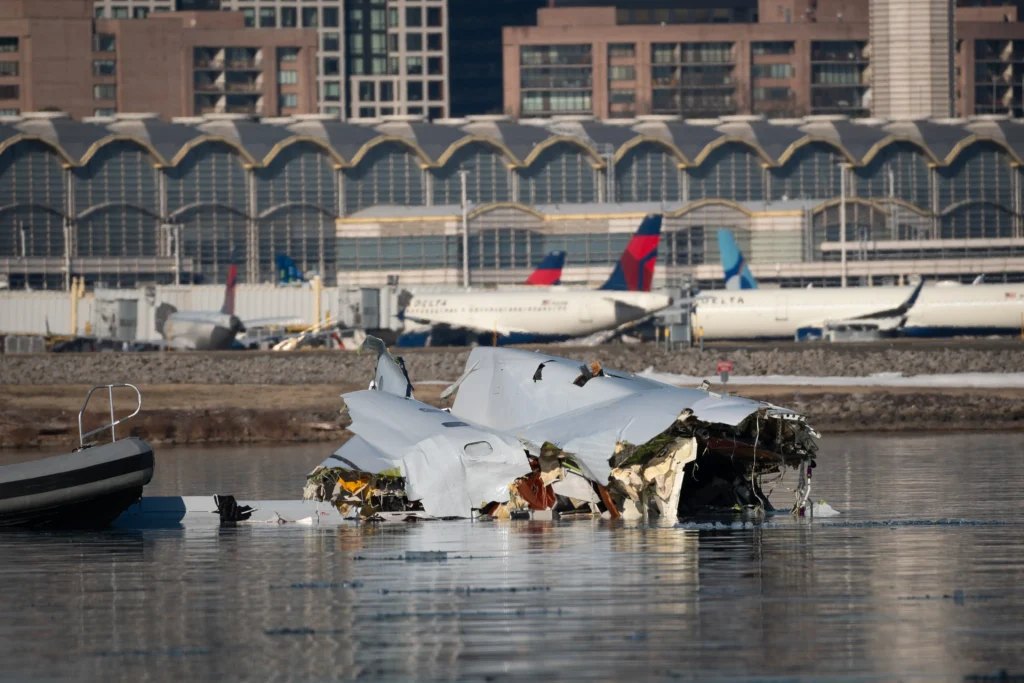
Unlike many routine aviation events, this one carries additional weight because it occurred within the same tightly controlled airspace where the January 2025 midair collision between an American Eagle regional jet and a U.S. Army Black Hawk helicopter claimed 67 lives. That accident prompted sweeping changes to helicopter operations around DCA, making Tuesday’s event a closely watched test of those procedures.
Table of Contents
At a Glance
- Incident: Apparent loss of separation
- Location: Ronald Reagan Washington National Airport (DCA)
- Aircraft: Marine One and Envoy Air Flight 3742 (Embraer E170)
- Date: Tuesday, August 4, 2026
- Outcome: Both aircraft continued safely
- FAA response: Investigation underway; Safety Review Team expected
- Key question: Why were commercial departures still operating during Marine One’s departure?
What Happened
According to the FAA and multiple news reports, Marine One lifted from the Ellipse at approximately 2:33 p.m. local time before heading toward Joint Base Andrews. About one minute later, Envoy Air Flight 3742, an Embraer E170 bound for Pensacola, departed Reagan National Airport. Envoy Air is a wholly owned subsidiary of American Airlines and operates as American Eagle. Flight tracking data placed the jet within roughly 1.5 miles of the Ellipse shortly after takeoff.
Reuters reported that sources familiar with the event said standard separation requirements may not have been maintained. The FAA has not formally confirmed a loss of separation and has emphasized that the aircraft were not converging and that the event did not amount to a dangerous close call.
A second aircraft, Republic Airways Flight 4700, was about three miles from the airport at the time and was instructed to perform a precautionary go-around. It landed safely at 2:52 p.m.
Timeline of Events
| Time | Event |
|---|---|
| 2:31 p.m. | Marine One crew advises Reagan Tower they are approximately three minutes from lifting. |
| ~2:33 p.m. | Marine One departs the Ellipse near the White House. |
| ~2:34 p.m. | Envoy Air Flight 3742 departs DCA for Pensacola. |
| Moments later | Controllers issue a traffic advisory; Marine One reports the departing jet in sight and continues toward Andrews. |
| 2:52 p.m. | Republic Airways Flight 4700 lands safely after a precautionary go-around. |
Air Traffic Control Audio Raises New Questions
Air traffic control recordings reviewed by CNN suggest the event may have stemmed from a communication breakdown rather than pilot error. According to those recordings, the Marine One crew contacted Reagan Tower several times before departure.
At approximately 2:31 p.m., the crew transmitted that they were “three minutes to lift.” The call reportedly went unacknowledged, and airport traffic continued operating. On a later transmission, the controller advised that the previous call had been broken and unreadable.
Minutes afterward, Marine One advised controllers it was departing on its previously briefed route. The controller then warned of a regional jet already rolling for takeoff, and the crew reported the traffic in sight. A U.S. Marine Corps spokesperson later told CNN the flight was routine and that Washington National Tower did not delay the crew, ask them to hold, or otherwise alter their flight profile.
That sequence is now central to the FAA’s review, because post-2025 procedures generally require commercial traffic to be halted before Marine One begins moving. The crew appears to have provided the expected advance notice. Investigators will now examine why airport operations continued.
Why the Rules Exist
The significance of this incident extends well beyond Tuesday’s operations.
On January 29, 2025, American Eagle Flight 5342 collided with a U.S. Army UH-60 Black Hawk helicopter while approaching Reagan National Airport, killing all 67 people aboard both aircraft. It became the deadliest U.S. commercial aviation accident since 2001.
In the wake of the collision, and acting on National Transportation Safety Board recommendations, the FAA implemented major changes around DCA, including:
- Restricting mixed helicopter and airline operations in the DCA corridor
- Eliminating many opportunities for visual separation near major airports
- Narrowing exceptions primarily to presidential, military, law enforcement, and medevac flights
- Increasing operational controls during Marine One movements
Those measures have increased runway closures and contributed to delays at an already capacity-constrained airport, but they were designed to reduce the risk of another catastrophic conflict between helicopters and commercial aircraft.
What Is a Loss of Separation?
A loss of separation occurs when aircraft fail to maintain the minimum spacing required by FAA standards. Near airports, controllers typically work to maintain roughly:
- 1.5 miles of horizontal separation
- 500 feet of vertical separation
A loss of separation does not necessarily mean a collision was imminent. It indicates that aircraft came closer than prescribed safety margins, prompting review and, in some cases, formal investigation. In this case, the FAA has stated the aircraft were not converging and has not characterized the event as a dangerous close call.
What Happens Next
According to Reuters, the FAA is expected to convene a Safety Review Team, a process typically used when an event suggests a procedural or systemic weakness rather than a single operational error.
Investigators are expected to examine:
- Whether established Marine One procedures were followed
- Air traffic control communications and radio quality
- Controller workload at the time of the departure
- Coordination between presidential flight operations and airport traffic
- Whether additional safeguards are needed
The White House has downplayed the event. Spokesperson Kush Desai told the Wall Street Journal, which first reported the story, that Marine One is flown by some of the world’s best aviators and that the President was never in harm’s way.
Envoy Air and American Airlines had not commented at the time of publication.
Why This Investigation Matters
While Tuesday’s event ended safely, it occurred in one of the nation’s most sensitive and tightly controlled pieces of airspace.
The FAA’s review is unlikely to focus solely on the crews involved. Investigators will more likely examine whether the procedures established after the 2025 DCA collision functioned as intended, or whether additional safeguards are needed to prevent similar situations.
For aviation professionals, the incident is another reminder that procedures are only as effective as their execution, and that operations involving presidential aircraft demand precise coordination between flight crews and air traffic controllers.
FAQ: Marine One Reagan National Incident
Was President Trump ever in danger?
According to the FAA, the aircraft were not converging, and officials have not described the event as a dangerous close call. Both aircraft continued their flights safely while the investigation proceeds.
What is Marine One, and who flies it?
Marine One is the call sign for any U.S. Marine Corps aircraft carrying the President. The mission is flown by Marine Helicopter Squadron One (HMX-1), based at Marine Corps Air Facility Quantico, Virginia.
Why are departures stopped during Marine One operations?
Following the January 2025 DCA midair collision, the FAA implemented stricter procedures intended to prevent conflicts between helicopters and commercial aircraft during presidential helicopter movements.
Sources
For additional information, see:
- Wall Street Journal
- Reuters
- CNN
- Federal Aviation Administration (FAA)
- National Transportation Safety Board (NTSB)