The U.S. Army awarded Northrop Grumman a $4.84 billion CIRCM contract on September 8, 2026, for full-rate production of its Common Infrared Countermeasures system, the laser-based technology that protects Army helicopters from heat-seeking missiles. The firm-fixed-price, indefinite-delivery/indefinite-quantity award runs through September 30, 2035, giving the Army nearly a decade of procurement capacity through a single contract vehicle.
Northrop Grumman was the only company to bid on the work. The contract replaces the decades-old approach of dodging heat-seeking missiles with flares and chaff, substituting a system that fires a laser directly at an incoming missile’s infrared seeker to steer it off course.
Table of Contents
What the $4.84 Billion Contract Covers
The award, contract number W58RGZ-26-D-0056, went to Northrop Grumman Systems Corp. of Rolling Meadows, Illinois, with the Army Contracting Command at Redstone Arsenal, Alabama, managing the deal. The Pentagon’s notice did not specify how many CIRCM units the contract covers or how funding breaks down year to year; work locations and funding will instead be determined as individual orders are issued against the vehicle over its nine-year span.
This is the Army’s second full-rate production IDIQ for CIRCM, following an earlier CIRCM contract worth $959.1 million awarded to Northrop Grumman in April 2021. Annual production orders have followed since, including awards of roughly $155.1 million, $142 million, and $144 million in 2023, and a fourth award in 2024 covering 336 additional shipsets on top of the 500 units already delivered.
How CIRCM Protects Helicopters
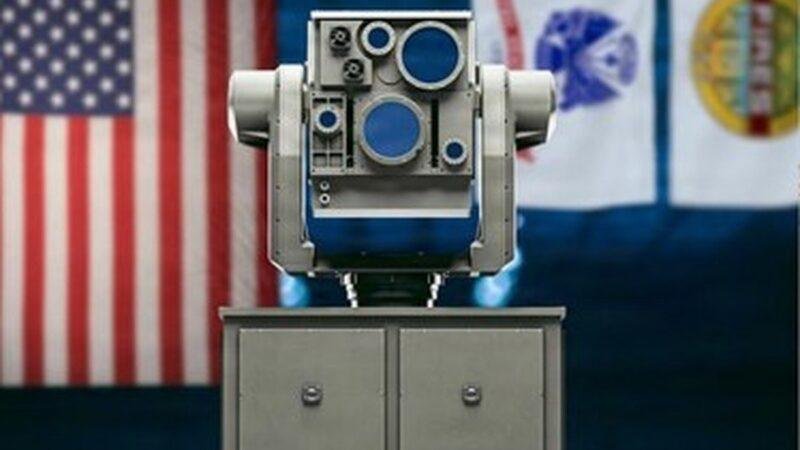
CIRCM, short for Common Infrared Countermeasures, is a lightweight, dual-jammer directional infrared countermeasure system built around a quantum cascade laser. It integrates with an aircraft’s existing missile warning sensors, which detect an incoming infrared-guided missile and cue the system’s turreted beam directors to track it. The laser then fires directly at the missile’s seeker, distorting its view of the target and steering it off course, a sequence Northrop Grumman says takes only a few seconds.
That approach targets the missile’s guidance directly, rather than relying on flares or chaff to confuse a seeker from a distance, the method helicopter crews have used since the late 1960s. The threat CIRCM is designed to counter, shoulder-fired and vehicle-launched infrared-guided missiles, has downed numerous helicopters in Ukraine since Russia’s 2022 invasion.

From Test Program to Nearly 700 Systems Fielded
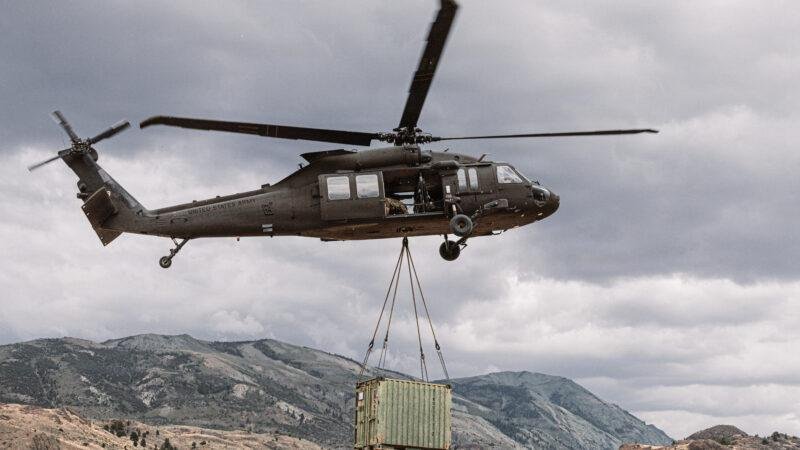
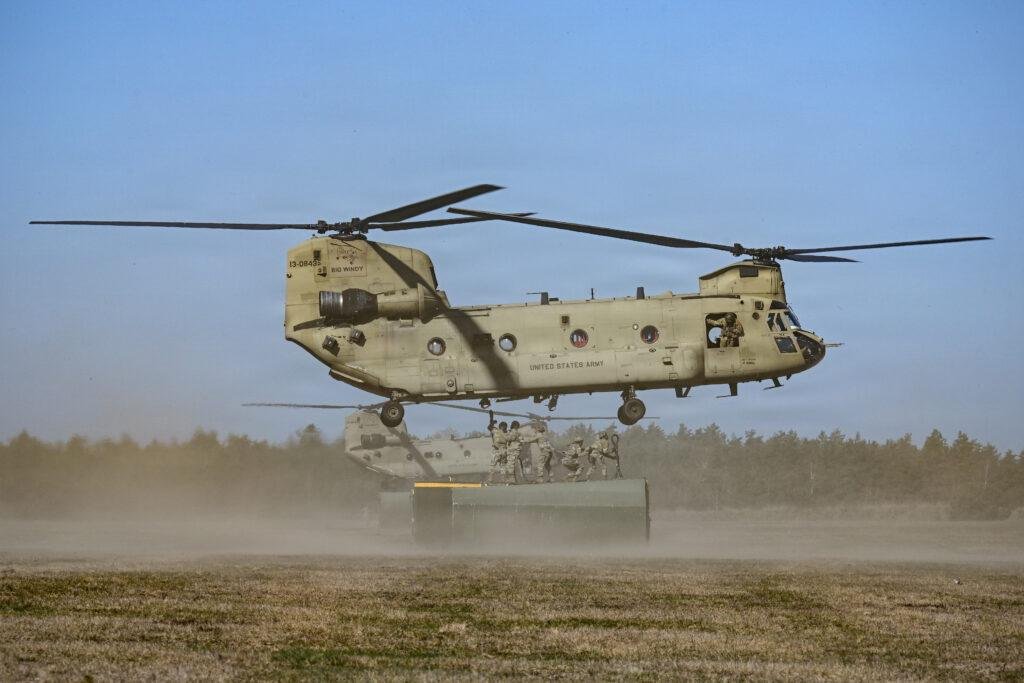
The Army declared CIRCM’s Initial Operational Capability in November 2022, after installing the system on more than 100 aircraft. By 2023, it was operational on the UH-60M and HH-60M Black Hawk, the CH-47F Chinook, and the AH-64E Apache.
“CIRCM’s ability to track and rapidly defeat infrared-guided threats has been validated over thousands of hours of rigorous testing in laboratory, flight and live-fire test environments. Achieving IOC was made possible by the entire team’s dedication and our strong partnership with the Army.”
Bob Gough, Vice President, Navigation, Targeting and Survivability, Northrop Grumman, speaking after CIRCM reached Initial Operational Capability in 2023
As of this year, Northrop Grumman says nearly 700 CIRCM systems have been installed on rotary-wing aircraft worldwide, logging more than 70,000 operational flight hours. In March 2026, the company delivered its first export CIRCM systems, equipping Germany’s newly ordered CH-47 Chinook fleet, extending the system beyond the U.S. Army for the first time.
FAQ: Northrop Grumman CIRCM Contract
What aircraft does CIRCM protect?
CIRCM is fielded on the Army’s AH-64 Apache, CH-47 Chinook, and UH-60 Black Hawk helicopters. The system is designed to work on rotary-wing, tiltrotor, and small fixed-wing aircraft more broadly.
How does CIRCM actually work?
It uses the aircraft’s existing missile warning sensors to detect an incoming infrared-guided missile, then fires a laser at the missile’s seeker to disrupt its tracking and steer it off course, rather than relying on flares or chaff.
Is CIRCM used outside the U.S. Army?
Yes. Northrop Grumman delivered its first export CIRCM systems to Germany in March 2026 for the country’s newly ordered CH-47 Chinook fleet, the first allied air force to receive the system.
Looking Ahead
The new CIRCM contract gives the Army a procurement vehicle running through 2035, but the Pentagon has not disclosed how many systems will actually be ordered under the CIRCM contract or on what schedule. The Aviation Diary will track individual production orders as they’re issued, along with whether additional allied nations follow Germany in adopting CIRCM through Foreign Military Sales.
Sources
- The Defence Blog — “U.S. Army Awards NG $4.8B for Helicopter Missile Defense”
- ClearanceJobs — “Army Awards Northrop Grumman $4.8 Billion Infrared Countermeasure Contract”
- Defense Daily — “Army Awards Nearly $5 Billion CIRCM Full-Rate Production Deal to Northrop Grumman”
- Defense Security Monitor — on Germany’s CIRCM export and program history
- The Aviationist — “A Very Close Look at the Anti-Missile System That Will Equip 1,500+ US Army Helicopters”