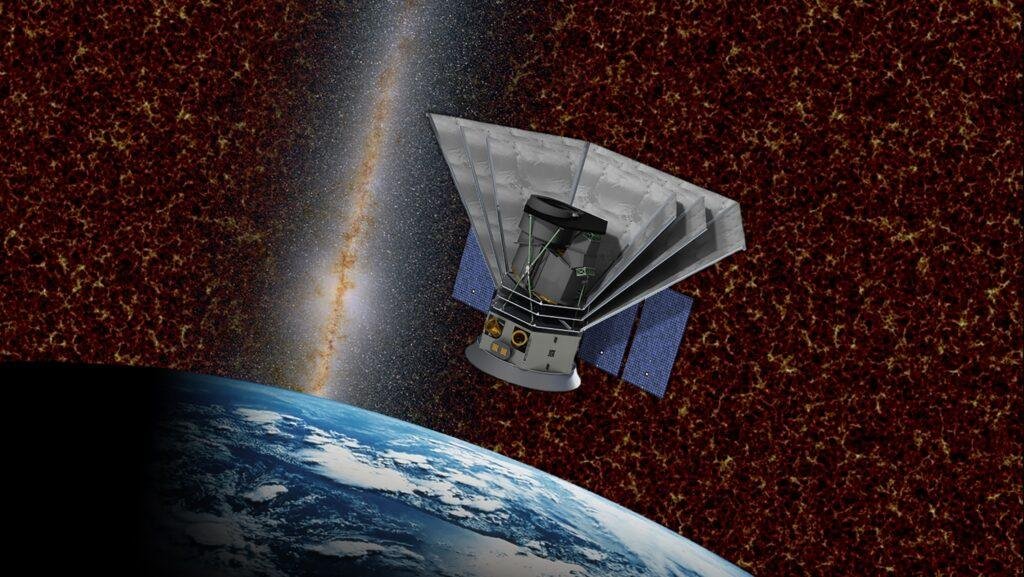
SPHEREx brown dwarfs observations are revealing atmospheric signatures in objects that are too small to sustain ordinary stellar hydrogen fusion but can be warmer than giant planets.
NASA said October 8 that a research team examined 37 nearby brown dwarfs with its space telescope. The findings, reported in The Astrophysical Journal, suggest complex infrared chemistry across a broad range of atmospheric temperatures.
The telescope is intended to survey many more targets. The new sample is an early analysis, not a completed census of brown dwarfs or a direct claim that these objects support biological life.
Table of Contents
SPHEREx Brown Dwarfs Show Planet-Like Molecules
Brown dwarfs form when clouds of gas collapse, much as stars form, but their masses are insufficient for sustained hydrogen fusion. Unlike planets orbiting bright host stars, many free-floating brown dwarfs are heated primarily by their own internal energy.
NASA reports that SPHEREx detected infrared spectral patterns consistent with molecules including water, methane, carbon monoxide and carbon dioxide. Their different absorption features allow researchers to compare atmospheric conditions between objects.
The study examined a sample spanning temperatures from around 2,200 degrees Celsius to minus 20 degrees Celsius. That wide range permits comparisons between warmer, star-like brown dwarfs and cooler atmospheres with more planet-like properties.
SPHEREx brown dwarfs: How Infrared Colors Reveal Hidden Atmospheres
SPHEREx collects measurements across 102 spectral channels rather than taking a single ordinary color photograph. Different atmospheric molecules affect the brightness of light at different wavelengths, producing the fingerprints astronomers study.
The observations extend from near the visible red range into infrared light that human eyes cannot detect. That spectral coverage is useful because many brown dwarfs are dim in ordinary images even while emitting detectable thermal radiation.
Atmospheric clouds and chemistry can complicate the reading of these patterns. Researchers need models and comparisons across multiple objects to infer what combinations of temperature, cloud coverage and molecular composition best fit each spectrum.
A Larger Sample May Test Current Models
Only a small number of brown dwarfs had previously received detailed space-based study, NASA says. SPHEREx is surveying thousands, potentially reducing the sampling limits that have shaped theories of brown dwarf atmospheres.
Comparisons with Jupiter and Saturn are scientifically useful because those planets also possess complex gas atmospheres. They do not make brown dwarfs ordinary planets: their formation, heat sources and temperatures can be substantially different. The SPHEREx brown dwarfs study uses infrared spectra to compare atmospheres without physically sampling their gases.
The October findings expand the observational evidence available to test atmospheric models. NASA has not claimed that every brown dwarf has the same chemical mixture or that infrared signatures alone provide a full interior map.
FAQ: SPHEREx brown dwarfs
What did SPHEREx brown dwarfs data reveal?
A brown dwarf is an object formed like a star but too low in mass to sustain ordinary hydrogen fusion.
How many brown dwarfs were included in this SPHEREx study?
The initial study described by NASA analyzes observations of 37 nearby brown dwarfs.
Can SPHEREx detect atmospheric molecules?
Its infrared spectra contain features researchers use to identify likely water, methane and other molecules in brown dwarf atmospheres.
Looking Ahead
The team plans broader analysis of the thousands of brown dwarfs appearing in SPHEREx observations. Additional spectra should help evaluate how atmospheric chemistry changes across temperatures.
Sources
Image credit: NASA Jet Propulsion Laboratory (US-GOV-PUBLIC-DOMAIN; reuse terms). Featured image is an archival or contextual illustration, not the reported event.