The White House helipad taking shape on the South Lawn is nearly finished, ending five decades of presidential helicopters landing directly on grass. The permanent granite pad was built for one reason: the Sikorsky VH-92A Patriot that now flies the Marine One mission is too powerful for the lawn it is supposed to land on.
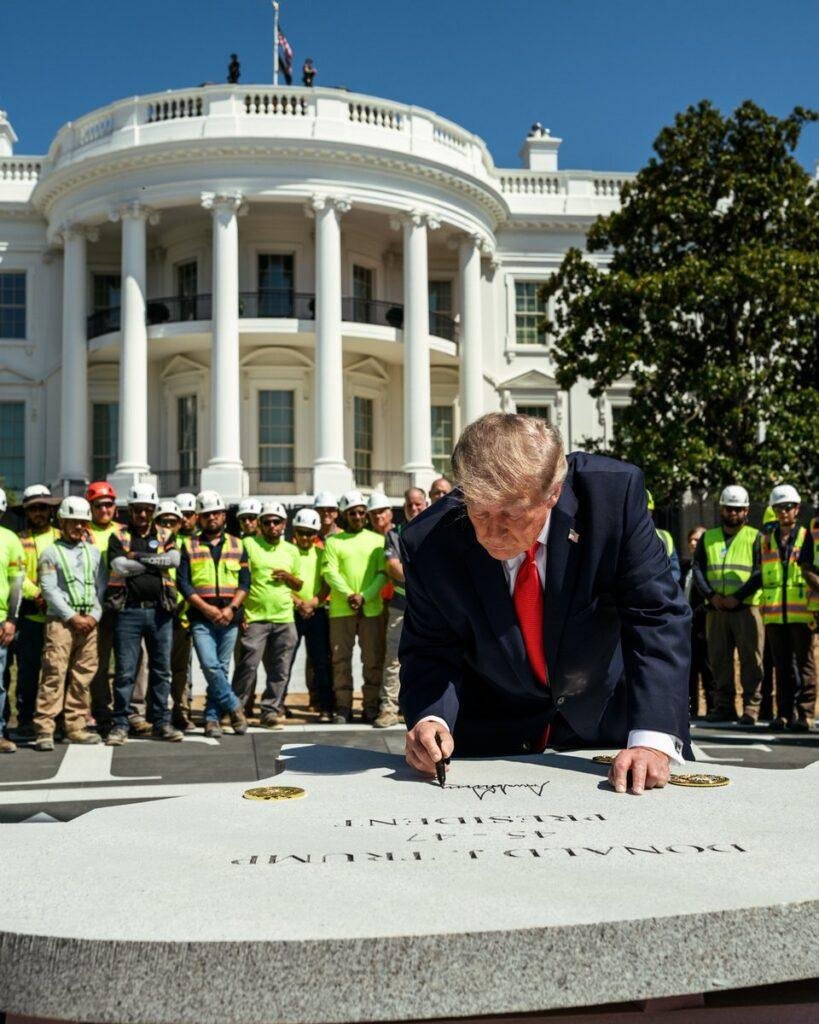
President Donald Trump toured the site with reporters on August 19, 2026, signing a slab of granite that will be laid into the finished surface and saying the pad will be operational this month.
Table of Contents
Why the White House Helipad Is Being Built
The problem is aerodynamic, not cosmetic.
The VH-92A Patriot vents much of its engine exhaust downward and toward the rear of the airframe, and it generates roughly two and a half times the rotor wash of the VH-3D Sea King it replaces. On a prepared surface that is a non-issue. On turf, it is destructive.
Each landing did not simply discolor the South Lawn. It tore the grass out. Marines had tried mitigating the damage by laying metal landing mats, but the exhaust plume routinely extended past the edges of the mat and chewed up the surrounding turf anyway.
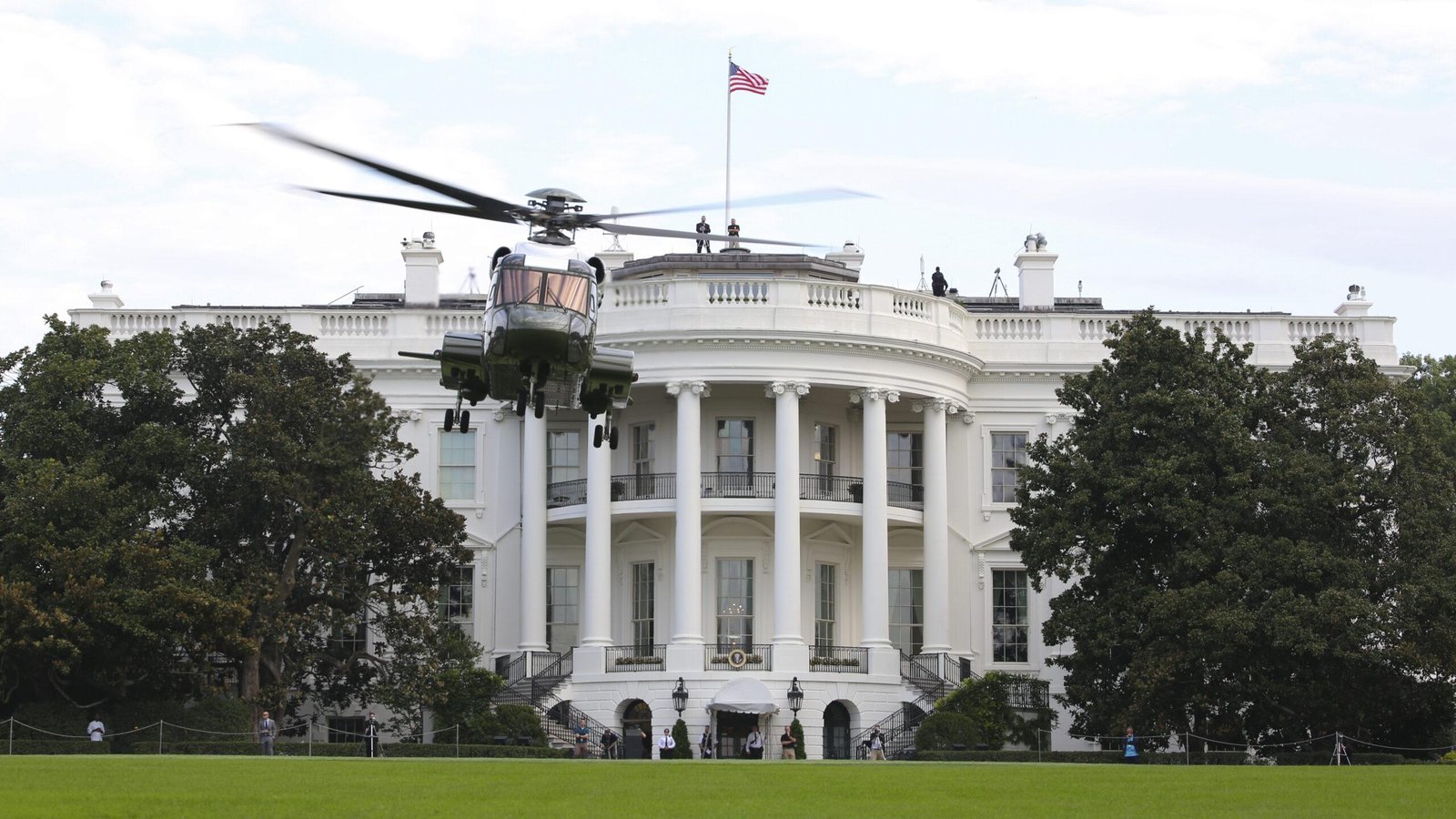
The practical consequence was that the newest presidential helicopters in the fleet were kept largely away from their most famous destination. The VH-92A flew presidential missions elsewhere while the aging VH-3D continued handling routine South Lawn arrivals and departures.
“For 50 years, we’ve been landing helicopters on grass.”
President Donald Trump, speaking to reporters
The VH-92A Patriot Behind the Change
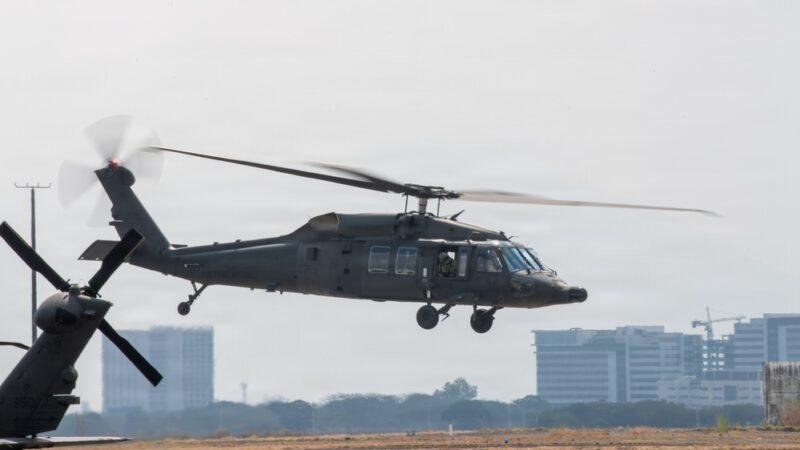
Built by Sikorsky, a Lockheed Martin company, the VH-92A Patriot is derived from the commercial Sikorsky S-92 and was developed under a U.S. Navy contract valued at approximately $1.24 billion to recapitalize the presidential helicopter fleet.
Sikorsky completed delivery of all 23 aircraft to the Marine Corps in August 2024. The type is intended to replace the long-serving VH-3D Sea King and, in time, portions of the VH-60N White Hawk fleet operated by Marine Helicopter Squadron One.
Compared with the airframes it succeeds, the VH-92A brings:
- A larger, more powerful airframe based on the proven S-92 commercial platform
- Modern secure communications keeping the president connected to U.S. command networks in flight
- Updated defensive and mission systems
- Substantially greater downwash and a rearward, downward-directed exhaust path
- Improved cabin capacity for staff and security personnel
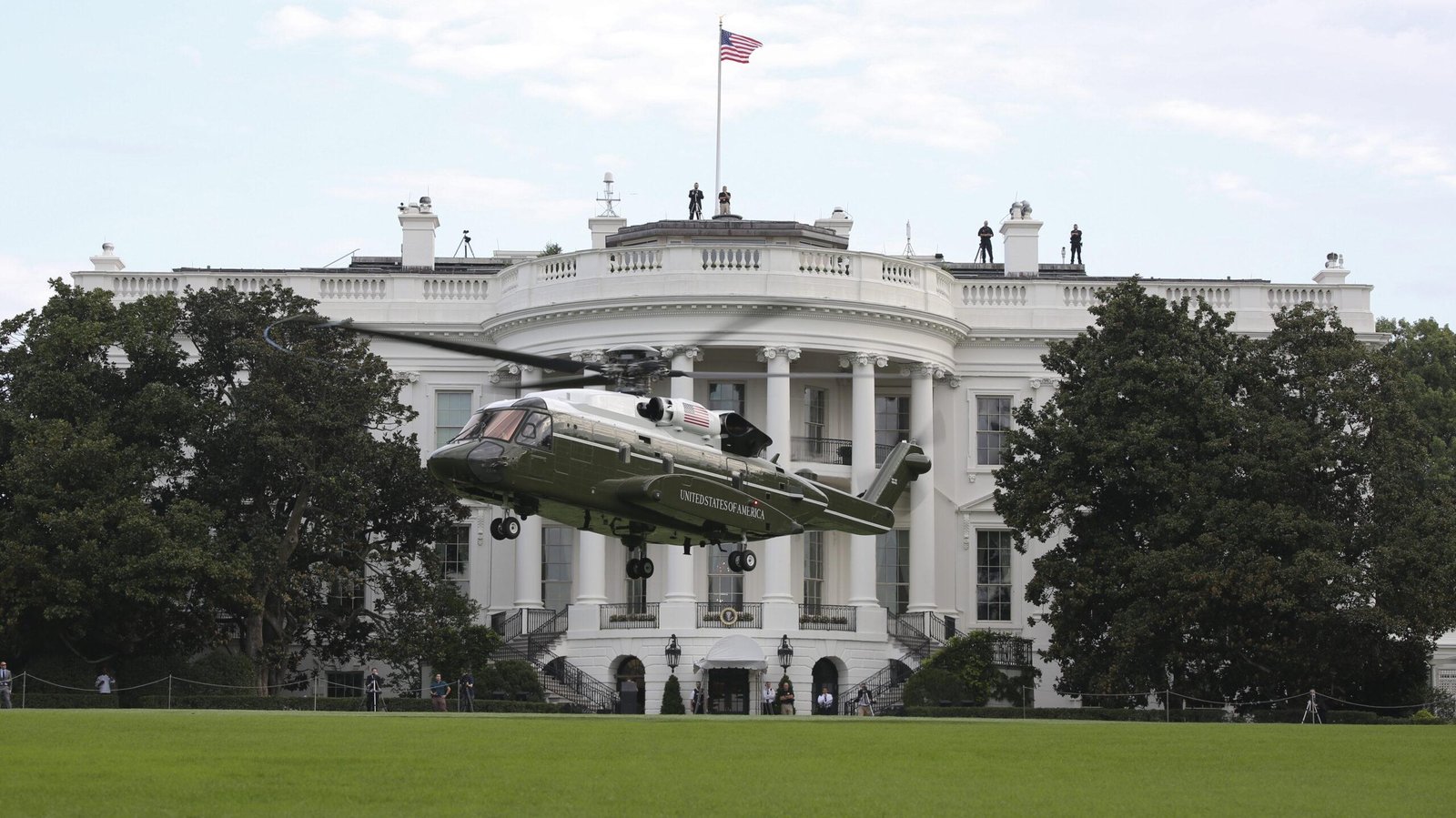
That final characteristic is the one that produced a construction project on the South Lawn. The aircraft was ready years before the ground it needed to land on was.
From Grass to Granite
For generations the image was consistent: the helicopter descends over Washington, settles onto open grass a short walk from the South Portico, and Marines hold position while the president crosses the lawn. There was no fixed landing zone, a arrangement long favored because a permanent, predictable pad is easier to target.
The new installation replaces that improvised arrangement with a circular granite surface roughly 100 feet in diameter, carved with the presidential seal at its center.
The work has not been entirely linear. Portions of the newly laid stonework were removed and rebuilt after the president rejected the original slope. During the August 19 tour, Trump signed a large granite slab featuring a radial cut he said he had personally specified, which is to be flipped and set into the pad surface. He also signed the reverse of a carved eagle destined for the seal itself.
Who Is Paying for the White House Helipad
The White House helipad is being funded by Sikorsky rather than by appropriated federal money. Trump has put the figure at roughly $5 million to $6 million, and a Lockheed Martin spokesperson has confirmed the company’s contribution, which was made to the National Park Service.
The adjacent driveway replacement is a separate line of work. Trump has said that project was covered by private donations, including his own.
Beyond flight operations, the finished pad is expected to serve as an outdoor venue for presidential press conferences and events.
Marine One Is a Call Sign, Not an Aircraft
A recurring misconception is worth clearing up alongside the helipad story: Marine One is a radio call sign, not the name of a particular helicopter.
Any U.S. Marine Corps aircraft carrying the sitting president uses it. The mission belongs to Marine Helicopter Squadron One, better known as HMX-1, headquartered at Marine Corps Base Quantico in Virginia. The squadron flies presidential transport and also supports movement for other senior government officials.
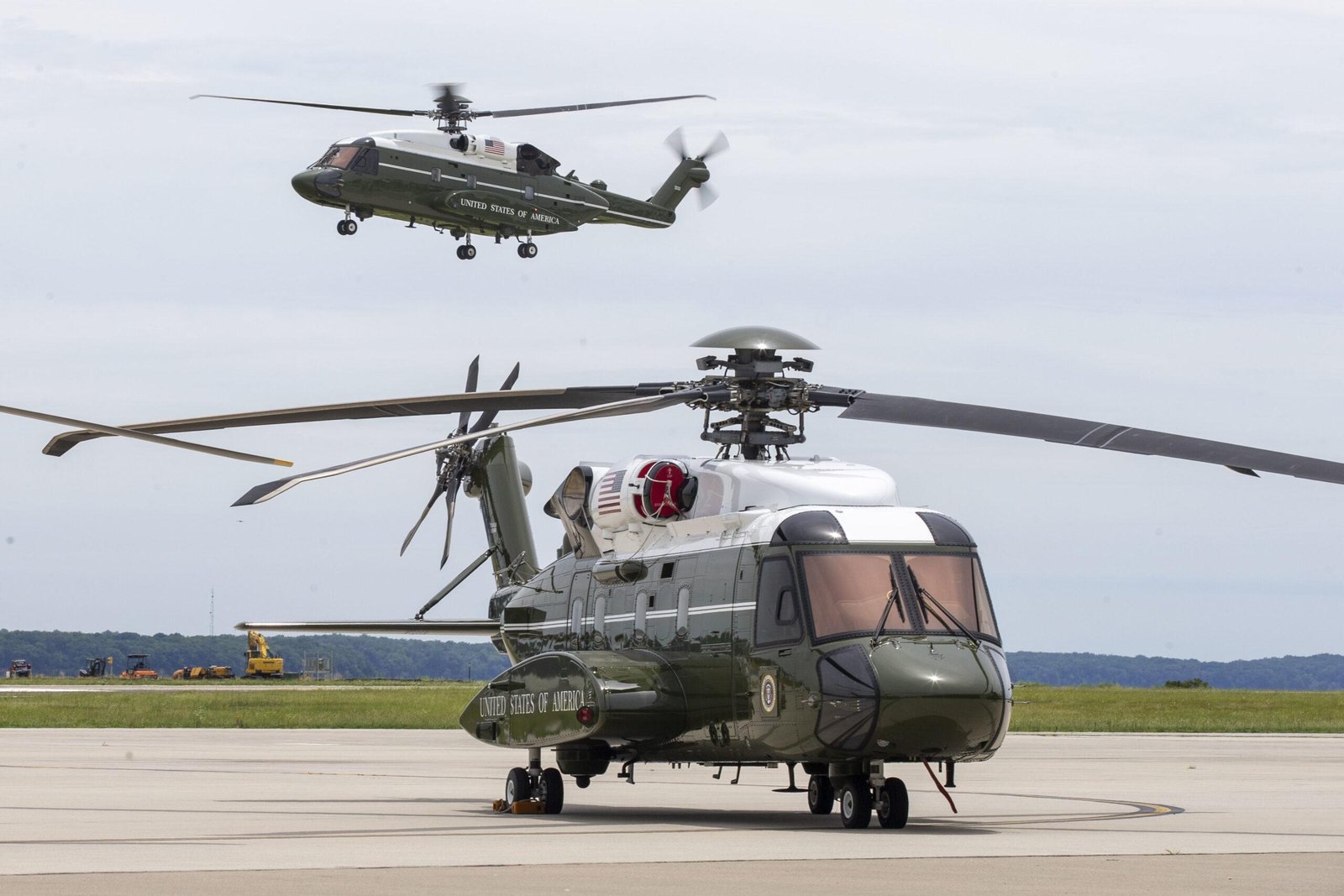
When the president steps aboard a VH-92A, that airframe becomes Marine One for the duration of the flight.
What Happens Next
Set against a new fighter program or an airport expansion, a 100-foot circle of stone is a small piece of infrastructure. Its significance is entirely about location.
South Lawn departures are among the most photographed helicopter operations on earth, and the visual grammar of those departures has been fixed for half a century. The White House helipad changes it. Rather than continuing to adapt an aircraft to an unsuitable surface, the surface has been rebuilt around the aircraft.
The milestone aviation observers will be watching for is the first operational Marine One landing on the completed pad, which Trump has indicated should come within the month. That touchdown formally closes the VH-3D era at the White House and opens the VH-92A one.
The Aviation Diary will continue tracking the VH-92A transition, HMX-1 operations, and related U.S. military aviation developments.
FAQ: The White House Helipad and Marine One
Why does the White House need a helipad now?
The VH-92A Patriot directs its exhaust downward near the rear of the airframe and produces roughly 2.5 times the rotor wash of the VH-3D Sea King. Repeated landings ripped the South Lawn grass out rather than merely discoloring it, and metal landing mats did not contain the damage.
How much does the White House helipad cost and who is paying?
Roughly $5 million to $6 million, donated by Sikorsky, the Lockheed Martin subsidiary that builds the VH-92A. Lockheed Martin has confirmed the contribution was made to the National Park Service.
Is Marine One a specific helicopter?
No. Marine One is a call sign applied to whichever Marine Corps aircraft is carrying the sitting president. HMX-1 at Quantico flies the mission, currently with the VH-92A Patriot and the older VH-3D and VH-60N types.
Sources
For additional information about this story:
- CNN — Trump unveils new construction project, signs piece of helipad
- The Washington Times — Trump signs slab as part of new White House helipad
- The Epoch Times — Trump Unveils Upgrades to White House Grounds
- Military Times — Marine One helipad to be built on White House lawn
- The War Zone — VH-92 Patriot Getting Granite White House Helipad