Fort Hood Apache crash investigators are examining what caused a U.S. Army AH-64 Apache attack helicopter to go down near Salado, Texas, on Wednesday, killing two soldiers during a routine training flight.
The crash occurred on August 12, 2026, in Bell County, roughly 60 miles north of Austin. The helicopter went down in a field and sparked a large grass fire, bringing Army personnel, law enforcement and multiple local fire departments to the scene. Both soldiers aboard the aircraft were pronounced dead.
The soldiers’ identities had not been publicly released Wednesday night as the Army worked to notify their families. The cause of the Fort Hood Apache crash also remained under investigation.
Table of Contents
Fort Hood Apache Crash Near Salado, Texas
The AH-64 Apache crashed Wednesday afternoon in a field near Salado in Bell County, southeast of Fort Hood.
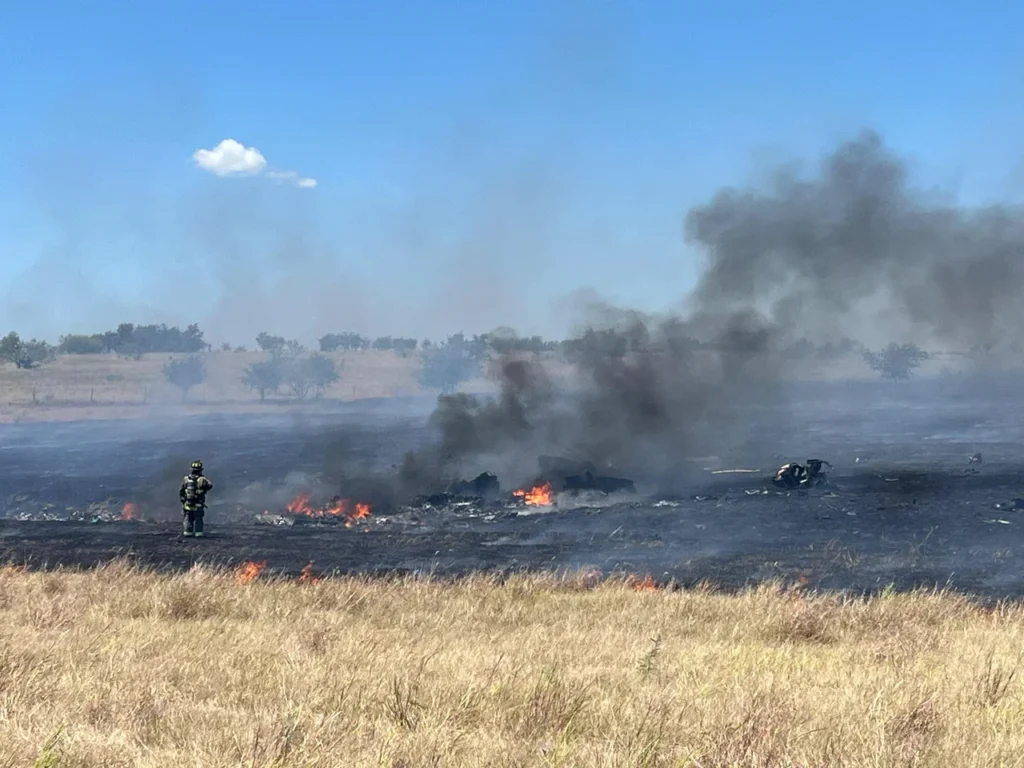
Local authorities responded to reports of the crash as smoke and fire spread across the surrounding field. Images released from the scene showed burned terrain, scattered wreckage and emergency personnel working near the crash site.
The Army subsequently confirmed that the aircraft was an AH-64 Apache based at Fort Hood and that two soldiers were killed.
According to reporting from Reuters, the Bell County justice of the peace pronounced both soldiers dead at the scene. Multiple local fire departments assisted with the fire caused by the crash.
What We Know So Far
| Detail | Confirmed Information |
|---|---|
| Date | August 12, 2026 |
| Location | Near Salado, Bell County, Texas |
| Aircraft | U.S. Army AH-64 Apache |
| Home installation | Fort Hood, Texas |
| Occupants | Two U.S. Army soldiers |
| Fatalities | Two |
| Flight | Routine training flight |
| Crash investigation | Ongoing |
| Cause | Not yet determined |
Crash Sparks Large Grass Fire
The impact ignited a significant grass fire around the crash site.
Photos from the Bell County Sheriff’s Office showed a wide area of burned vegetation with smoke rising from the wreckage as emergency personnel worked at the scene.
The fire prompted a substantial response from local agencies, with firefighters working to contain flames surrounding the wreckage. Several local fire departments assisted at the scene.
Apache Was on a Routine Training Flight
The helicopter was conducting a routine training flight when it crashed, according to information provided by military officials.
Exactly what happened during the flight remains unknown.
As of Wednesday night, the Army had not announced a preliminary cause of the Fort Hood Apache crash. There has also been no official determination publicly attributing the accident to a mechanical problem, maintenance issue, weather, pilot action or any other factor.
Until investigators release additional information, claims circulating online about what caused the Apache to go down should be treated as speculation.
Two Fort Hood Soldiers Killed
Fort Hood confirmed that two soldiers were killed in the accident.
The Army has not yet publicly identified the soldiers as officials work through the notification process for their families.
Fort Hood officials expressed condolences to the families, friends and fellow soldiers affected by the loss.
Texas Gov. Greg Abbott also acknowledged the crash and offered condolences following confirmation of the fatalities.
What Is the AH-64 Apache?
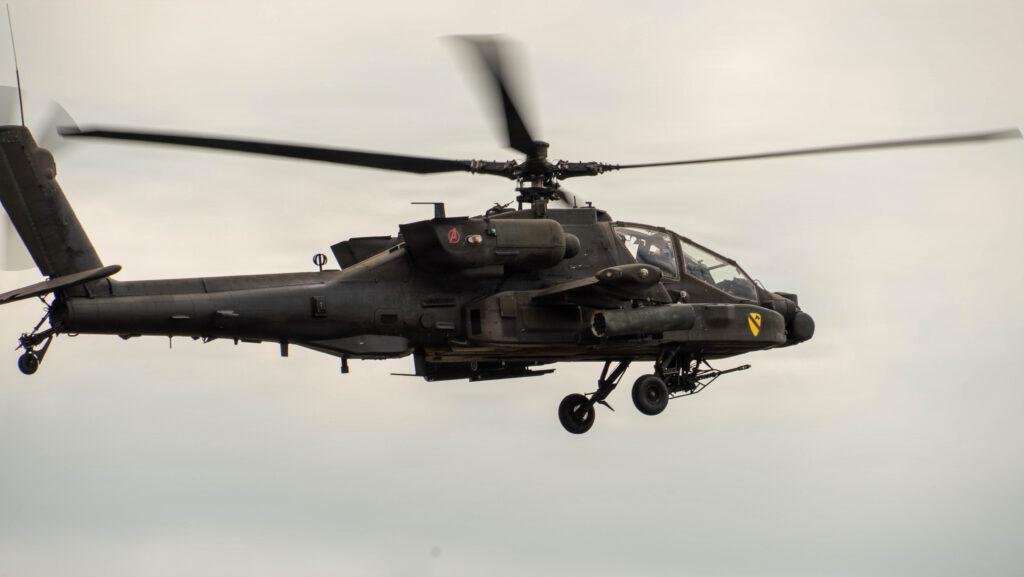
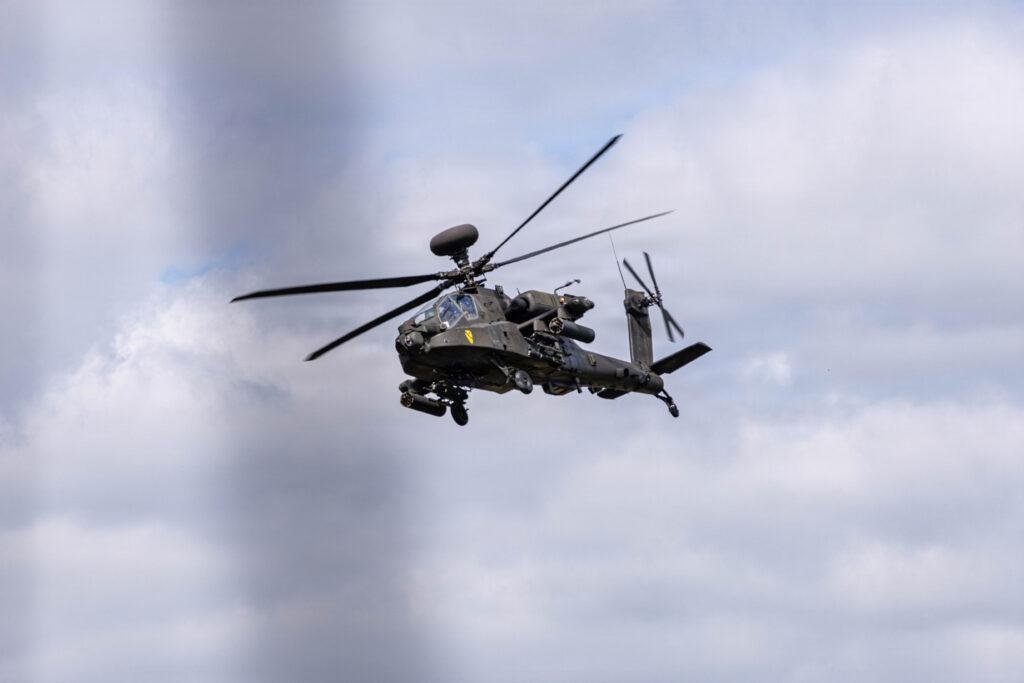
The AH-64 Apache is the U.S. Army’s primary attack helicopter and one of the most recognizable military helicopters in service.
The twin-engine, four-bladed aircraft uses a tandem cockpit with a pilot and co-pilot/gunner. It is designed to perform missions including armed reconnaissance and close combat operations in daytime, nighttime and adverse-weather conditions.
Apache variants can carry the M230 30mm chain gun, 2.75-inch rockets and AGM-114 Hellfire missiles, among other systems. The modern AH-64E incorporates upgraded sensors, communications and situational-awareness capabilities.
Investigation Into the Fort Hood Apache Crash
The cause of Wednesday’s Fort Hood Apache crash remains under investigation.
Military aviation accident investigations can involve examinations of aircraft wreckage, maintenance documentation, flight information, crew records, environmental conditions and other evidence before investigators reach conclusions about the sequence of events.
That process can take considerable time, and an initial lack of information about the cause is not unusual during the early stages of an aviation accident investigation.
No official finding regarding the cause of the Salado crash had been announced as of publication.
The Aviation Diary will update this report when the Army releases additional verified information about the Fort Hood Apache crash, including the soldiers’ identities, their unit or findings concerning the accident.
About Fort Hood
Fort Hood is one of the U.S. Army’s largest installations and is located in Central Texas near Killeen, approximately 60 miles north of Austin.
The installation supports major Army formations and extensive aviation and ground-training operations. Apache helicopters have operated from the installation for years as part of Army aviation training and readiness missions.
The crash near Salado occurred southeast of the installation in Bell County.
Developing Story
This is a developing story. Information about the Fort Hood Apache crash may change as Fort Hood, the U.S. Army and local authorities release additional details.
The Aviation Diary will update this article as verified information becomes available.
Sources