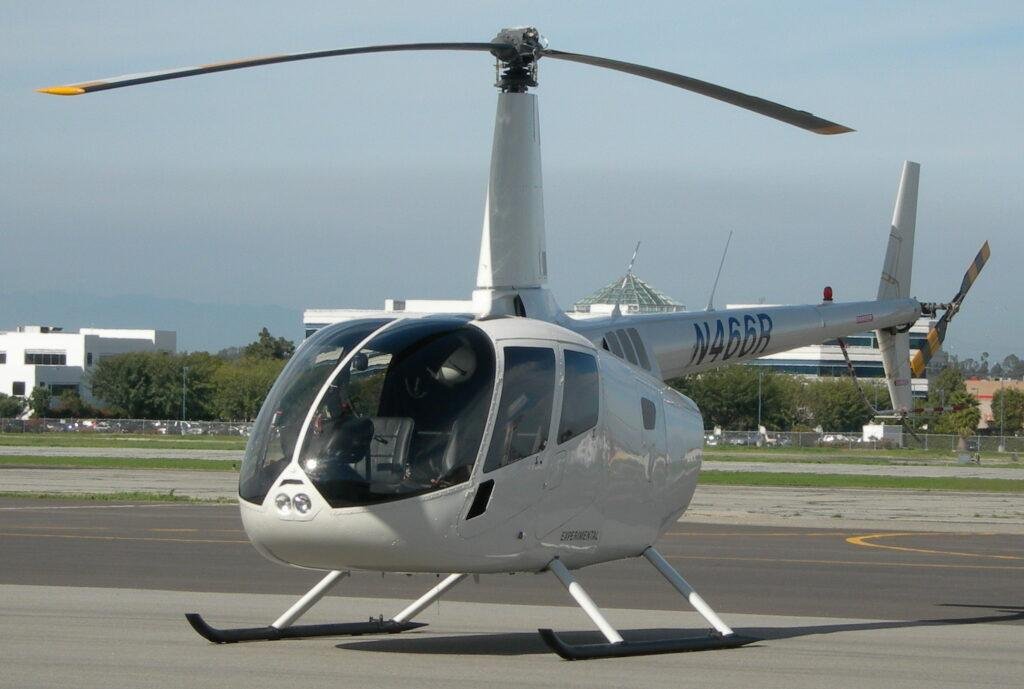
Robinson R66 Flight School Next selection news is reshaping the outlook for U.S. Army helicopter training. The Army is moving toward a major overhaul of how it trains its next generation of rotary-wing pilots, selecting M1 Support Services for the Flight School Next (FSN) program and the Robinson R66 as the program’s training helicopter.
Robinson Helicopter Company confirmed on August 17, 2026, that the R66 is included in M1’s Flight School Next solution for the Army’s Initial Entry Rotary-Wing (IERW) training program at Fort Rucker, Alabama.
Table of Contents
Robinson R66 Flight School Next: Selected for Army Training
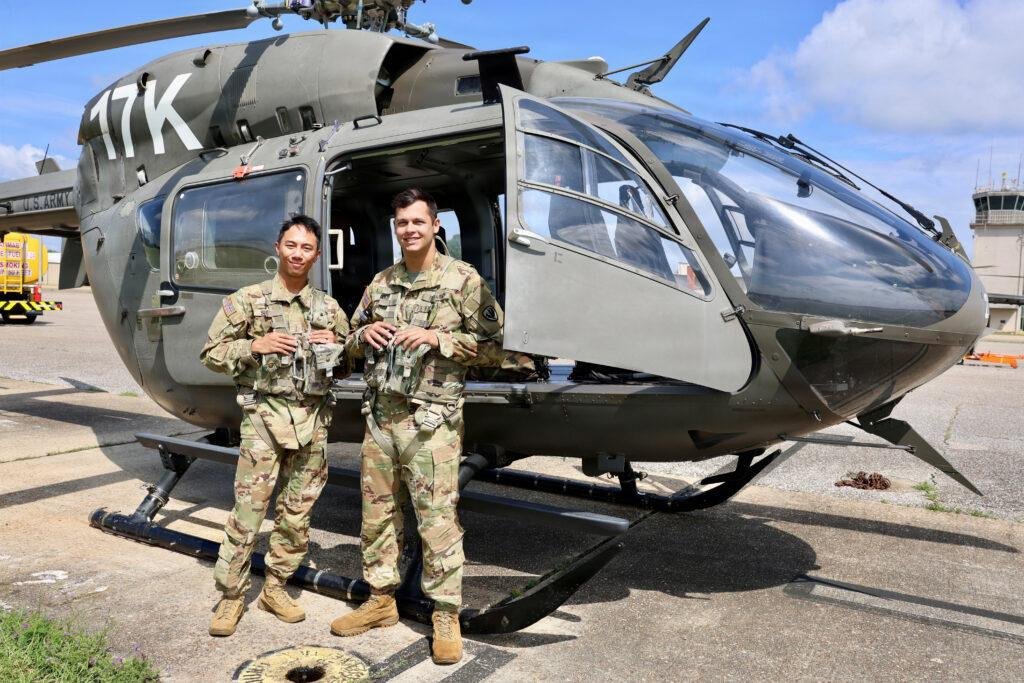
The selection represents a significant change for Army aviation training, moving away from the twin-engine UH-72 Lakota currently used for primary rotary-wing instruction toward a lighter, single-engine turbine helicopter and a contractor-operated training model.
What Is Flight School Next?
Flight School Next is the Army’s effort to modernize Initial Entry Rotary-Wing training by shifting much of the training operation to a Contractor-Owned, Contractor-Operated (COCO) model.
Under the Army’s requirements, the contractor is expected to provide much of the infrastructure necessary to conduct flight training, including aircraft, maintenance, instructors, academic instruction, simulators and other training equipment. The Army will continue to provide certain government resources, including facilities and fuel.
The Robinson R66 Flight School Next program is designed to support the following training scope:
- Approximately 800 to 1,500 rotary-wing students annually
- A potential contract period of 26 years
- Training conducted at Fort Rucker, Alabama
M1 Support Services’ team includes Robinson Helicopter Company along with other aviation and training organizations.
Why the Army Chose a Commercial Helicopter
One of the most significant aspects of Flight School Next is the Army’s shift toward commercially available training aircraft.
The R66 is a five-seat, single-engine turbine helicopter produced by Robinson Helicopter Company and powered by the Rolls-Royce RR300 turboshaft engine. Using a relatively simple commercial helicopter for initial instruction represents a different philosophy from training new pilots aboard the larger twin-engine UH-72 Lakota.
Army officials have previously questioned whether the UH-72 is unnecessarily complex and expensive for teaching fundamental helicopter flying skills. Flight School Next was developed in part to explore a more efficient training model using commercially available aircraft, modern simulators and revised instructional methods.
R66 Will Replace the UH-72 in the Initial Training Role
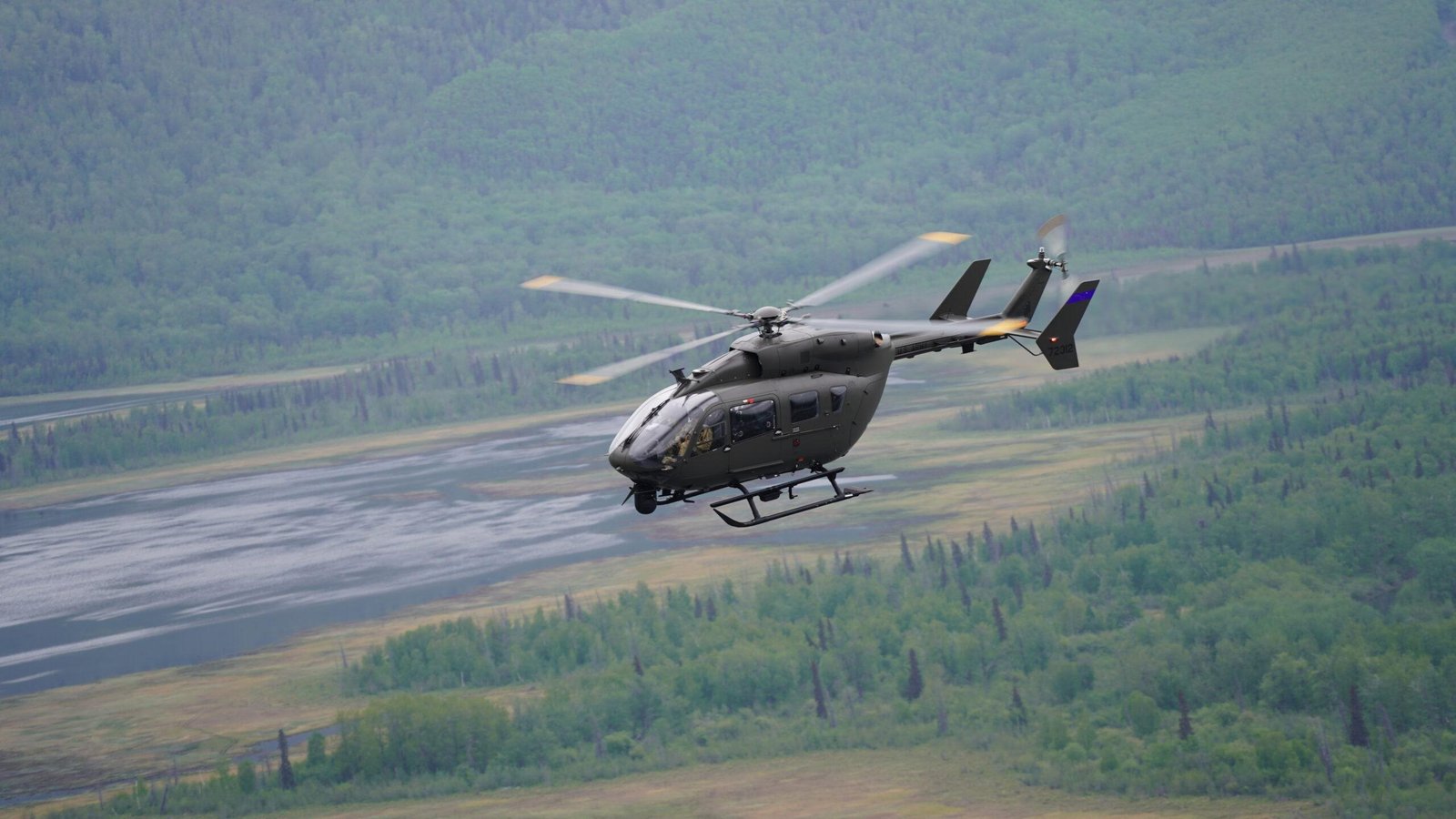
The selection means the Robinson R66 is positioned to assume the basic training role currently performed by the Airbus UH-72 Lakota, which has served as the Army’s primary Initial Entry Rotary-Wing training helicopter since the service transitioned away from the Bell TH-67 Creek.
Unlike the twin-engine UH-72, the R66 uses a single Rolls-Royce RR300 turbine engine. Its smaller size and simpler configuration are intended to allow student aviators to concentrate on fundamental helicopter handling and flying skills before progressing to operational Army aircraft.
After completing initial rotary-wing training, Army aviators can move on to advanced training associated with operational platforms such as the:
- AH-64 Apache
- UH-60 Black Hawk
- CH-47 Chinook
The $10 Billion Figure Needs Context
The widely reported $10 billion figure does not represent the purchase of $10 billion worth of Robinson R66 helicopters. Instead, it represents the potential maximum value of the overall Flight School Next contract.
The single-award indefinite-delivery, indefinite-quantity contract can extend for as long as 26 years and covers far more than aircraft. The broader training enterprise includes aircraft operations, maintenance, instructors, academic training, simulators, support personnel and other services required to produce Army aviators.
That distinction matters because Flight School Next is fundamentally a long-term training services program, rather than a conventional Army helicopter acquisition program.
Robinson Developed the R66 for the Army Training Competition
Robinson’s involvement in Flight School Next has been developing for more than a year. In 2025, the company publicly unveiled an R66 military training helicopter configuration aimed specifically at military pilot-training requirements.
The aircraft builds on the commercial R66 platform while incorporating equipment intended for military training. M1 Support Services subsequently advanced through the Army’s Flight School Next competition with the R66 as a central component of its proposal.
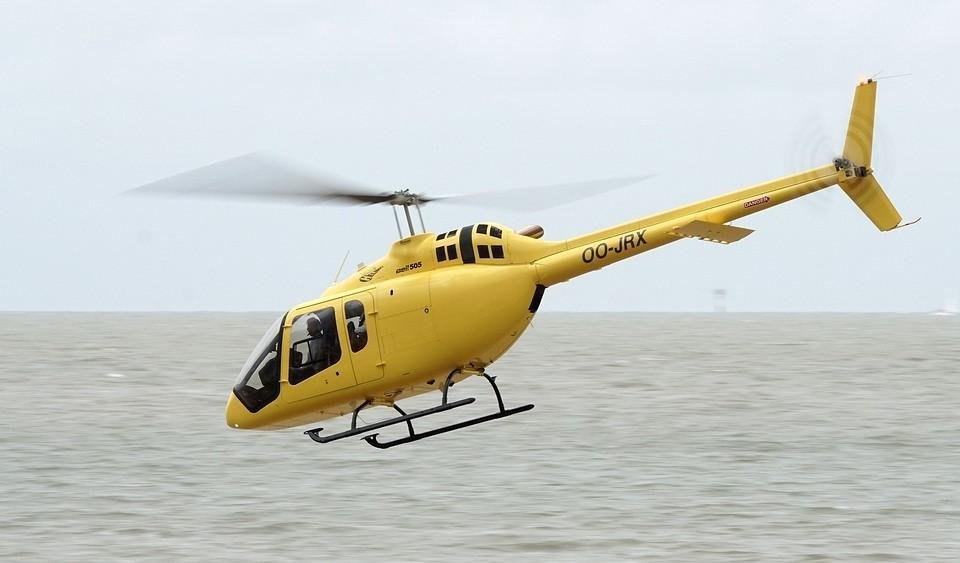
The final competition included another commercial light helicopter, the Bell 505, illustrating the Army’s broader interest in returning basic helicopter instruction to smaller and less complex aircraft.
A Major Win for Robinson Helicopter
For Robinson Helicopter Company, the Army decision represents an important expansion beyond the company’s traditional civilian helicopter market. Robinson aircraft are widely used around the world for flight training, private aviation, law enforcement, utility operations and commercial missions.
Becoming part of the U.S. Army’s primary helicopter training pipeline could give the R66 considerably greater visibility in the military training market and potentially open opportunities with other armed forces seeking lower-cost turbine training helicopters.
The decision also places Robinson alongside some of the most recognizable aircraft in the Army aviation training pipeline.
What Happens Next?
The transition to Flight School Next will not occur overnight. The Army’s program calls for a phased implementation as M1 establishes the aircraft fleet, personnel, maintenance organization, training systems and other infrastructure necessary to support Initial Entry Rotary-Wing training.
The existing UH-72 training operation will therefore continue during the transition. Once the Robinson R66 Flight School Next transition reaches full operation, the Robinson R66 is expected to become one of the first helicopters encountered by future Army aviators beginning their flying careers.
For a helicopter originally developed primarily for the civilian market, that represents a significant new chapter.
FAQ: Robinson R66 and Flight School Next
Is the Army buying $10 billion worth of Robinson R66 helicopters?
No. The Robinson R66 Flight School Next contract’s $10 billion figure is the potential maximum value of the entire contract over its possible 26-year term, covering aircraft operations, maintenance, instructors, academic training and simulators — not a dedicated helicopter purchase.
What aircraft will the R66 replace?
The R66 is positioned to replace the twin-engine Airbus UH-72 Lakota in the Army’s Initial Entry Rotary-Wing training role at Fort Rucker, Alabama.
What engine powers the Robinson R66?
The R66 is powered by a single Rolls-Royce RR300 turboshaft engine, a simpler single-engine configuration than the twin-engine UH-72 it is set to replace for basic instruction.
Looking Ahead
The Robinson R66’s selection for Flight School Next marks one of the most significant shifts in U.S. Army rotary-wing training in years, moving primary instruction toward a lighter, commercially derived helicopter and a contractor-operated training model. As the program moves through its phased implementation at Fort Rucker, the R66 is set to become the first helicopter many future Army aviators fly.
The Aviation Diary will continue covering developments involving Flight School Next, U.S. Army aviation training, and other major military aviation stories.
Sources
For additional information about this story:
- Robinson Helicopter Company — R66 Selected for U.S. Army Flight School Next as Army Announces Intent to Award Contract to M1 Support Services, August 17, 2026
- M1 Support Services — Robinson Helicopter Company Joins Team M1 to Transform U.S. Army Flight Training
- The Aviationist — U.S. Army Selects M1 for Flight School Next Program
- AeroTime — US Army Moves to Robinson R66 Under $10B Helicopter Training Program
- Aerospace Global News — US Army Picks Robinson R66 to Replace Lakota as Pilot Training Helicopter