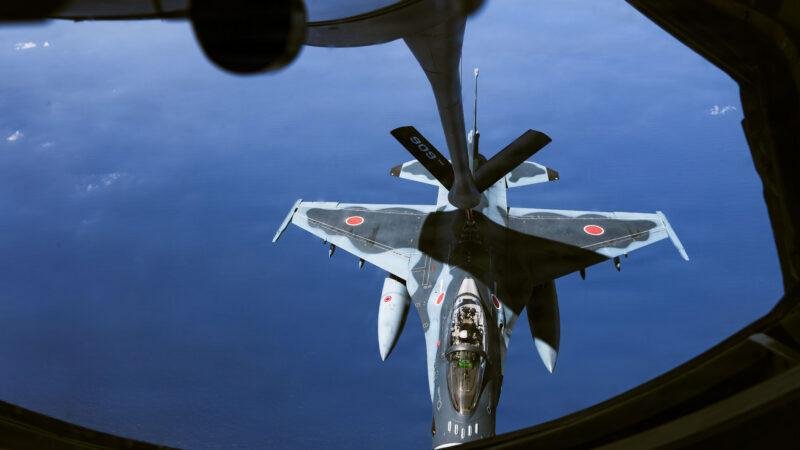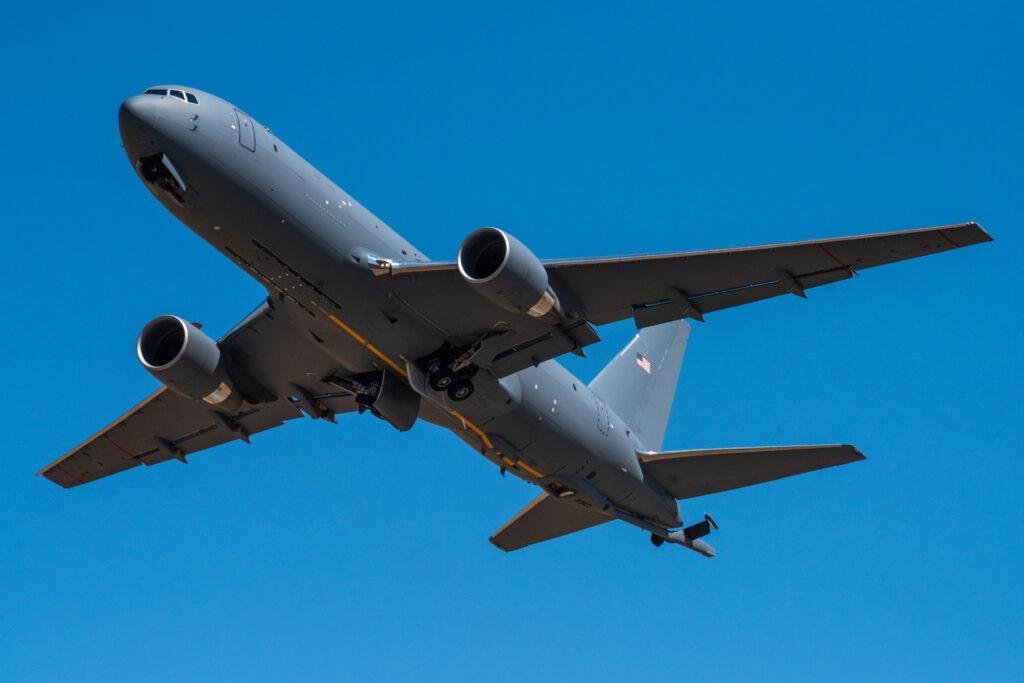
KC-46A Qatar sale approval just cleared a major hurdle, with the U.S. State Department signing off on a potential $4.5 billion Foreign Military Sale that would give the Qatar Emiri Air Force its own fleet of Boeing KC-46A Pegasus aerial refueling tankers. The notification, published August 20, positions Qatar to become only the fourth country in the world — after the United States, Japan, and Israel — to operate the Pegasus.
The proposed deal comes as Qatar continues expanding its combat air fleet and deepens defense ties with Washington following a period of heightened regional tension.
Table of Contents
KC-46A Qatar Sale Clears State Department Review
The U.S. Department of State published its approval of the KC-46A Qatar sale on Thursday, August 20, notifying Congress of a potential Foreign Military Sale valued at $4.5 billion. The notification authorizes the sale to move forward but does not represent a finalized contract — pricing, configuration, and delivery schedule remain subject to negotiation between Washington and Doha.
Qatar’s request covers up to four KC-46A Pegasus tankers, built by Boeing at its Everett, Washington facility. If the sale is finalized, Qatar would join a short list of Pegasus operators that currently includes only the United States, Japan, and Israel.
[ADD IMAGE HERE — KC-46A Pegasus refueling aircraft, DVIDS]
What’s Included in the Proposed Sale
The State Department’s release outlines a package that goes well beyond the airframes themselves. Alongside up to four KC-46A aircraft, the proposed deal includes:
- Eight Pratt & Whitney PW4062 turbofan engines — four installed, four as spares
- Ten AN/ALR-69A radar warning receivers
- Fifteen Guardian Laser Transmitter Assemblies for Large Aircraft Infrared Countermeasure (LAIRCM) systems
- Eight LAIRCM system processor replacements
- Precision navigation, secure communications, missile-warning sensors, training devices, and logistical support
Notably, the State Department’s announcement did not explain why the package’s total value runs well above the KC-46A’s roughly $250 million unit cost — a gap likely reflecting the defensive systems, spares, and support infrastructure bundled into the deal.
The proposed sale will increase Qatar’s capability to meet current and future threats by enhancing its defense capabilities and interoperability with the United States.
U.S. Department of State
Why Qatar Wants the KC-46A
Qatar has been building a modern, high-end combat fleet for years, operating Boeing F-15QAs, Dassault Rafales, and Eurofighter Typhoons. What it has lacked is an organic aerial refueling capability — until now, extending the range and endurance of that fleet has depended on tanker support from allied nations.
Owning KC-46As would let the Qatar Emiri Air Force:
- Extend fighter range and time on station without relying on partner-nation tankers
- Reposition combat aircraft rapidly across the region
- Sustain longer patrols amid ongoing tension with Iran
- Support cargo, personnel, and aeromedical evacuation missions, thanks to the KC-46A’s dual-role design
Qatar had previously weighed the Airbus A330 Multi Role Tanker Transport but never placed an order, leaving the KC-46A as its clearest path to an organic tanker fleet.
The Backdrop: Al Udeid and Regional Tension
The proposed sale arrives against a backdrop of elevated risk to Gulf air bases. Al Udeid Air Base, Qatar’s roughly $10 billion investment in hosting U.S. forces, has faced exposure to missile and drone threats during 2026 — a reality that has pushed planners toward hardened shelters, dispersed parking, and alternate operating locations across the region rather than concentrating aircraft and fuel at a single site.
Qatar’s tanker request also follows attacks linked to heightened tensions with Iran since late February, part of a broader regional pattern that has pushed Gulf states to accelerate defense acquisitions. For Washington, the deal doubles as burden-sharing: Doha absorbing more of the cost of sustaining coalition air operations that the U.S. has traditionally shouldered through its own tanker fleet.
[ADD IMAGE HERE — Al Udeid Air Base or KC-46A ground operations, DVIDS]
What Happens Next
Congressional notification is a required step in the Foreign Military Sale process, not a finished deal. The sale is subject to congressional review, and Qatar and the U.S. still need to negotiate final pricing, configuration, and delivery timelines before any contract is signed. Congress could also modify or block elements of the package during its review period.
If the deal proceeds on schedule, Qatar’s KC-46As would be built alongside existing U.S. Air Force, Japanese, and Israeli orders at Boeing’s Everett production line.
FAQ: KC-46A Qatar Sale
Is the KC-46A Qatar sale finalized?
No. The State Department’s August 20 announcement is a congressional notification authorizing the sale to proceed, not a signed contract. Final pricing, configuration, and delivery terms still need to be negotiated, and Congress retains the ability to review or modify the package.
How many countries operate the KC-46A Pegasus?
Currently three: the United States, Japan, and Israel. If the Qatar sale is finalized, Qatar would become the fourth nation to operate the Pegasus.
Why does Qatar need its own aerial refueling tankers?
Qatar has expanded its fighter fleet with F-15QAs, Rafales, and Typhoons but has relied on allied tankers to extend their range. An organic KC-46A fleet would let Qatar sustain longer patrols and reposition aircraft independently, particularly amid ongoing regional tension with Iran.
Looking Ahead
The proposed KC-46A Qatar sale reflects a broader shift in Gulf airpower, as regional partners move to reduce their dependence on U.S. and allied tanker support in an increasingly contested airspace. Whether the deal survives congressional review at its full $4.5 billion scope — or gets trimmed during negotiation — will shape how quickly Qatar can field an independent refueling capability.
The Aviation Diary will continue tracking the KC-46A program, Gulf defense procurement, and broader developments in U.S.-Qatar military cooperation as the sale moves through Congress.
Sources
For additional information about this story:
- Defense News — US approves possible $4.5 billion sale of KC-46As, equipment to Qatar
- Defense Daily — Qatar Could Become Fourth Country With KC-46As, As State Department Okays $4.5 Billion Sale
- FlightGlobal — US approves sale of four KC-46 tankers to Qatar
- Air Force Technology — US clears $4.5bn sale of KC-46A aerial tankers to Qatar