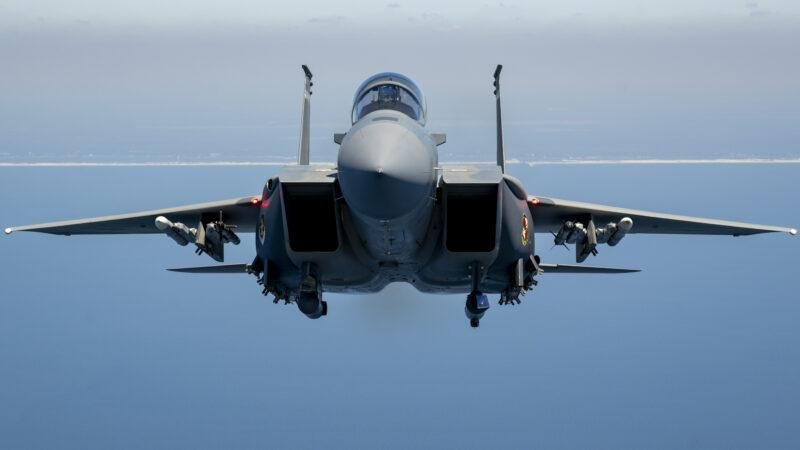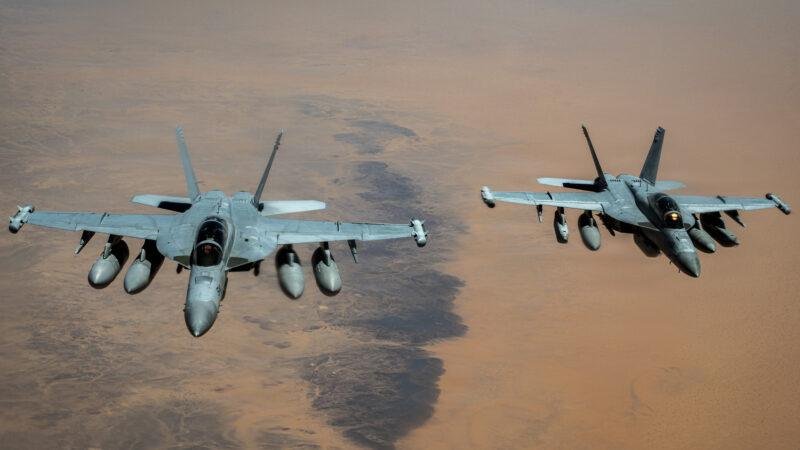
The Saudi Arabia JDAM-ER package cleared by the U.S. State Department on September 4, 2026, would give the Royal Saudi Air Force more than 10,000 extended-range precision-guided bomb kits in a deal valued at approximately $5 billion. The Defense Security Cooperation Agency notified Congress of the possible Foreign Military Sale under Transmittal #26-35, with Boeing identified as the principal contractor.
The approval is a proposed sale, not a signed contract. Quantities, pricing and delivery schedules still have to be negotiated between Washington and Riyadh before any weapons change hands.
Table of Contents
What the Package Includes
The proposed sale pairs two guidance-kit variants with matching bomb bodies: 5,004 KMU-572 JDAM guidance kits with 5,004 BLU-111 500-pound general-purpose bombs, and 5,000 KMU-556 JDAM guidance kits with 5,000 BLU-117 2,000-pound general-purpose bombs. Together that’s more than 10,000 guidance kits split roughly evenly between the two weight classes, giving Saudi mission planners a lighter and a heavier option depending on the target.
The package also includes FMU-139 fuze systems, DSU-38 and DSU-40 target detectors, containers, spare parts and U.S. government and contractor engineering, technical and logistics support — the standard support package attached to a Saudi Arabia JDAM-ER case of this size.
What JDAM-ER Adds Over Standard JDAM
JDAM itself is a guidance kit, not a new bomb: it bolts onto existing bomb bodies and uses GPS-aided inertial navigation to turn an unguided “dumb bomb” into a precision weapon with a published glide range of roughly 15 miles. JDAM-ER adds a modular wing kit to that same guidance package, extending the glide range past 40 nautical miles — more than triple the standard version — without turning the weapon into a powered cruise missile.
That extra distance lets a launching aircraft release its weapon farther from the target and spend less time inside the engagement envelope of shorter-range air defenses. Boeing has said the wing kit can be added or removed as needed and uses the same aircraft interface as standard JDAM, which limits the software changes, weapons-separation testing and retraining a new munition would otherwise require.
Fitting an Existing Saudi F-15 Force
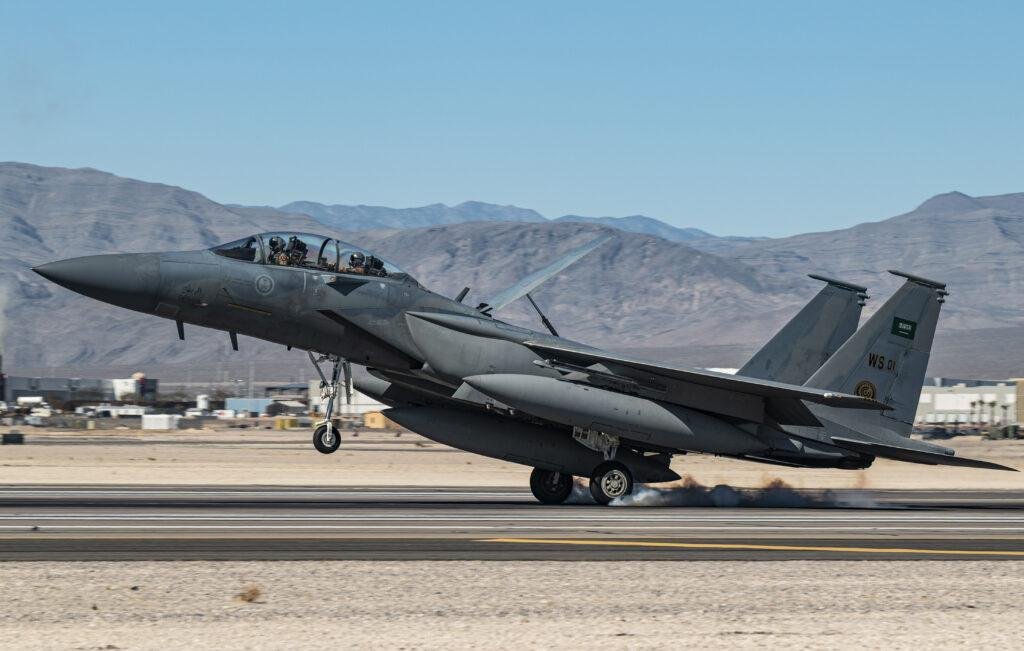
Saudi Arabia already operates one of the largest F-15 fleets outside the United States, including the F-15SA multirole variant built specifically for the Royal Saudi Air Force. The kingdom has purchased JDAM-related equipment from Washington before — a 2008 case covered 900 tail kits, and a 2015 package added thousands more alongside laser-guided bombs and other munitions — but the new proposal is considerably larger and focused specifically on the extended-range variant rather than the standard kit.
Because JDAM-ER shares its core architecture with the JDAM already integrated on Saudi F-15s, the proposed sale extends an existing weapons ecosystem rather than requiring a new aircraft or a new munitions interface.
Part of a Larger Round of Approvals
The JDAM-ER case was one of several Foreign Military Sale notifications the State Department cleared the same week, together totaling roughly $6 billion across Saudi Arabia, Oman and Iraq. Separately from the JDAM-ER package, the department also approved a possible $750 million sale of AGT-1500 tank engines to Saudi Arabia, with Honeywell as principal contractor — a land-systems case unrelated to the kingdom’s airpower but notified alongside it.
Saudi Arabia was designated a Major non-NATO Ally by the United States in November 2025, a status that grants preferential access to U.S. defense trade without extending NATO’s mutual-defense obligations. The JDAM-ER proposal follows a string of other recent approvals for Riyadh, including a $3 billion F-15 sustainment package in February 2026 and a $9 billion request for PAC-3 MSE interceptors earlier this year.
FAQ: Saudi Arabia JDAM-ER
Does this mean Saudi Arabia has bought 10,000 bombs?
Not yet. The State Department’s approval authorizes a possible Foreign Military Sale; the quantities, configuration and final price are still subject to negotiation, and no contract has been signed.
How is JDAM-ER different from standard JDAM?
JDAM-ER adds a modular wing kit to the same GPS-guided kit used on standard JDAM, extending its glide range from about 15 miles to more than 40 nautical miles while keeping the same aircraft interface.
What aircraft would carry these weapons?
Saudi Arabia’s F-15 fleet, including the F-15SA, is the most likely platform, since the kingdom’s existing F-15s are already integrated with standard JDAM.
Looking Ahead
Neither the State Department nor Boeing has released a timeline for finalizing the Saudi Arabia JDAM-ER contract following the September 4 notification. The Aviation Diary will track the Saudi Arabia JDAM-ER case as it moves through the Foreign Military Sales process toward a signed agreement.
Sources
- U.S. Department of State / DSCA — Kingdom of Saudi Arabia: Joint Direct Attack Munitions – Extend Range, Transmittal #26-35
- Defense Daily — U.S. OKs Nearly $7 Billion in FMS With Saudi Arabia, Iraq, Including Large JDAM-ER Deal With Riyadh
- TheDefenseWatch — U.S. Approves $5 Billion JDAM-ER Sale to Saudi Arabia, Expanding Long-Range Precision Strike Capability
- Global Defense Corp — U.S. State Department Approves $5 Billion JDAM-ER Bombs for Saudi Arabia
- DefenceTalk — DSCA: Sale of JDAM’s to Saudi Arabia (2008)
- GlobalSecurity.org — Saudi Arabia Air-to-Ground Munitions Notification (2015)
- The Defense Post — US Approves Saudi Arabia’s F-15 Sustainment Under $3-Billion Deal
- DSCA — Kingdom of Saudi Arabia: F-15 Sustainment (Feb. 2026)
- DSCA — Kingdom of Saudi Arabia: PATRIOT Advanced Capability-3 Missile Segment Enhancement Missiles (Jan. 2026)