NASA X-59 maintenance work includes a procedure in which a mechanic physically enters the aircraft’s top-mounted engine inlet to check for foreign objects and damage. NASA described the inspection on Oct. 16 in a report about work performed at Edwards Air Force Base, California.
The agency’s account follows an inspection conducted by Lockheed Martin Skunk Works general flight mechanic Jonathan Reynaga on April 30, 2026. As the experimental airplane stood between its eleventh and twelfth flights, Reynaga used a light and climbed into the inlet to examine areas that cannot be assessed as readily from outside.
Table of Contents
NASA X-59 maintenance — Inside NASA X-59 Maintenance Procedures
NASA calls the procedure duct diving. It is a maintenance inspection, not a demonstration of a new flight capability. The published video and description provide a behind-the-scenes view of the work needed to keep a research aircraft available for flight tests, rather than announcing that a new speed or noise target has been achieved.
Top-Mounted Inlet Reflects the Aircraft Design
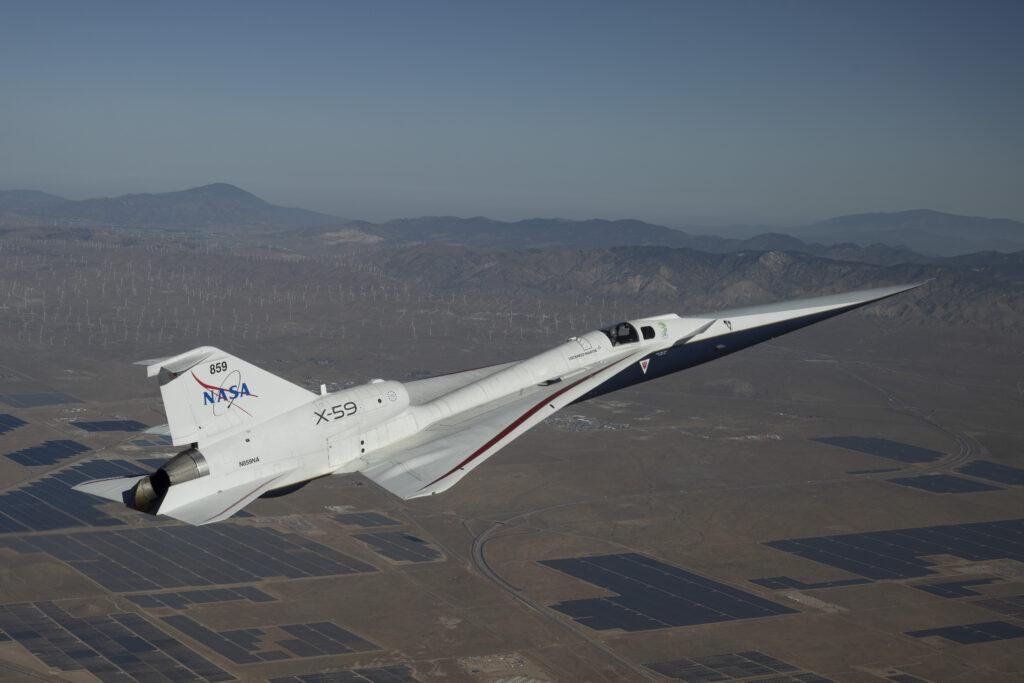
The X-59 uses a top-mounted inlet feeding a single F414-GE-100 engine. NASA designed the aircraft to study whether carefully shaped supersonic flight can reduce the loud sonic booms normally associated with aircraft moving faster than sound. The engine position is part of the overall low-boom configuration.
NASA propulsion personnel say the top-mounted location also changes the debris risks encountered in routine operations. Compared with engines placed closer to the ground, this arrangement is less exposed to material thrown up during takeoff or landing, although the inlet still needs inspection.
The duct curves toward the engine and offers little working room. NASA described the inspection as confined and physically awkward. A mechanic must check fan blades and surrounding components, looking for foreign objects or visible indications of damage that could affect engine performance. The published account is specific to the X-59 design and cannot be generalized to every military or commercial aircraft.
Quesst Depends on Repeatable Aircraft Readiness
Quesst is NASA’s research program to develop data on quieter supersonic flight over land. NASA intends to gather public responses to the sound produced by the X-59 and share evidence with U.S. and international regulators considering future noise thresholds.
That research depends on a reliable test aircraft, not just an aerodynamic concept. Mechanics, crew chiefs and engineers must inspect the vehicle between flights so test teams can interpret results without avoidable equipment problems. An engine problem would interrupt the data-gathering effort and could complicate comparisons across flights.
NASA’s report said inspection crews had found no engine damage during 38 X-59 flights at the time of its account. That statement describes the inspection record reported by NASA; it does not prove future tests will be free of problems. The agency did not use the Oct. 16 article to announce a new commercial supersonic air-service timetable.
The April inspection occurred during a pause in flight testing, according to NASA’s account. Its timing matters: the aircraft was not conducting a flight while the mechanic entered the inlet. The procedure was carried out on the ground as part of servicing the experimental vehicle. NASA described similar access arrangements on the F-15 and F/A-18 aircraft that accompany some X-59 flight tests, making clear that hands-on duct checks are familiar work for research-aircraft maintenance teams.
FAQ: NASA X-59 maintenance
Why does NASA X-59 maintenance involve entering the inlet?
A mechanic needs to examine the confined inlet and engine components directly for debris or possible damage.
What engine powers the X-59?
NASA identifies the aircraft’s engine as the F414-GE-100, supplied through a distinctive upper-mounted inlet.
Does the maintenance story announce a new supersonic milestone?
No. NASA described routine inspection work supporting Quesst flight testing, not a new flight-speed or noise result.
Looking Ahead
NASA will continue using X-59 test flying and eventual community-response data to support Quesst’s research objectives. The October maintenance report does not specify an additional inspection date or the next scheduled flight; those operational details remain subject to the test program.
Sources
https://www.nasa.gov/blogs/quesst/2026/10/16/diving-into-maintenance-with-nasas-x-59/