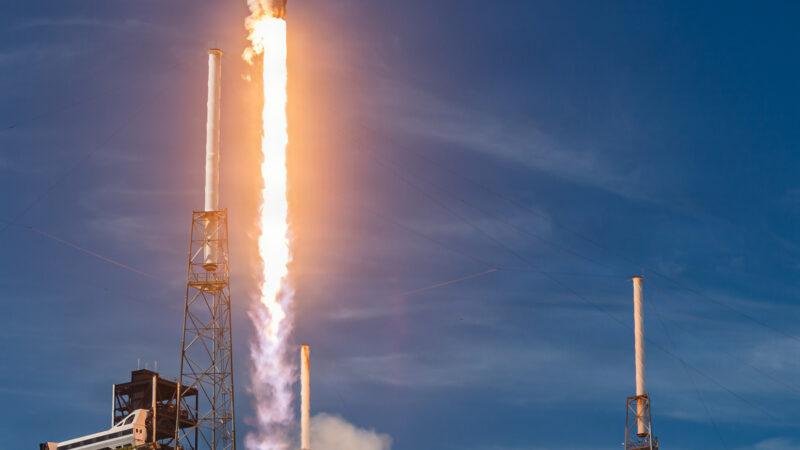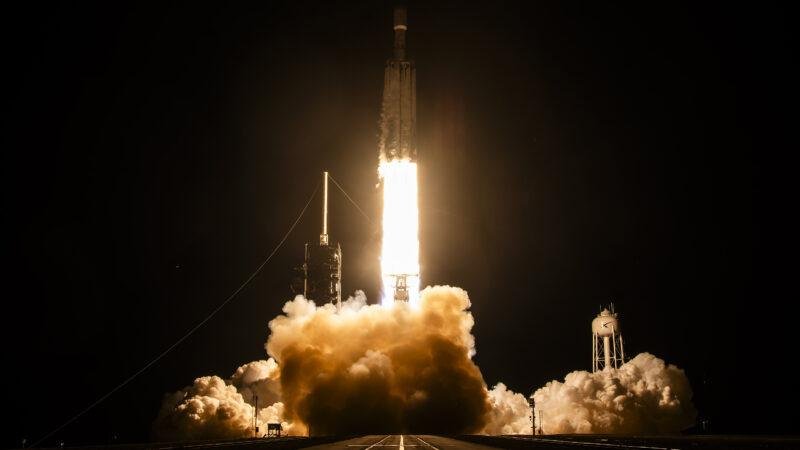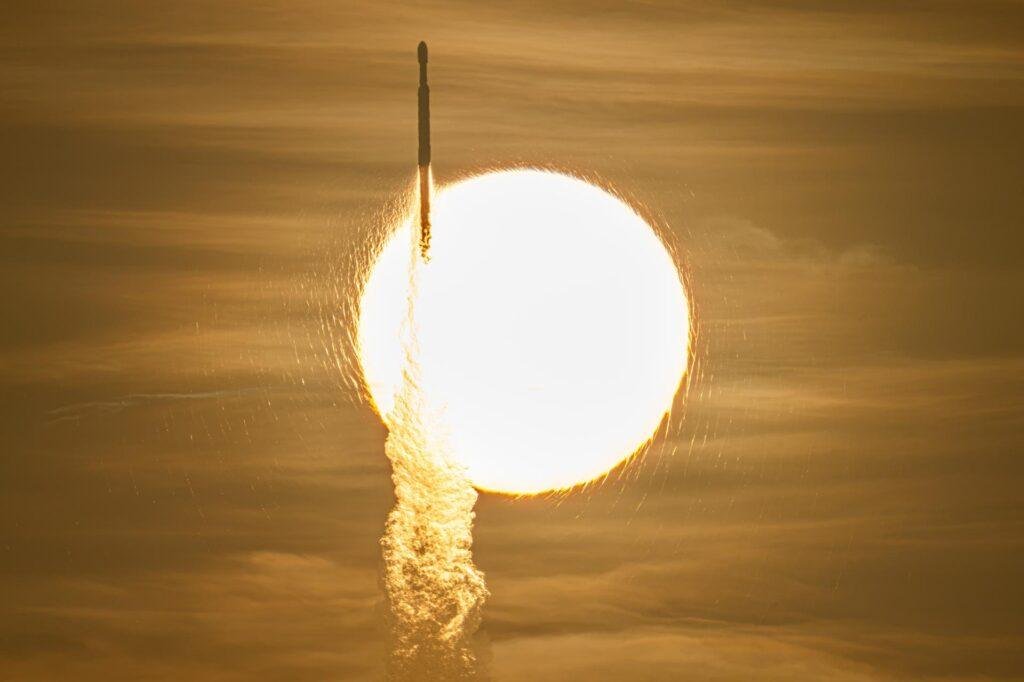
The NASA Roman Space Telescope launch sent one of the agency’s most ambitious astrophysics missions on its way, riding a SpaceX Falcon Heavy off the pad and beginning a three-month journey toward deep space.
The Nancy Grace Roman Space Telescope launched Sunday, August 30, aboard a SpaceX Falcon Heavy from Launch Complex 39A at NASA’s Kennedy Space Center in Florida, beginning a journey that could fundamentally change how astronomers study the universe.
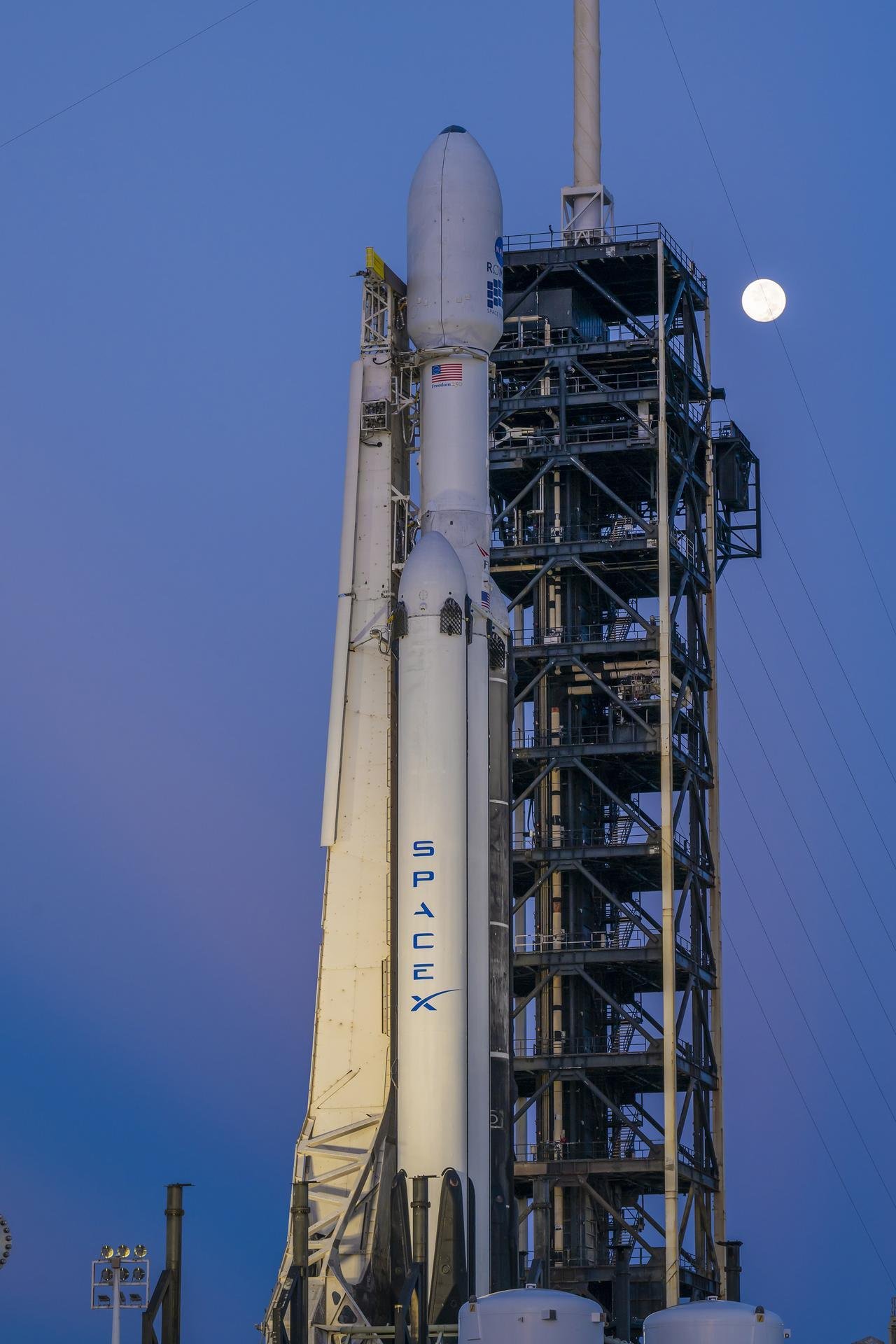
The NASA Roman Space Telescope launch reached orbit at 7:26 a.m. EDT, with Falcon Heavy sending the observatory toward a destination approximately one million miles from Earth. About 31 minutes after launch, Roman separated from the rocket and began flying independently. NASA subsequently confirmed communications with the spacecraft and successful deployment of its solar panels and lower instrument sunshade.
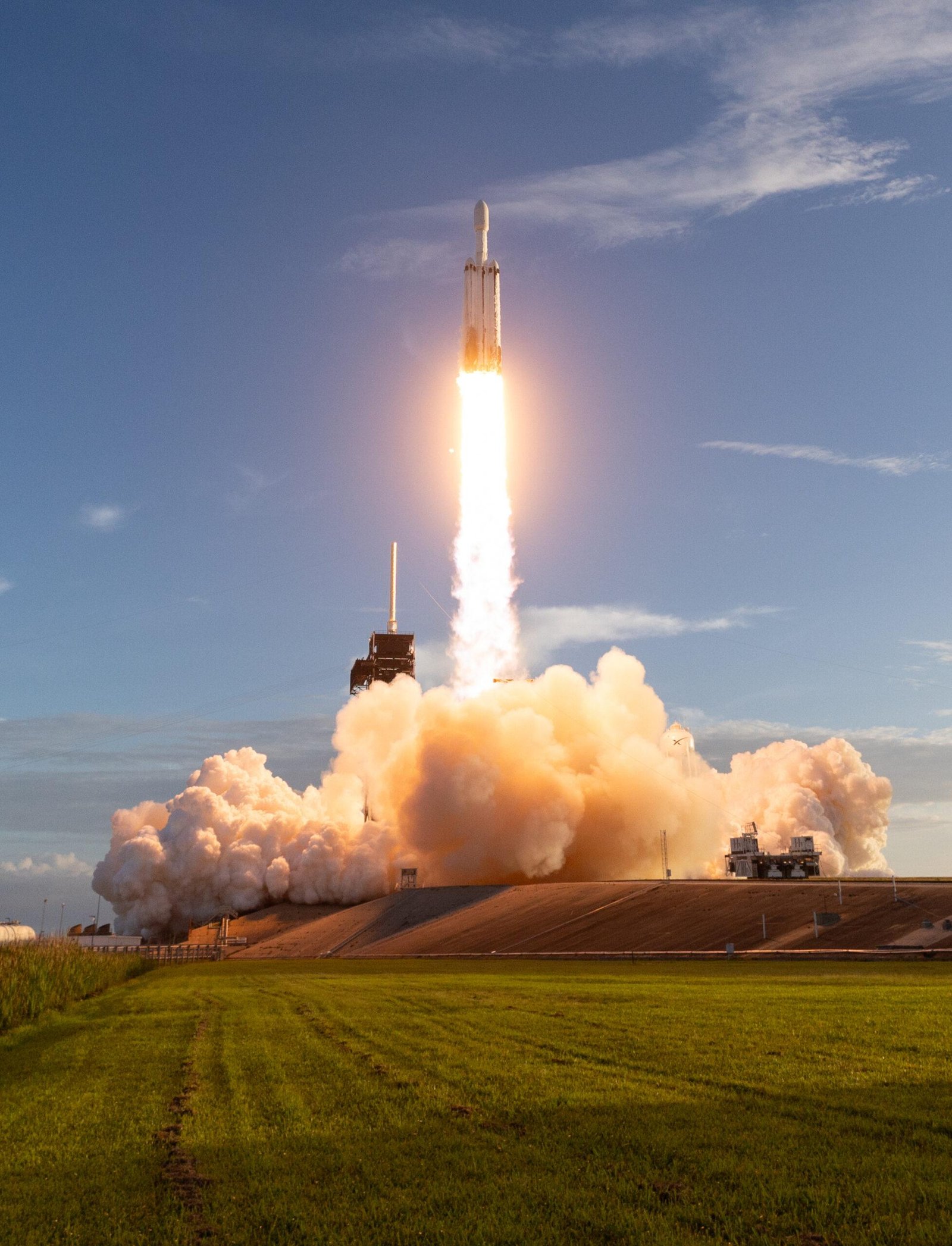
Roman is now beginning an approximately three-month journey toward the second Sun-Earth Lagrange point, known as L2, where it will operate alongside an increasingly powerful generation of space observatories.
But the significance of Roman goes far beyond Sunday’s launch.
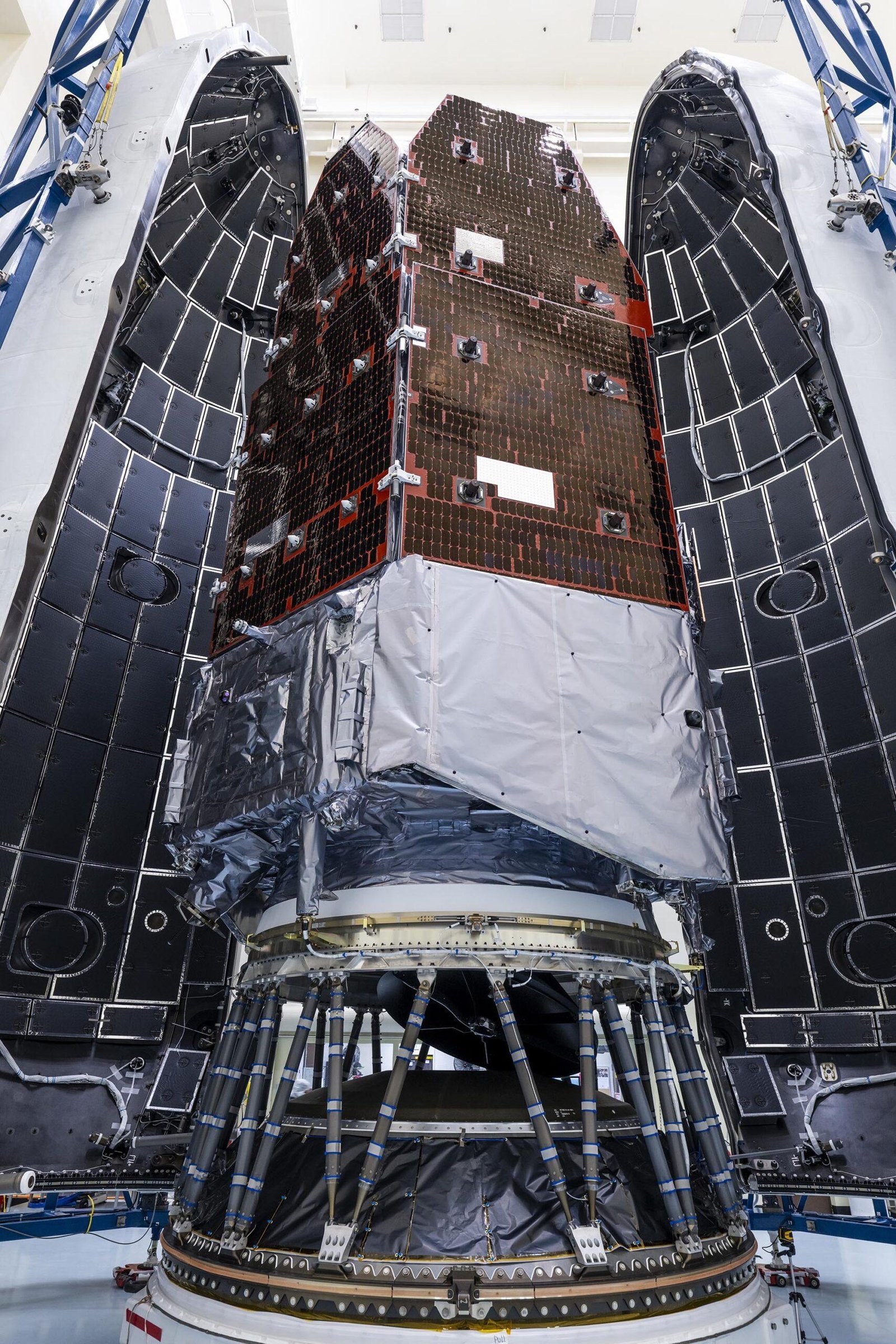
Table of Contents
A Wide-Angle View of the Universe
Since the NASA Roman Space Telescope launch, comparisons to the Hubble Space Telescope have followed Roman everywhere — and there’s a good reason.
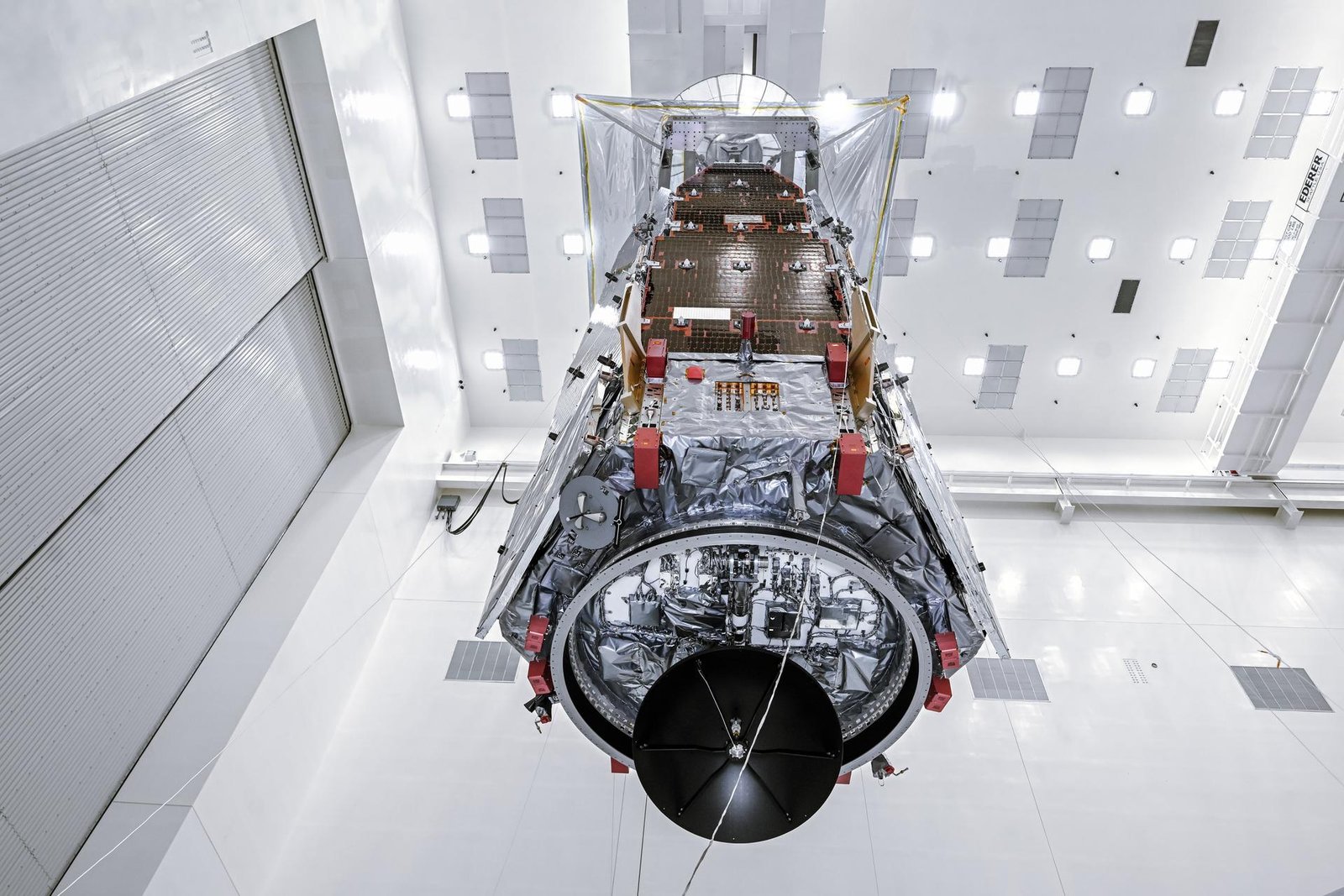
Both observatories use a 2.4-meter primary mirror, but Roman is designed to see vastly more of the sky in a single observation.
Its primary science instrument, the Wide Field Instrument, is a 300-megapixel camera capable of capturing an area of sky roughly 100 times larger than Hubble can cover with a comparable observation. NASA says Roman will be capable of surveying the sky up to 1,000 times faster than Hubble while maintaining similar sensitivity and infrared resolution.
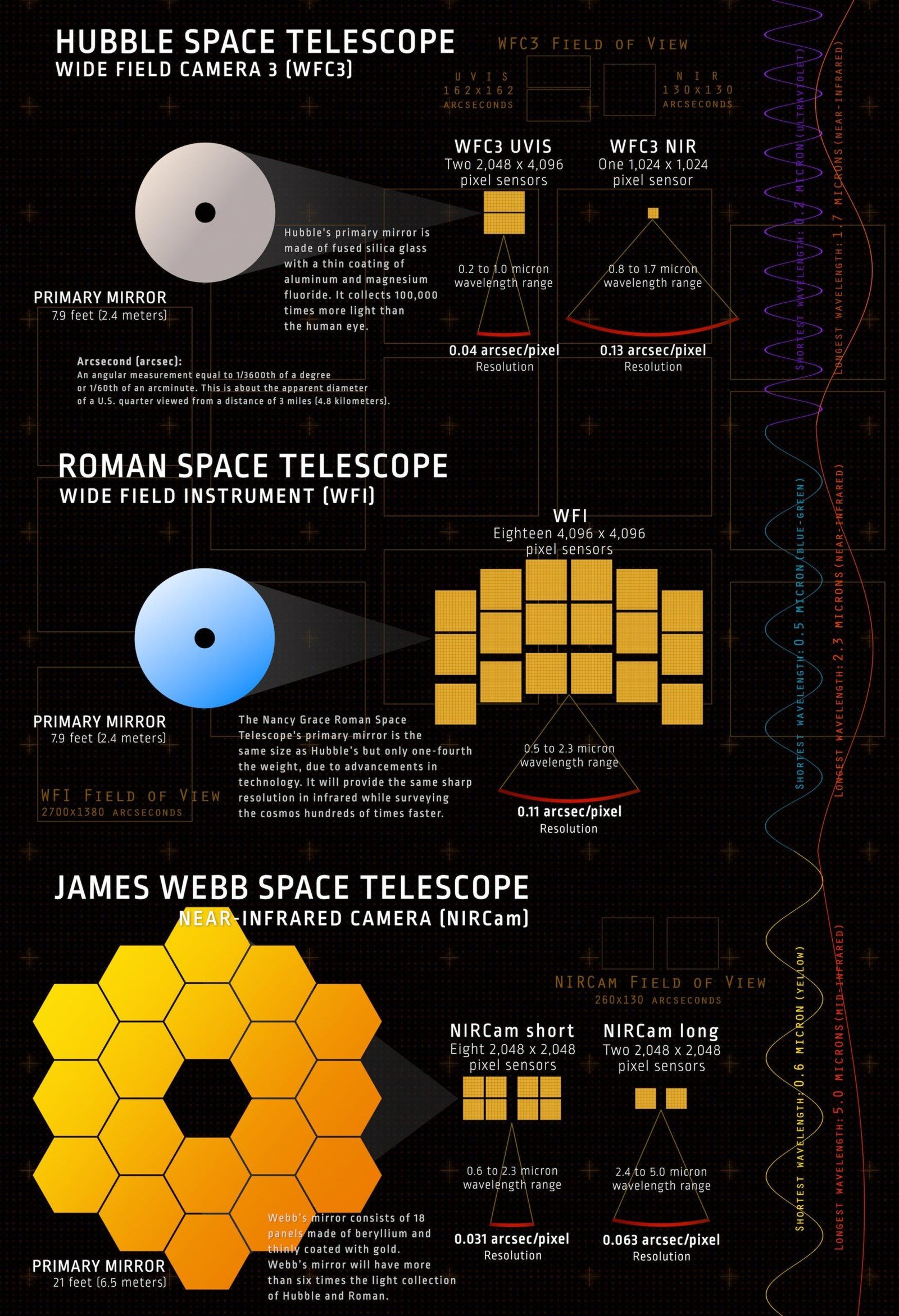
Think of the difference this way: Hubble has spent decades providing extraordinarily detailed views of selected portions of the universe. Roman is designed to combine that kind of sharpness with a much wider perspective.
Over its first five years of observations, NASA expects Roman to image more than 50 times as much sky as Hubble covered during its first 30 years.
That combination of detail and scale could allow scientists to identify astronomical patterns and objects that were previously difficult—or simply impossible—to detect.
Searching for Answers About Dark Energy and Dark Matter
One of the central goals behind the NASA Roman Space Telescope launch is investigating two of the biggest mysteries in modern cosmology: dark energy and dark matter.
Scientists have strong evidence that much of the universe is composed of material and energy that cannot be observed directly using conventional methods.
Dark matter appears to exert gravitational effects on galaxies and other structures, while dark energy is the term used to describe the still poorly understood phenomenon associated with the accelerating expansion of the universe.
Roman’s enormous astronomical surveys will allow scientists to map vast numbers of galaxies across cosmic history.
By examining their distribution, distances and how matter has shaped the universe over time, researchers hope to better understand what is driving cosmic expansion and how large-scale structures formed.
Roman’s mission therefore isn’t simply about photographing distant galaxies. It is designed to help investigate some of the fundamental physics governing the universe.
Roman Will Also Hunt for Exoplanets
Beyond the science return from the NASA Roman Space Telescope launch itself, the observatory will have another major assignment: finding and studying planets beyond our solar system.
Roman’s Wide Field Instrument will conduct a microlensing survey toward the inner Milky Way, allowing astronomers to detect planets by measuring the temporary brightening caused when the gravity of an intervening star and its planets bends light from a more distant star.
NASA expects the technique to uncover more than 1,000 exoplanets during the mission.
Roman also carries a second instrument known as the Coronagraph Instrument.
Rather than conducting Roman’s primary science surveys, the coronagraph is a technology demonstration designed to test advanced methods for blocking the overwhelming light of a star so that much fainter planets orbiting nearby can be observed.
The technology could help pave the way for future space telescopes capable of directly studying smaller, potentially Earth-like worlds.
An Enormous Amount of Data Is Coming
Roman’s ability to survey huge sections of the universe — the direct result of the NASA Roman Space Telescope launch — comes with another challenge: data.
NASA expects the telescope to transmit approximately 1.4 terabytes of data every day, which would give Roman the highest data rate yet for a NASA astrophysics mission.
NASA says machine learning, artificial intelligence and citizen-science efforts will help researchers identify significant discoveries within the enormous flow of observations.
That volume could turn Roman into something more than a telescope targeting predetermined objects.
It could become a discovery engine.
Repeated wide-area observations may expose unexpected supernovae, previously unknown planets, changes around black holes and other transient phenomena that astronomers did not specifically set out to find.
What’s Next After the NASA Roman Space Telescope Launch?
The NASA Roman Space Telescope launch was only the beginning.
The spacecraft is traveling toward Sun-Earth L2, roughly one million miles from Earth. During its journey and commissioning phase, teams will test and calibrate the observatory and its instruments before regular science operations begin.
NASA currently expects Roman’s first images to be released in early 2027.
Once operational, Roman’s primary mission is planned for five years, with the possibility of an extended mission.
Its observations will also complement other major observatories rather than replace them.
Where the James Webb Space Telescope can examine relatively narrow regions of the universe in extraordinary depth and detail, Roman can search huge regions for objects and phenomena worth investigating further. Hubble, Webb, Roman and future observatories can therefore operate as different pieces of a much larger astronomical system.
A New Era of Wide-Field Space Astronomy
The successful NASA Roman Space Telescope launch marks the beginning of one of NASA’s most ambitious astrophysics missions in years.
A telescope with Hubble-class resolution, an enormously wider field of view and the ability to return more than a terabyte of observations every day could transform the way astronomers search the sky.
Roman was built to answer specific questions about dark energy, dark matter and exoplanets.
But with an observatory capable of looking at so much of the universe at once, some of its most important discoveries may ultimately be the ones nobody predicted.
For now, Roman is headed toward L2.
The next chapter begins when it opens its eyes.