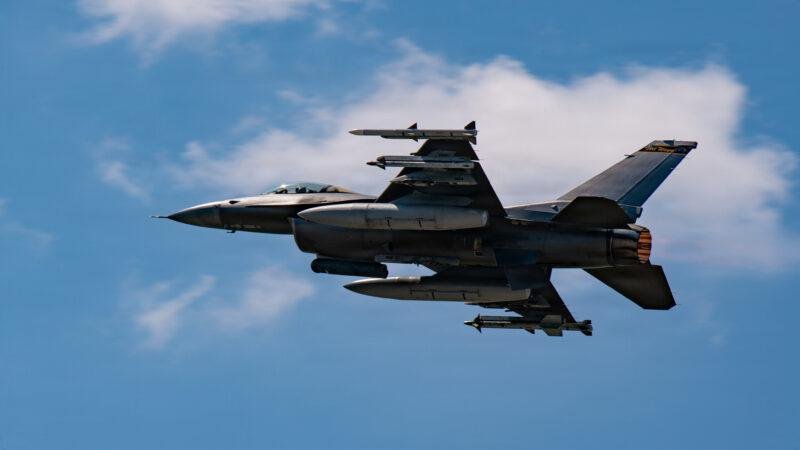
On the morning of Sept. 11, 2001, Michigan ANG F-16 pilot Tom Froling took off from Selfridge Air National Guard Base on what was supposed to be an ordinary training mission. Froling and his flight lead, Maj. Doug Champagne, departed at about 8:50 a.m. and headed north toward Grayling Range for practice bombing and strafing runs. By the time they turned back toward Selfridge, the air traffic system around them was beginning to sound unlike anything they had heard before.
Twenty-five years later, Froling described the experience in an interview with The Aviationist: a routine morning that shifted within hours from training to homeland defense. After landing and learning that the World Trade Center and Pentagon had been attacked, he returned to a squadron preparing F-16s with live air-to-air missiles and cannon ammunition. The next morning, he was flying combat air patrol over a country whose civilian skies had gone almost completely silent.
Table of Contents
A Routine F-16 Mission Turns Strange
Froling and Champagne left Selfridge in F-16Cs for a low-level training route toward Grayling Range in northern Michigan. The plan was familiar: practice weapons delivery, strafing passes, then a return to base. Froling later recalled that the weather was clear and the mission itself was going normally.
The first signs that something was wrong came on the flight home. Air traffic control transmissions sounded increasingly unusual, and the pilots heard aircraft being diverted despite good weather. When the formation checked in with operations about 100 miles from Selfridge, the squadron commander immediately began asking whether the F-16s had any ammunition left after the range work.
Froling initially thought the questions meant something had gone wrong during the training mission. The 127th Wing’s own 2011 account of that morning describes Champagne having the same concern: perhaps a round had left the range or someone had been where they should not have been. Instead, the questions reflected something far larger unfolding beyond Michigan.
After landing, the pilots were directed away from their normal post-flight routine and into an area used for aircraft with live ammunition. Froling’s crew chief climbed to the cockpit and told him that the Pentagon and World Trade Center had been hit. Until that moment, the mission had still largely been framed by what the pilots could hear over the radio. On the ground, the full scale of the attacks became clear.
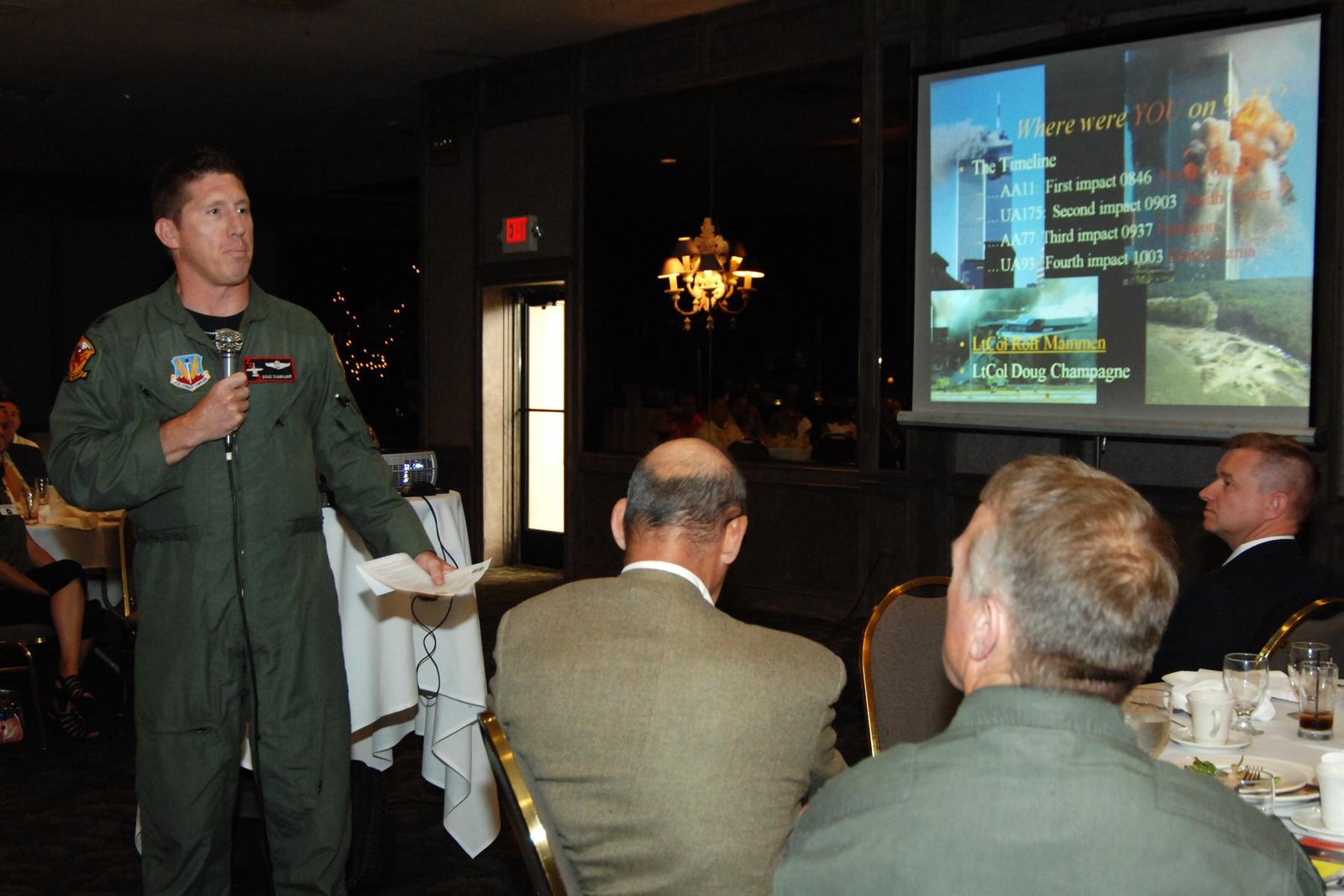
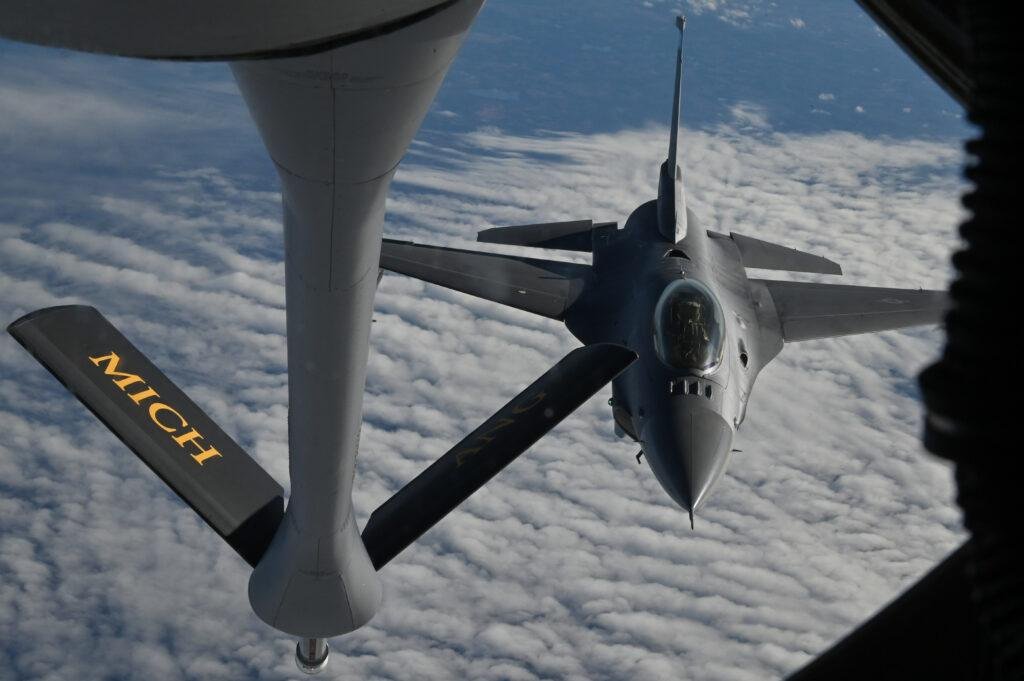
Credit: U.S. Air Force photo by Staff Sgt. Rachel Barton
From Training Rounds to Live Missiles
Froling was told to go home and return several hours later because the squadron expected to move to alert status. When he came back, the scene had changed completely. F-16s that had started the day as training aircraft were being configured with live AIM-120 AMRAAMs, AIM-9 Sidewinders and live cannon ammunition for homeland-defense patrols.
That transition was difficult to process even for the Michigan ANG F-16 pilot. Froling had trained to intercept hostile military aircraft overseas. He told The Aviationist that his unit had never trained for a scenario in which hijacked civilian airliners were deliberately used as weapons against targets inside the United States.
Froling also said he later learned that the urgent questions about his remaining ammunition were connected to a possible tasking involving United Airlines Flight 93. The aircraft crashed near Shanksville, Pennsylvania, after passengers and crew fought the hijackers before such an intercept from Selfridge took place. A separate 127th Wing history published in 2011 says higher commanders briefly considered using Champagne’s unarmed F-16 to help protect Chicago before he landed.
“Nobody Else Was Flying”
Early the next morning, the Michigan ANG F-16 pilot was awakened for a combat air patrol over the Midwest. He and the other pilots briefed new rules of engagement and launched into airspace that looked nothing like the America they had flown over before Sept. 11.
Civilian traffic had been grounded. Looking down near Detroit Metropolitan Airport, Froling could see airliners packed onto the ground after the nationwide shutdown. In the air, the normal stream of civilian traffic was gone. “Nobody else was flying,” he recalled.
The quiet did not mean the patrol lacked tension. During one sortie, an E-3 Sentry AWACS crew reported an unidentified aircraft and cleared the F-16s to intercept. Froling’s formation accelerated toward the contact before it was identified as a military helicopter from Grand Ledge on an unannounced VIP flight. The episode showed how quickly ordinary ambiguity could become a potential threat in the first days after the attacks.
A Later Patrol Over New York
On a later mission, the Michigan ANG F-16 pilot was awakened in the early morning and told that East Coast fighters were limited by weather and that his unit was needed for a combat air patrol over New York City. The Selfridge F-16s launched in rain, climbed above the weather and headed east under AWACS control.
As the patrol descended beneath the cloud layer near New York, Froling looked down toward lower Manhattan. Ground Zero was illuminated by powerful lights as rescue and recovery crews worked through the wreckage. For a pilot whose Sept. 11 had begun with a routine trip to a training range in Michigan, the view made the consequences of the attacks impossible to separate from the mission that now filled his cockpit.
The patrols were part of a much broader shift in American air defense. The Air Force’s homeland-defense response became Operation Noble Eagle, which maintained combat air patrols over New York, Washington and other locations. Air Force historical records note that Air National Guard pilots carried much of that sustained mission in the months that followed.
How 9/11 Changed Selfridge’s Mission
The 127th Wing’s response did not end with one or two patrols. According to the wing’s official history, hundreds of Citizen-Airmen reported to Selfridge within hours, and the unit moved to 24-hour alert duty to provide aerial coverage over the Great Lakes region. The 107th Fighter Squadron subsequently flew air-superiority patrols over the Detroit area in its F-16s.
That response reflected a national change in priorities. Before Sept. 11, continental air defense had largely been organized around threats approaching from outside the United States. The attacks forced the military to confront the possibility that civilian aircraft already inside U.S. airspace could become weapons. Operation Noble Eagle turned that improvised response into a continuing homeland-defense requirement.
For the Michigan ANG F-16 pilot, the change was visible at the most personal level: one morning he was practicing weapons employment over northern Michigan; hours later his squadron was preparing fighters for armed patrols over American cities. Twenty-five years later, that abrupt shift remains the center of his memory of Sept. 11.
FAQ: Michigan ANG F-16 Pilot Tom Froling on 9/11
Who is Tom Froling?
Tom Froling is a retired Michigan ANG F-16 pilot and Air National Guard lieutenant colonel who flew the F-16C from Selfridge Air National Guard Base. On Sept. 11, 2001, he was flying a routine training mission with Maj. Doug Champagne when the attacks unfolded.
Was Froling airborne when the 9/11 attacks began?
Yes. Froling took off from Selfridge at about 8:50 a.m. local time and was flying a training mission to Grayling Range while the attacks were unfolding. He learned the extent of what had happened only after returning to Selfridge.
What did the Michigan Air National Guard do after the attacks?
The 127th Wing rapidly shifted to homeland-defense operations, armed F-16s for combat air patrols and moved to continuous alert duty. The 107th Fighter Squadron flew air-superiority patrols over Detroit and the Great Lakes region as part of the wider U.S. response that became Operation Noble Eagle.
Did Froling’s unit consider an intercept on Sept. 11?
Froling told The Aviationist that he later learned NORAD had contacted his wing commander about a possible intercept involving United Airlines Flight 93, which crashed in Pennsylvania before such a mission from Selfridge occurred. The 127th Wing’s 2011 history separately says commanders briefly considered sending Champagne south to help protect Chicago.
Looking Back 25 Years Later
The significance of Froling’s story is less about a single intercept or patrol than about how quickly the mission changed. A Michigan ANG F-16 pilot who launched for routine training returned to an air base preparing for armed homeland defense, then flew through nearly empty American skies under rules no one at Selfridge had expected to need that morning. Twenty-five years later, his recollection adds a cockpit-level view to the history of how the Air National Guard responded when the familiar assumptions of U.S. air defense changed in a matter of hours.
Sources
- The Aviationist — “Nobody Else Was Flying”: An F-16 Pilot Recalls the Morning of 9/11
- 127th Wing — Selfridge Pilots Recall Sept. 11
- 127th Wing — 127th Wing Fact Sheet and unit history
- Air Force Historical Support Division — 2001: Operation Noble Eagle
- Michigan Department of Military and Veterans Affairs — Dawn of the New Millennium