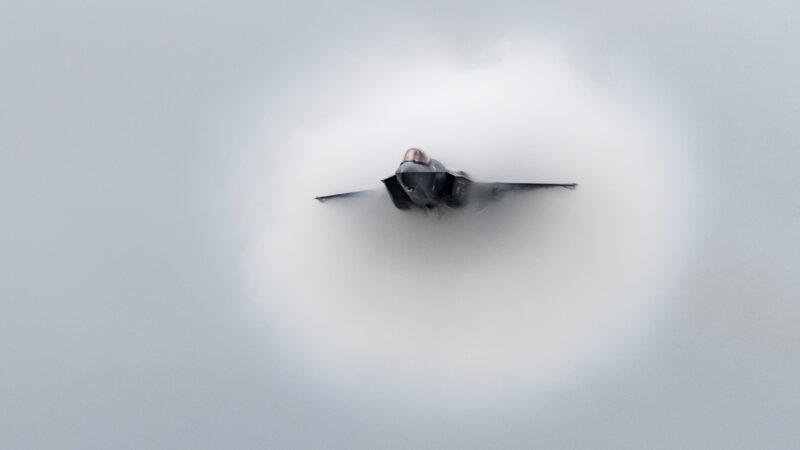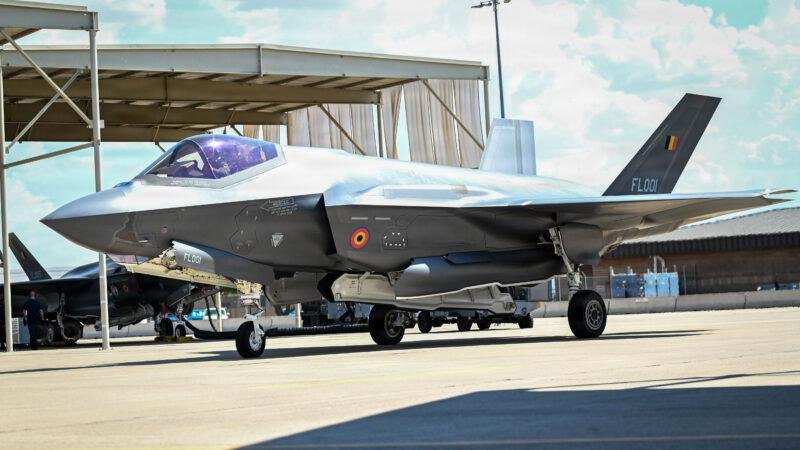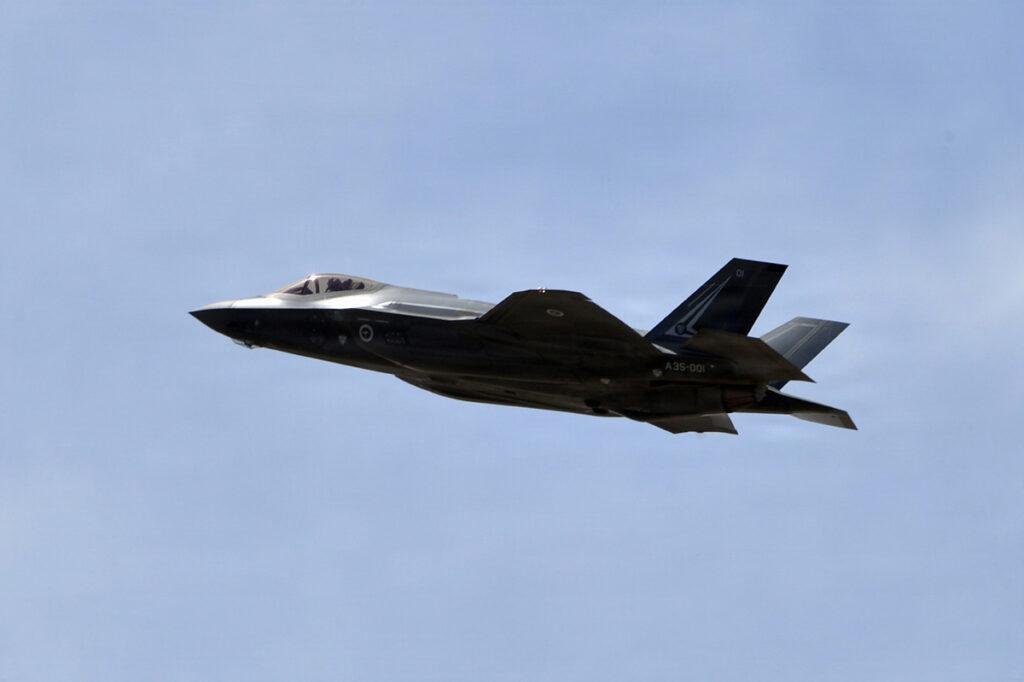
The F-35 parts diverted to Hong Kong from an Australian military aircraft are now reportedly in Chinese government custody, adding a new security dimension to a shipment incident already under investigation by the United States and Australia.
Bloomberg reported on September 23 that UPS was transporting a cockpit canopy and weapons-bay door from an Australian F-35A to the United States in late May for inspection and possible repair or disposal. The shipment stopped in South Korea before being routed to Hong Kong, and people briefed on the incident told Bloomberg that the Chinese government later took possession of the parts and has not returned them.
Table of Contents
F-35 Parts Diverted to Hong Kong: What Happened
The F-35 parts diverted to Hong Kong came from a Royal Australian Air Force F-35A and were being moved through the fighter’s international sustainment system. Bloomberg reported that UPS was carrying the canopy and weapons-bay door to the United States for inspection and possible repair or disposal.
The shipment stopped in South Korea and was then routed to Hong Kong. Public reporting has not established why the routing changed, why the shipment stopped in South Korea, or whether the diversion resulted from an error or deliberate action.
The F-35 Joint Program Office has acknowledged a shipment issue involving unserviceable F-35 components and said it is working with U.S. authorities and industry partners to retrieve the parts, investigate the incident and add safeguards. ABC News reported the Pentagon statement as Australia confirmed it was assisting with the investigation.
China Reportedly Took Possession of the Components
The latest development came from Bloomberg, which cited people briefed on the incident as saying the Chinese government took possession of the F-35 parts diverted to Hong Kong and has not returned them.
That reporting does not establish that Beijing caused the diversion. Neither U.S. nor Australian authorities have publicly accused China of rerouting the shipment, and Al Jazeera reported that China’s Foreign Ministry said it was unaware of the incident.
For that reason, describing the episode as China “stealing” an F-35 canopy would go beyond the evidence currently in the public record. What is established is that the shipment did not reach its intended U.S. destination, was diverted to Hong Kong, and is now reportedly in Chinese government custody.
Why the F-35 Canopy Matters
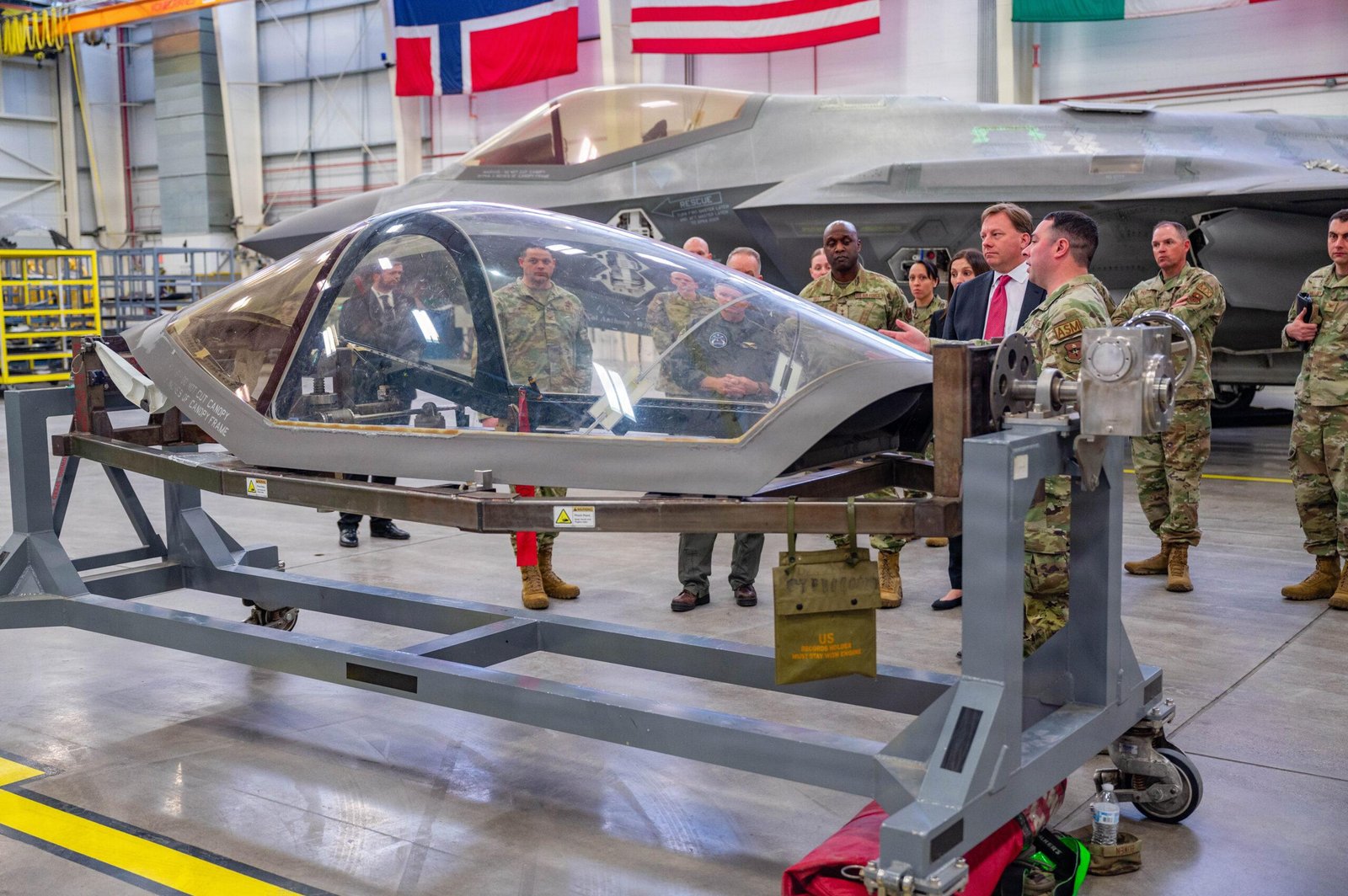
Among the F-35 parts diverted to Hong Kong, the cockpit canopy is especially notable because it is more than a transparent cover. The U.S. Air Force has described the F-35A canopy as a stretched acrylic bubble with a thin transparent layer of radar-absorbent material on its exterior that helps preserve the aircraft’s low-observable characteristics.
The Air Force has previously replaced canopies when that outer layer degraded, peeled or separated because deterioration could create a radar vulnerability. A more recent DVIDS release from the 388th Fighter Wing likewise states that the canopy’s outer surface forms part of the jet’s stealth capability.
Physical access to a canopy could therefore allow examination of its construction, coatings and material behavior. That does not mean possession of one canopy reveals the F-35’s complete stealth design, which depends on the aircraft’s overall shaping, materials, surface treatments, internal carriage and other integrated features.
The Weapons-Bay Door and Low-Observable Design
The second major component was a weapons-bay door. Bloomberg’s sources said both the canopy and the door were coated with radar-absorbing material supplied as part of the aircraft’s stealth design.
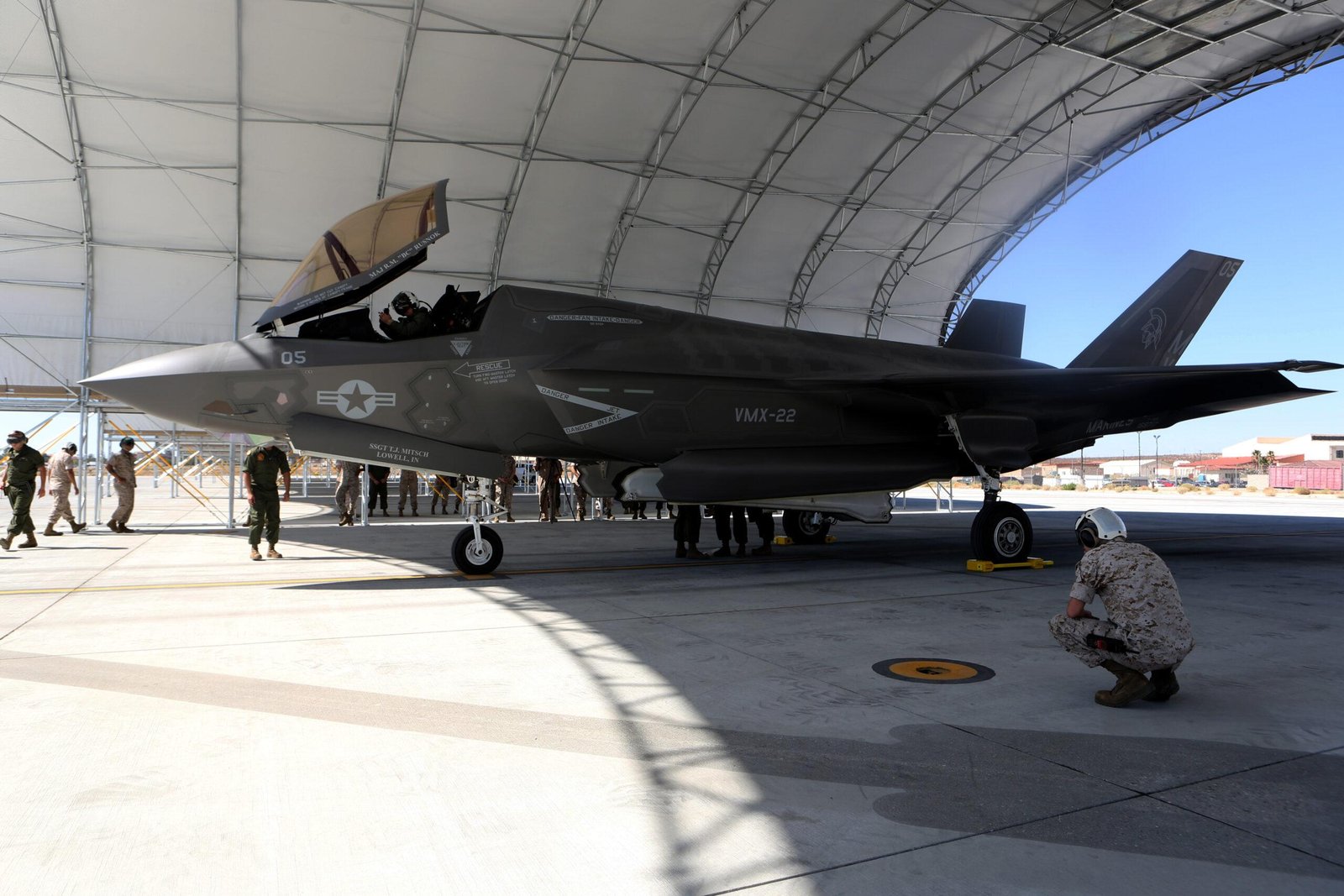
The Royal Australian Air Force describes the F-35A as using a low-observable design with internal weapons and fuel carriage. Keeping weapons inside the aircraft is part of how the fighter avoids the additional radar reflections that external stores and pylons can create.
The condition of the diverted weapons-bay door has not been publicly detailed beyond its description as unserviceable. There is also no public evidence showing that either component has been technically exploited or reverse-engineered.
Australia Says the Parts Were Not Sensitive
Australian Defence Minister Richard Marles has publicly played down the sensitivity of the missing components. In an official September 22 transcript, Marles said Australia was working with the United States and Lockheed Martin and examining what occurred at the Australian end of the shipment.
Marles said his understanding was that the F-35 parts diverted to Hong Kong did not involve sensitive equipment or sensitive parts. He also said responsibility for managing the matter rests with the United States and Lockheed Martin, which manages the F-35 global supply chain.
That assessment is not necessarily inconsistent with the technical interest surrounding the canopy and weapons-bay door. A component can be unserviceable or not treated as classified sensitive equipment while still containing physical materials or manufacturing features that another government could potentially study.
A Larger F-35 Supply-Chain Accountability Problem
The F-35 parts diverted to Hong Kong also put renewed attention on the scale and complexity of the fighter’s global support system. Australia operates 72 F-35As and participates in an international program in which aircraft parts, maintenance work and support functions are distributed across partner nations and contractors.
The Australian Department of Defence says its regional F-35 support capability includes airframe maintenance, engine maintenance, component repair and warehousing, with Australian companies participating in the wider global sustainment system.
Parts accountability has already been a documented challenge. A 2023 U.S. Government Accountability Office review found that one F-35 prime contractor had recorded losses involving more than one million spare parts worth over $85 million since May 2018, while fewer than 2 percent of those identified losses had been reviewed by the Joint Program Office at the time.
Those figures included parts that were lost, damaged or destroyed and ranged from major assemblies to routine hardware such as bolts, screws and fasteners. They should not be interpreted as one million sensitive F-35 components disappearing. GAO’s broader finding was that the Pentagon lacked complete accountability over portions of the global spares pool.
The incident comes as the F-35 enterprise continues expanding and modernizing internationally. The Aviation Diary has also been tracking that wider program, including the Pentagon’s planned F-35 Starshield SATCOM upgrade targeted for fielding later in the next decade.
FAQ: F-35 Parts Diverted to Hong Kong
Did China steal the F-35 parts?
There is no public evidence establishing that China caused the shipment to be diverted. Bloomberg reports that the Chinese government later took possession of the parts after they reached Hong Kong and has not returned them.
What F-35 parts were diverted to Hong Kong?
The F-35 parts diverted to Hong Kong were a cockpit canopy and a weapons-bay door from an Australian F-35A being sent to the United States for inspection and possible repair or disposal, according to Bloomberg.
Could the components reveal F-35 stealth technology?
Both components reportedly incorporate radar-absorbing material, so physical examination could potentially reveal information about their materials or construction. Public reporting does not establish that the parts have been exploited, and the F-35’s stealth performance depends on far more than either component by itself.
Looking Ahead
The next verifiable milestones are the recovery effort and the investigation into how the shipment was rerouted. The F-35 Joint Program Office says it is working with U.S. authorities and industry partners to retrieve the components and put safeguards in place, while Australia is reviewing what occurred on its side of the shipment.
Until investigators explain where the routing changed, who controlled the shipment at each stage and what happened to the parts after they reached Hong Kong, the incident will remain both a security concern and a test of the logistics controls surrounding the F-35’s global sustainment network.
Sources
- Bloomberg via Yahoo Finance — China Is Holding Sensitive F-35 Parts Diverted to Hong Kong
- Australian Department of Defence — Richard Marles Doorstop, Adelaide, September 22, 2026
- ABC News Australia — Australia Confirms F-35 Parts Went Missing in Hong Kong
- Al Jazeera — U.S. and Australia Investigate F-35 Parts Diverted to Hong Kong
- U.S. Air Force Safety Center — Maintainers Ensure F-35A Stays Safe and Stealthy
- Royal Australian Air Force — F-35A Lightning II
- Australian Department of Defence — Joint Strike Fighter Aircraft Program
- U.S. Government Accountability Office — F-35 Global Spare Parts Accountability