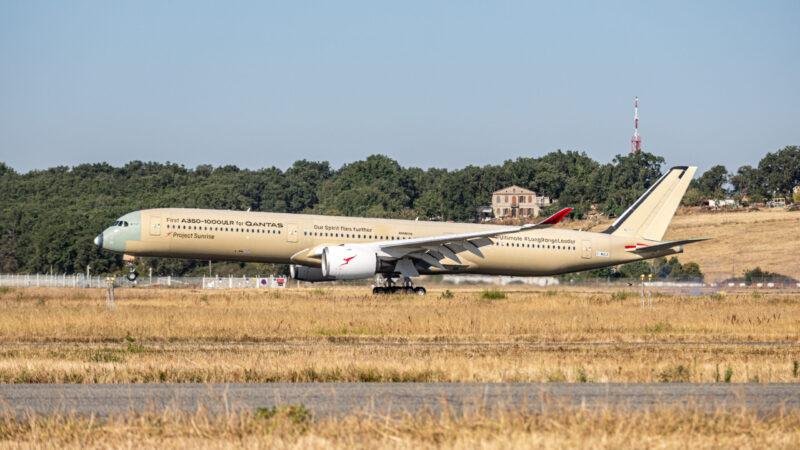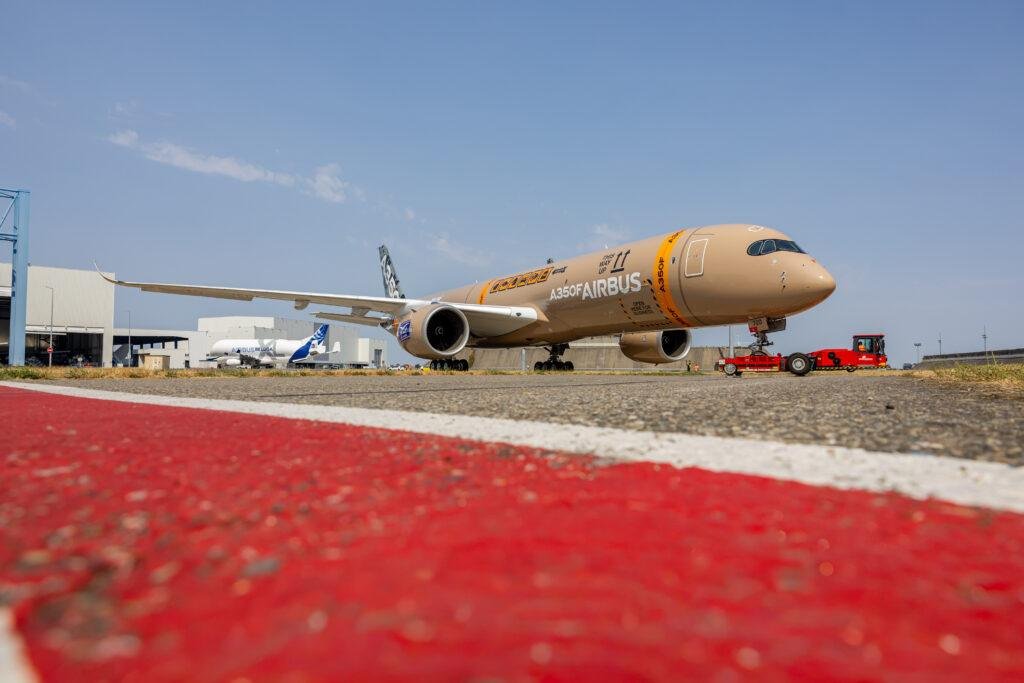
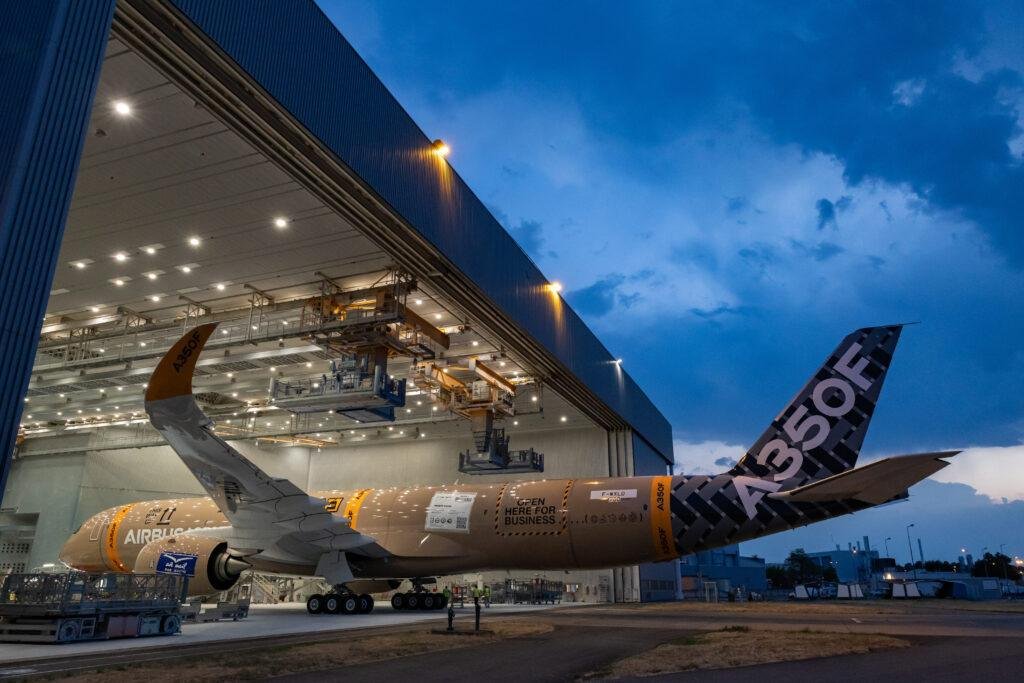
The Airbus A350F is approaching its first flight as MSN700 completes a sequence of simulator rehearsals and ground tests designed around the freighter’s distinct aerodynamics and cargo systems.
The aircraft is derived from the A350 family, but it is not simply a passenger A350 with a cargo door. Its fuselage combines the forward length of an A350-900 with the rear fuselage length and wings of an A350-1000, creating an aerodynamic model and ground-handling geometry that require a dedicated test campaign.
Airbus plans to use two flight-test aircraft for roughly 400 flight hours over about nine months. MSN700 will lead the aerodynamic and flight-control work, while MSN701 will concentrate on aircraft systems, including the freighter’s fire and smoke protections.
Table of Contents
Why the A350F Needs a Dedicated Flight-Test Campaign
The A350F shares major systems and structures with the passenger A350, but the freighter’s proportions produce a different aircraft-level model. Airbus says the new fuselage combination affects aerodynamics and flight-control behavior, while changes to the landing-gear geometry also affect maneuvering on the ground.
That distinction is central to the test plan. In its Sept. 14 first-flight preparation report, Airbus said the program follows five years of planning, component testing and demonstrator work. The manufacturer is now moving from those preparations toward proving the integrated aircraft in flight.
The opening flight will be conducted in Direct Law, the basic flight-control mode without the full envelope and stability protections available in Normal Law. Airbus said 10 percent of the derivative aircraft’s aerodynamic characteristics remain represented by an unverified model until flight data can confirm them.
How Airbus Is Rehearsing the First Flight
Before MSN700 leaves the ground, Airbus is running a Virtual First Flight program in a development simulator connected to real avionics test benches. The setup includes the aircraft’s flight controls and digital engine-control systems, allowing the crew to exercise the intended profile with hardware representative of the flying aircraft.
The program consists of 13 sessions lasting about five hours each. Airbus describes the installation as 90 percent representative of the physical A350F; the major element that cannot be fully demonstrated in the simulator is the freighter’s aerodynamic model in actual flight.
The rehearsals are intended to clear new systems, validate flight-control laws and expose the first two aircraft’s crews to combinations of system failures. The five-person first-flight crew will include two pilots, one test flight engineer and two flight-test engineers.
Ground Tests Cover Structure, Air Data and Cargo Safety
Airbus completed ground-vibration testing in June. That work measured how the full airframe responds to controlled vibration and provided data used to validate the structural and aeroelastic models needed before flight.
The flight-test team is also preparing anemometry calibration using a trailing cone. The cone samples undisturbed air behind the aircraft so engineers can compare its readings with the onboard pitot-static system, which supplies airspeed, altitude and Mach information. Pre-verification work is being performed with MSN59, an A350-1000.
Cargo-compartment safety creates another freighter-specific test requirement. Airbus plans to use smoke generators on the ground and in flight to evaluate detection, smoke propagation and crew procedures. If smoke or fire is detected in the main cargo area, the operating procedure may require depressurizing that deck and flying at 20,000 feet.
Those systems support an aircraft designed around a payload of up to 111 tonnes. Airbus’s official A350F specifications list 30 main-deck containers, 40 lower-deck LD3 containers and a 4,700-nautical-mile range.
Two Aircraft Will Divide the Certification Work
MSN700 and MSN701 will carry different flight-test instrumentation layouts and split the campaign by specialty. MSN700 will focus on aerodynamic performance, handling qualities and autopilot systems. It is also fitted with a tail skid and bumper for takeoff-performance testing.
MSN701 will concentrate on systems testing, including air conditioning and comprehensive fire and smoke work, and will conduct the hot- and cold-weather portions of the campaign. Airbus expects MSN700 to clear the flight-control laws first so MSN701 can make its initial flight in Normal Law.
The European Union Aviation Safety Agency is already reviewing and approving the flight-test plan. Airbus said EASA pilots and engineers are scheduled to fly as onboard witnesses during performance testing and will become more extensively involved in the formal certification phase planned for 2027.
FAQ: Airbus A350F First-Flight Preparations
Why does the A350F need a separate flight-test campaign?
Its combination of A350-900 and A350-1000 fuselage dimensions, A350-1000 wings, cargo systems and revised landing-gear geometry creates aircraft-level characteristics that must be tested independently.
How many aircraft will Airbus use in the campaign?
Airbus plans to use two aircraft, MSN700 and MSN701, dividing aerodynamic and flight-control work from systems, fire, smoke and weather testing.
What will happen after the first flight?
The first flight will open a planned campaign of roughly 400 flight hours over about nine months, leading into the formal certification work Airbus says is planned for 2027.
Looking Ahead
The next milestone is MSN700’s first flight, but the larger measure will be how quickly flight data confirms the freighter’s aerodynamic model and allows the team to expand from Direct Law into the full test envelope. The subsequent division of work between MSN700 and MSN701 will determine whether Airbus can complete the planned campaign and move into formal certification during 2027.
Sources
- Airbus — Preparing the Airbus A350F for its first flight
- Airbus — Official A350F capabilities and specifications