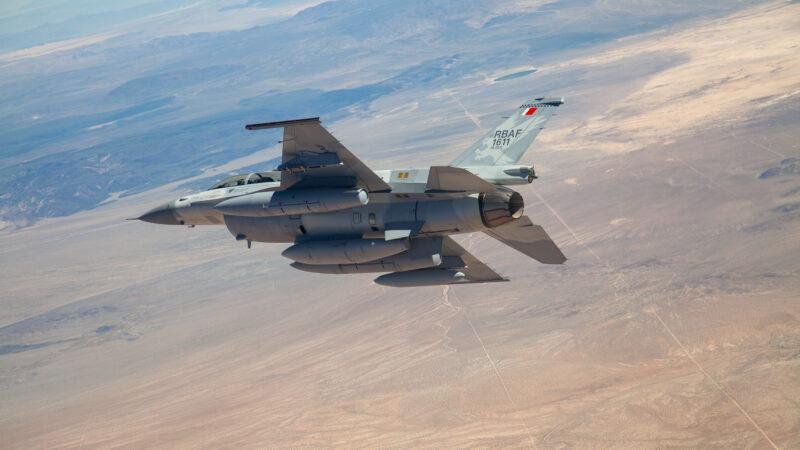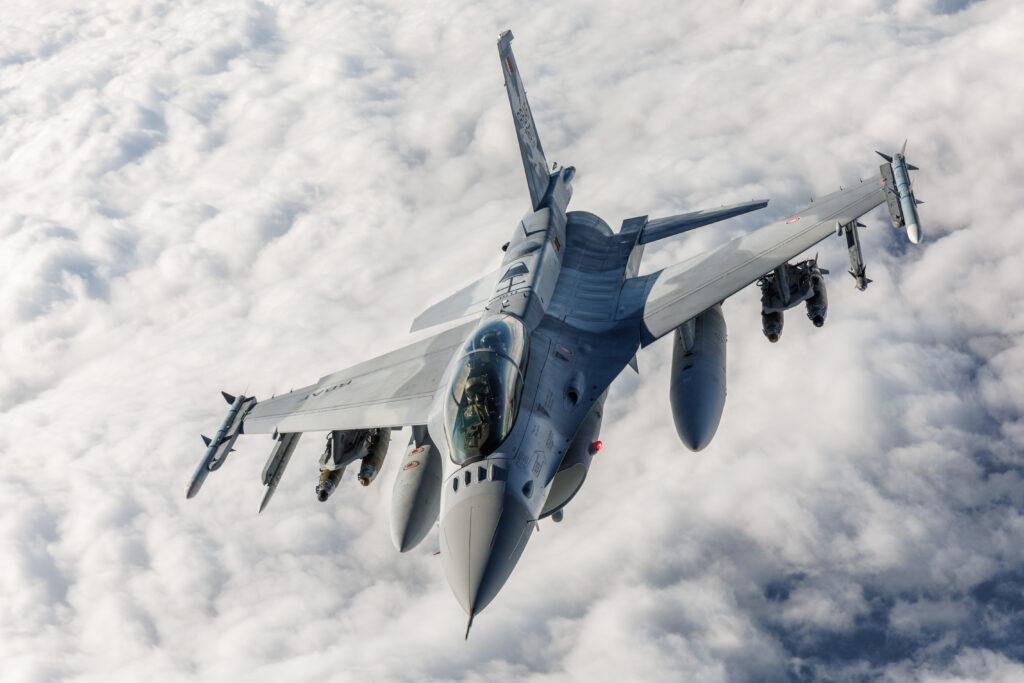
Taiwan took delivery of its first two F-16 Block 70 fighters on Oct. 2, 2026, starting a long-delayed order of 66 new-build jets from the United States.
The two single-seat jets, serial numbers 6727 and 6728, landed at Chihhang Air Base in Taitung County around noon, according to Focus Taiwan and Breaking Defense. They are the first new fighters delivered to Taiwan in more than two decades, TWZ and FlightGlobal reported.
The United States approved the sale in 2019. Deliveries were meant to begin in 2023 and finish in 2026, Focus Taiwan reported, but technical issues pushed the schedule back.
Table of Contents
The First F-16 Block 70 Jets Arrive in Taitung
Taiwan’s Military News Agency announced the arrival, and its photos showed the two jets landing, Breaking Defense reported. The aircraft will join the Republic of China Air Force’s 7th Tactical Fighter Wing at Chihhang, which retired its F-5 Tiger II fighters in 2024, according to the same report.
The jets left Lockheed Martin’s Greenville, South Carolina, plant for Hawaii on Aug. 17, then stayed in Hawaii for more than a month after an unexpected problem, TWZ reported. The reasons were not made public, and TWZ said speculation included weather and tanker availability. Focus Taiwan noted that the jets remained in Hawaii without explanation while President Donald Trump prepared to meet Chinese leader Xi Jinping in late September.
They left Hawaii on Oct. 1, stopped in Guam, and flew the last leg to Taitung on Oct. 2, TWZ reported. Defense Minister Wellington Koo said more jets will arrive before the end of the year but gave no number.
Why the F-16 Block 70 Delivery Slipped
TWZ reported that production-line adjustments, supply-chain problems and software issues all contributed to the delay, and that the pandemic also affected the line. Lockheed Martin had to rebuild its F-16 line in Greenville, Taiwan News reported.
Taiwan’s Ministry of National Defense acknowledged in late September that development and production of the jets’ new electronic warfare self-protection system was also a factor, TWZ reported. The Block 70s use L3Harris’ AN/ALQ-254(V)1 Viper Shield, and L3Harris said on Sept. 3 that it had finished production of the first 35 systems.
Koo had said in March, May and, through his deputy, in June that the first jets would arrive by the end of September, TWZ reported. Focus Taiwan said they had been expected by the end of August. Lawmakers have questioned whether Viper Shield meets requirements tied to Taiwan’s earlier F-16 upgrade, and Koo argued those requirements applied to the older Block 20 upgrade, not the new purchase, according to TWZ.
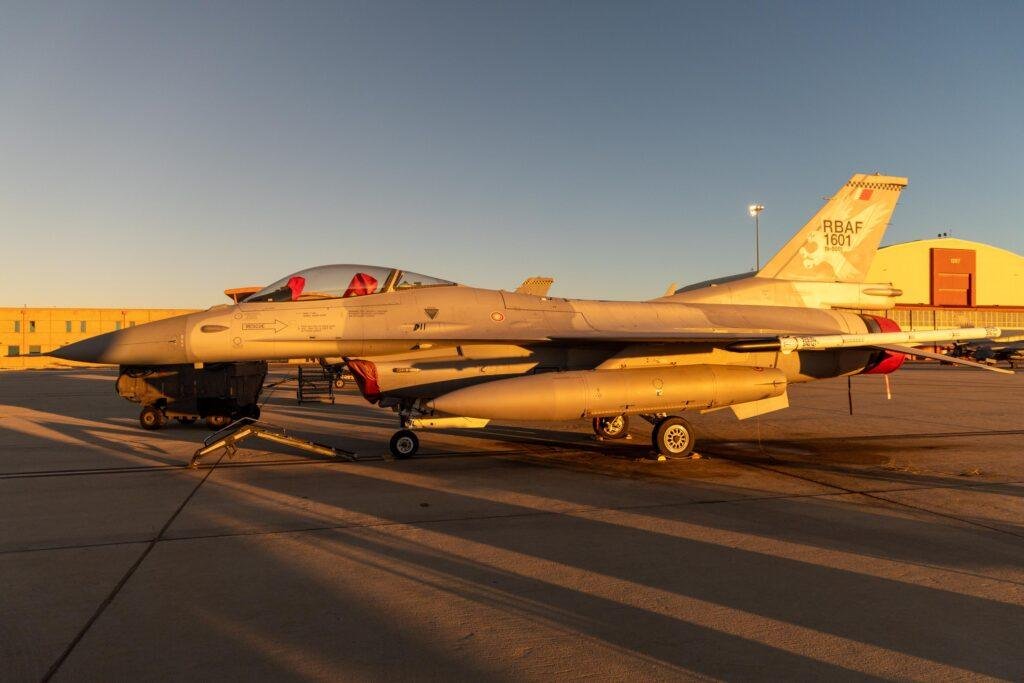
What the F-16 Block 70 Adds
The Block 70s are new-production aircraft. Taiwan’s existing F-16V fleet is made up of older F-16A/B Block 20 fighters, roughly 140 of them, upgraded under a separate program completed in 2023, TWZ reported. The new jets share many technologies with that fleet, including the AN/APG-83 radar, but are built from the ground up.
Breaking Defense reported that the Block 70s can carry conformal fuel tanks to extend range and are powered by the General Electric F110 engine, not the Pratt & Whitney F100 in Taiwan’s older F-16s.
Taiwan is also receiving Lockheed Martin’s IRST21 Legion-ES infrared search-and-track system under a $328.5 million foreign military sales contract awarded in February, TWZ reported. The sensor can detect and track airborne targets without emitting radar energy.
Weapons have not kept pace with the jets. Taiwan has ordered 200 AIM-120C-8 AMRAAM missiles, and the first AGM-88F HARM missiles arrived in 2022, TWZ reported. The AGM-154C Joint Standoff Weapon is the main gap, with deliveries held up by U.S. production delays and possibly not starting until 2027 or 2028, according to Taiwanese reporting cited by TWZ.
What Comes Next
The remaining jets are still in production or delivery in the United States, with some already moving through handover, TWZ reported, citing the latest information from the Air Force. They will be flown to Taiwan as production, flight-test and acceptance milestones are met. The aircraft must then pass Taiwan’s acceptance procedures while pilots and maintainers complete conversion training.
Once all 66 are delivered, Taiwan will operate more than 200 F-16s, TWZ reported. Officials have said the original goal of all 66 by the end of 2026 will not be met. Air Force Chief of Staff Lee Ching-jan said so to lawmakers in October 2025, according to CNA.
TWZ noted that the jets arrived days after Trump and Xi met in Washington, and that Trump said in May that a proposed $14 billion Taiwan arms package was being held in abeyance. Washington says its Taiwan policy has not changed, and Beijing opposes U.S. arms sales to Taiwan, according to the same report.
FAQ: Taiwan’s F-16 Block 70
How many F-16 Block 70 jets has Taiwan received?
Two of 66. The first two F-16 Block 70 jets, serials 6727 and 6728, landed on Oct. 2, 2026. The rest are still to come.
Where are the new F-16s based?
At Chihhang Air Base in Taitung County, with the 7th Tactical Fighter Wing.
Why were the F-16 Block 70 jets late?
Production-line changes, supply-chain problems, software issues and delays with the electronic warfare system all played a part, according to TWZ and Taiwan’s defense ministry.
Looking Ahead
Three things to watch: how many more F-16 Block 70 jets reach Taiwan before the end of 2026, when the Viper Shield electronic warfare system is fully ready, and when AGM-154C deliveries begin. Taiwan’s defense ministry has said it will announce delivery details as they are confirmed.
Sources
- Focus Taiwan (CNA) — Taiwan receives first 2 F-16V Block 70s
- TWZ — Taiwan’s First F-16 Block 70s Have Finally Arrived
- Breaking Defense — After yearslong delay, Taiwan receives first pair of new F-16s
- FlightGlobal — First F-16 Block 70 fighters land in Taiwan
- Taiwan News — Why Taiwan’s first F-16 Block 70s are still missing
- CNA via GlobalSecurity — Taiwan will not receive all 66 F-16V jets by end of 2026: Air Force