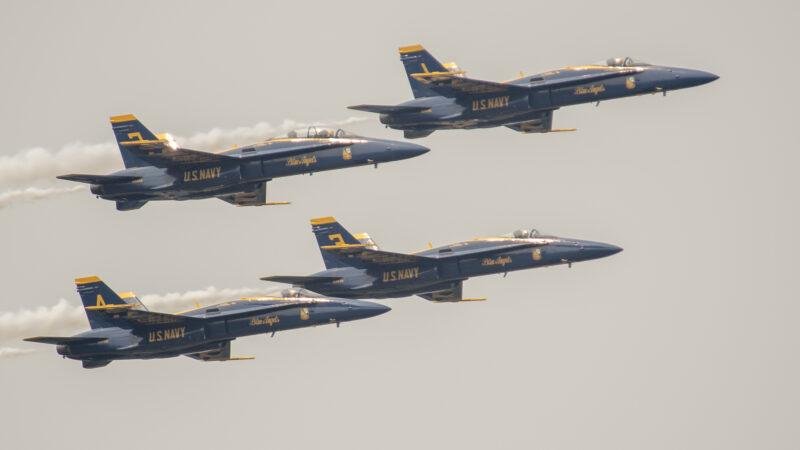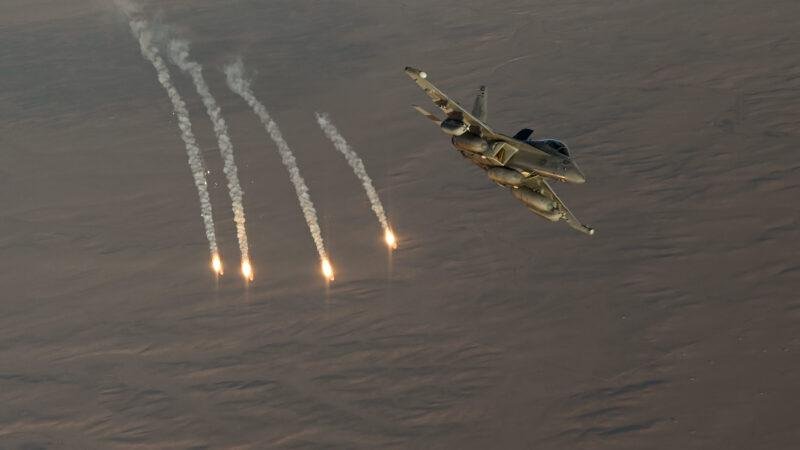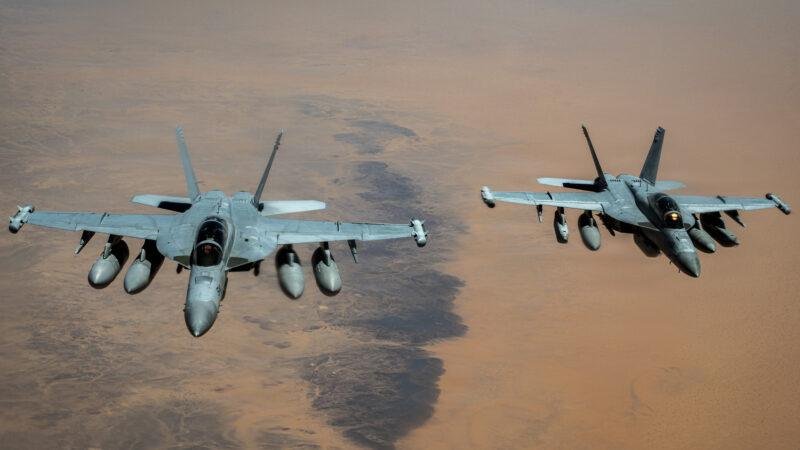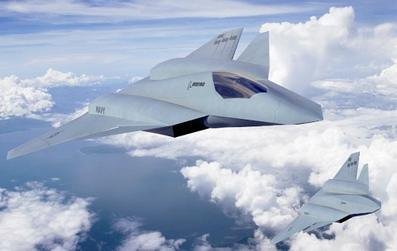
The U.S. Navy has selected Boeing to build the F/A-XX, the sixth-generation carrier fighter intended to succeed the F/A-18E/F Super Hornet and EA-18G Growler. The Department of War announced the award on Sept. 29, 2026, and described the contract as valued at more than $20 billion for the full-scale development phase.
Boeing beat Northrop Grumman, the other company still in the competition. The deal pays for multiple test aircraft rather than production jets, and it gives Boeing both of the U.S. military’s crewed sixth-generation fighter programs, alongside the Air Force’s F-47.
The decision ends a long wait for the Navy. Chief of Naval Operations Adm. Daryl Caudle said in August that the slow timeline was adding pressure on F/A-18 sustainment and on the F-35 program to bridge the gap until a sixth-generation fighter arrives, according to Aviation Week.
Table of Contents
Table of Contents
Boeing Takes the Navy’s Sixth-Generation Fighter
Boeing’s announcement, datelined St. Louis, says the Navy awarded the company a multi-billion-dollar contract to design, build and deliver the aircraft. The company’s release does not give a dollar value. The figure of more than $20 billion comes from the Pentagon’s description of the contract, as reported by Aviation Week and The Aviationist.
Acting Navy Secretary Hung Cao said the selection marks “a new era for the U.S. Navy.” Under Secretary of War for Acquisition and Sustainment Michael Duffey called the fighter a “crucial, non-negotiable investment” in long-term air combat capability.
Northrop Grumman said its offer was a survivable, digitally advanced sixth-generation fighter and that it looks forward to receiving additional information about the selection. Aviation Week noted that the company can challenge the outcome.
What the Contract Covers
According to the Pentagon’s description, the development contract procures multiple test aircraft for ground, airworthiness, systems and weapons-integration testing. It is not a production award. Coverage of the announcement cites no production quantity or first-flight date, and the Pentagon said only that the aircraft will fly beginning in the 2030s.
Boeing declined to share design details, saying technical and programmatic specifics remain classified under U.S. national security and export laws. The Navy has previously said the design will use a derivative of an existing fighter engine rather than the adaptive-cycle propulsion the Air Force is developing. The Aviationist also reported that Navy officials have said they expect roughly 25 percent more range than the F-35C and stronger jamming capability than the Growler.
The timing followed the budget calendar. Aviation Week reported that the award came shortly before the end of the fiscal year, when funding Congress had added for the program was due to expire. Congress’s fiscal 2026 defense appropriations directed the Pentagon to award a development contract to a single vendor to speed initial operational capability.
On the same day, the Navy also awarded Boeing a $16.7 million contract to plan and prepare for the shutdown of the F/A-18E/F and EA-18G production lines, Aviation Week reported.
What F/A-XX Is Meant to Replace
The Pentagon says F/A-XX will augment and eventually replace Super Hornets and Growlers beginning in the 2030s, operating alongside the F-35C and Collaborative Combat Aircraft. Navy leaders have described it as the crewed lead of a mixed air wing, and Caudle has said it will also serve as the Navy’s electronic attack aircraft as the Growler ages out.
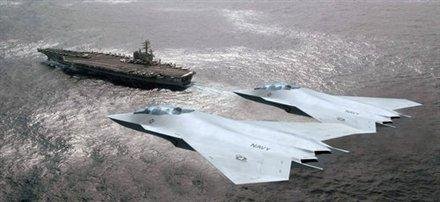
Aviation Week describes the primary task as long-range strike in heavily defended airspace, with a role in defending the carrier against air and missile attack. The air wing it joins is also expected to include the Boeing MQ-25 Stingray refueling drone and a future fleet of Collaborative Combat Aircraft.
Boeing Now Holds Both Crewed Sixth-Generation Fighters
Boeing won the Air Force’s F-47 contract in March 2025, so the F/A-XX award means the company is now developing both of the U.S. military’s crewed sixth-generation fighters. Its fighter work is based in St. Louis.
Aviation Week reported that some Pentagon officials had worried Boeing could not handle two major fighter development programs at once. Steve Parker, president and CEO of Boeing Defense, Space & Security, said building both was “always our plan” and that the company invested accordingly.
Boeing said construction continues on its secure manufacturing facility in St. Louis, which it describes as the largest in the U.S. and part of an all-digital design and manufacturing system.
FAQ: F/A-XX Contract
How much is the F/A-XX contract worth?
The Pentagon valued the development contract at more than $20 billion, while Boeing’s own release calls it a multi-billion-dollar award. The money covers full-scale development and test aircraft, not a production run.
When will F/A-XX enter service?
The Pentagon says it will augment and eventually replace Super Hornets and Growlers beginning in the 2030s. No more specific first-flight or fielding date has been reported.
Does Boeing now hold both U.S. crewed sixth-generation fighter programs?
Yes. Boeing is developing the Air Force’s F-47, awarded in March 2025, and now the Navy’s F/A-XX. The two programs are separate, and the Navy has said its aircraft needs a different airframe.
Looking Ahead
Northrop Grumman’s response is the first thing to watch, since Aviation Week noted the company can challenge the outcome. The next scheduled date is Boeing’s third-quarter earnings release on Oct. 27, the company’s first since the award. Neither a production quantity nor a first-flight date has been reported so far, and those details will show how quickly the Navy intends to move toward its 2030s fielding goal.
Sources
- Boeing — U.S. Navy Selects Boeing for F/A-XX Program
- Aviation Week — Boeing Wins U.S. Navy F/A-XX Fighter Competition
- The Aviationist — Boeing Awarded Contract to Build U.S. Navy’s F/A-XX Fighter
- Breaking Defense — Boeing wins Navy next-gen fighter F/A-XX competition
- Air & Space Forces Magazine — F-47 Maker Boeing Tapped for Navy’s F/A-XX Sixth-Gen Fighter
- The Defense Post — US Navy Awards Boeing $20B+ Contract to Build Sixth-Gen F/A-XX Fighter
- Boeing — News releases (third-quarter results date)