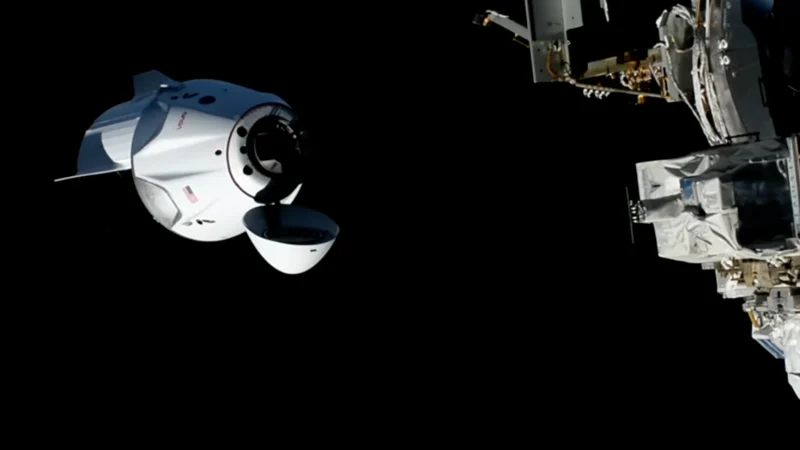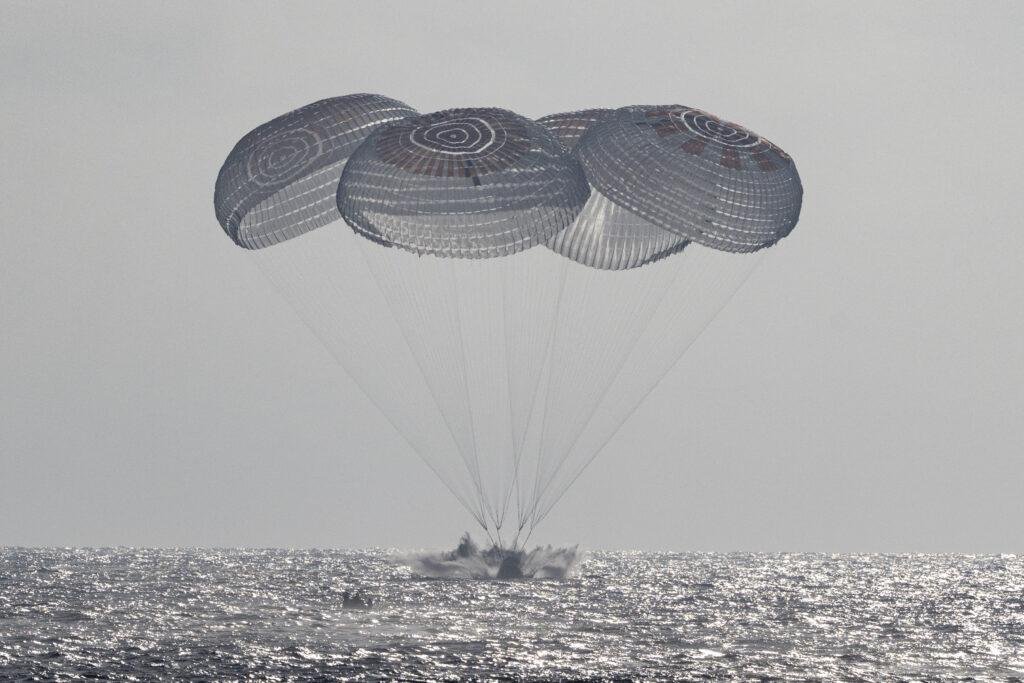
NASA Crew-12 returned to Earth on October 8 when its SpaceX Dragon capsule splashed down in the Pacific Ocean off Los Angeles. NASA said the spacecraft touched down at 11:34 a.m. Eastern daylight time, ending the international crew’s orbital mission.
The four travelers were NASA astronauts Jessica Meir and Jack Hathaway, European Space Agency astronaut Sophie Adenot and Roscosmos cosmonaut Andrey Fedyaev. NASA’s detailed return announcement said the astronauts spent 237 days living and working in orbit, including research and maintenance aboard the International Space Station.
The landing concludes one stage of station operations, not the work of the orbital laboratory itself. Other astronauts continue operating the complex while teams on Earth begin postflight medical assessments, equipment processing and science follow-up. NASA Crew-12 recovery documentation will also inform the postflight medical and operational reviews.
Table of Contents
NASA Crew-12 recovery follows scheduled descent
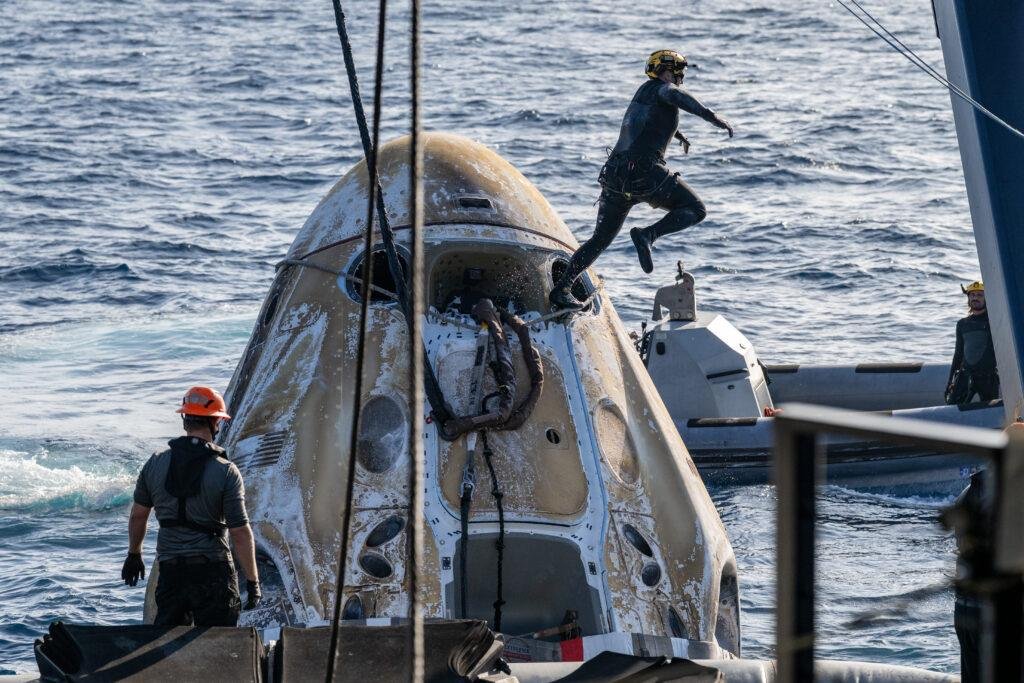
NASA reported that Dragon completed its deorbit burn before parachute descent and splashdown. Recovery crews approached the capsule at sea and prepared to bring the spacecraft and astronauts aboard a ship for post-landing procedures.
A spacecraft returning from orbit must convert a controlled atmospheric entry into a recoverable splashdown while flight controllers monitor weather and recovery readiness. NASA’s advance briefing made clear that the return timing depended on conditions off California as well as vehicle and ship readiness.
The agency’s detailed release reported 237 days in orbit, while a live NASA splashdown post referred to 235 days at the space station. Those measurements describe different portions of the mission and should not be silently treated as identical.
NASA Crew-12: research and spacewalks during the station mission
NASA said Crew-12 conducted research for future exploration, supported station maintenance and participated in external work. Its summary credited Meir with four spacewalks during the mission, bringing her career total to seven.
The agency also said Adenot performed three spacewalks and became the first French woman to work outside the station. The figures describe individual activity; some spacewalks involved multiple participants and should not be added together as if each were a separate outing.
The station’s research program examines how humans and equipment operate for extended periods in microgravity. Experiments range from life sciences to technology demonstrations, with conclusions generally requiring further processing after samples and data return to laboratories on Earth.
What the safe landing does and does not establish
The completed splashdown confirms the crew and vehicle reached the planned recovery area. It does not by itself certify the outcome of every experiment or finish the technical assessment of the spacecraft’s full mission.
Crew rotation is a continuing service in which transport vehicles connect the orbital laboratory with ground teams. Once personnel return, medical monitoring and scientific analysis become the immediate tasks, alongside preparation for future station traffic.
NASA scheduled a separate crew news conference at Johnson Space Center in Houston on October 15. That discussion may provide a more complete account of research results and the astronauts’ experiences than the immediate landing notices.
FAQ: Nasa Crew-12
When did NASA Crew-12 splash down?
NASA recorded splashdown at 11:34 a.m. EDT on October 8, 2026.
Who returned on Crew-12?
Jessica Meir, Jack Hathaway, Sophie Adenot and Andrey Fedyaev returned aboard Dragon.
How long was the mission?
NASA reported 237 days in orbit and separately described 235 days aboard the station.
Looking Ahead
The NASA Crew-12 return also creates a record of descent, recovery and postflight handling for teams supporting later Dragon missions. Watch NASA’s October 15 crew briefing and subsequent research updates for postflight findings. The landing is confirmed, while experiment-by-experiment conclusions remain separate.
Sources