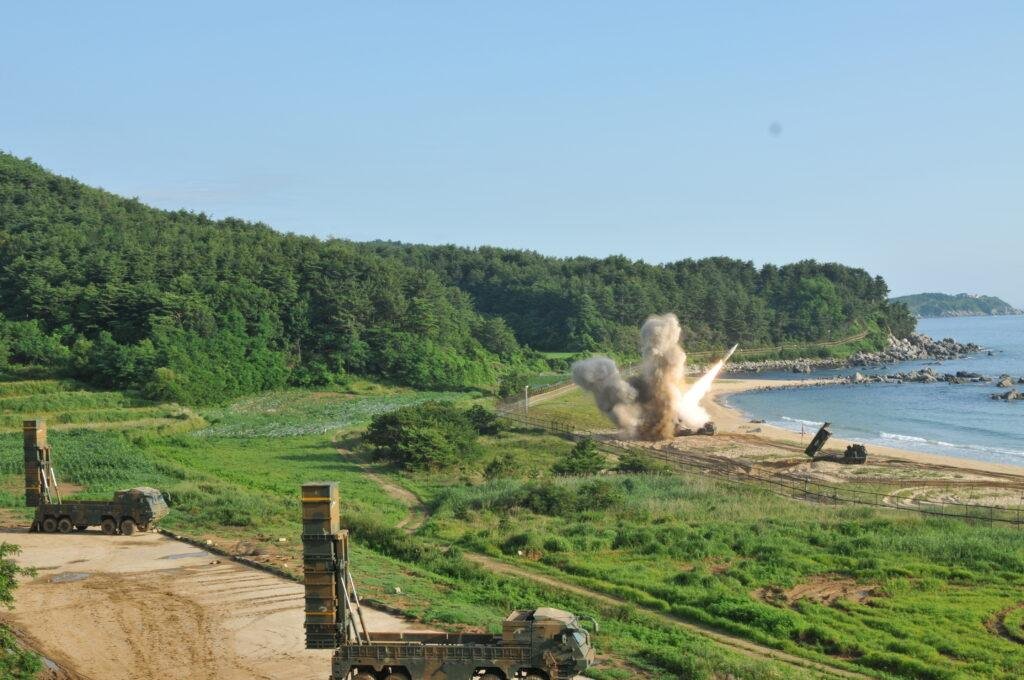
South Korea hypersonic development reached a new flight-test stage on October 8 when the government announced the first test of a domestically developed hypersonic glide vehicle. President Lee Jae Myung observed the event, according to the presidential office, which described it as an evaluation of technologies still under development.
The presidential briefing said the vehicle climbed to a target altitude, separated from its booster and completed a planned flight involving changes in direction. Yonhap reported that the event was intended to assess high-temperature materials, guidance and control rather than demonstrate an operational weapon already deployed to military units.
That distinction is central: a successful test, as described by the South Korean government, offers evidence about a developmental system but does not establish production readiness, combat performance or a deployment date. The South Korea hypersonic test also leaves questions about repeatability and the measured speed profile.
Table of Contents
South Korea hypersonic test checks flight control
The presidential office said the trial examined how the vehicle performs after booster separation, when it must maintain control during high-speed atmospheric flight. Its account described vertical and horizontal course changes during the glide phase before reaching a designated target point.
Those are different tasks from simply accelerating a missile to high speed. A hypersonic glide vehicle depends on a booster for its initial ascent and then uses its own aerodynamic control surfaces or other guidance mechanisms to maneuver as it descends. That distinction explains why officials emphasized separation, heat protection and control.
Seoul did not provide a public data package establishing the complete flight profile, instrument readings or final production configuration. The result should therefore be described as the government’s reported test achievement, not independently proven performance in operational conditions.
South Korea hypersonic: why this developmental result matters in Asia
The launch places another element of advanced missile research into South Korea’s defense debate. In the government’s description, a maneuvering glide vehicle would be intended to complicate an adversary’s ability to anticipate its flight path. That objective is different from confirmation that a deployable capability exists today.
Yonhap placed the event against heightened tensions with North Korea, which has also described tests of advanced missiles. Neither those comparisons nor the official language establish that the South Korean project has met a defined military procurement threshold.
From an aerospace standpoint, the important questions include repeatable guidance, thermal protection, integration with a booster and the ability to demonstrate performance across repeated launches. A single announced test can narrow uncertainty but cannot settle those questions on its own.
What officials have not disclosed
The publicly accessible presidential summary did not provide a verified maximum speed, test range, maneuver envelope or confirmed schedule for military deployment. Those omissions limit comparisons with other national hypersonic programs.
Although Yonhap reported that the president watched the test, the briefing is the principal direct source for the asserted flight outcome. Independent telemetry and an external technical assessment were not available in the reviewed materials.
Future test reports should distinguish technical development, qualification, procurement and eventual fielding. Those stages are not interchangeable, and a headline calling this system operational would exceed the evidence released so far.
FAQ: South Korea Hypersonic
What did the South Korea hypersonic test demonstrate?
Yes. The presidential office announced a first developmental flight test on October 8, 2026.
Is the system already deployed?
No deployment was established in the statements reviewed. The reported event was a technology test.
What was evaluated?
Officials cited booster separation, thermal protection, guidance and maneuvering during high-speed flight.
Looking Ahead
The South Korea hypersonic effort will still require further public testing before its reported performance can be judged across different conditions. The next verifiable milestone will be a follow-on test or official program update detailing repeatability, qualification and deployment plans. Until then, the performance figures and service timetable remain unconfirmed.
Sources