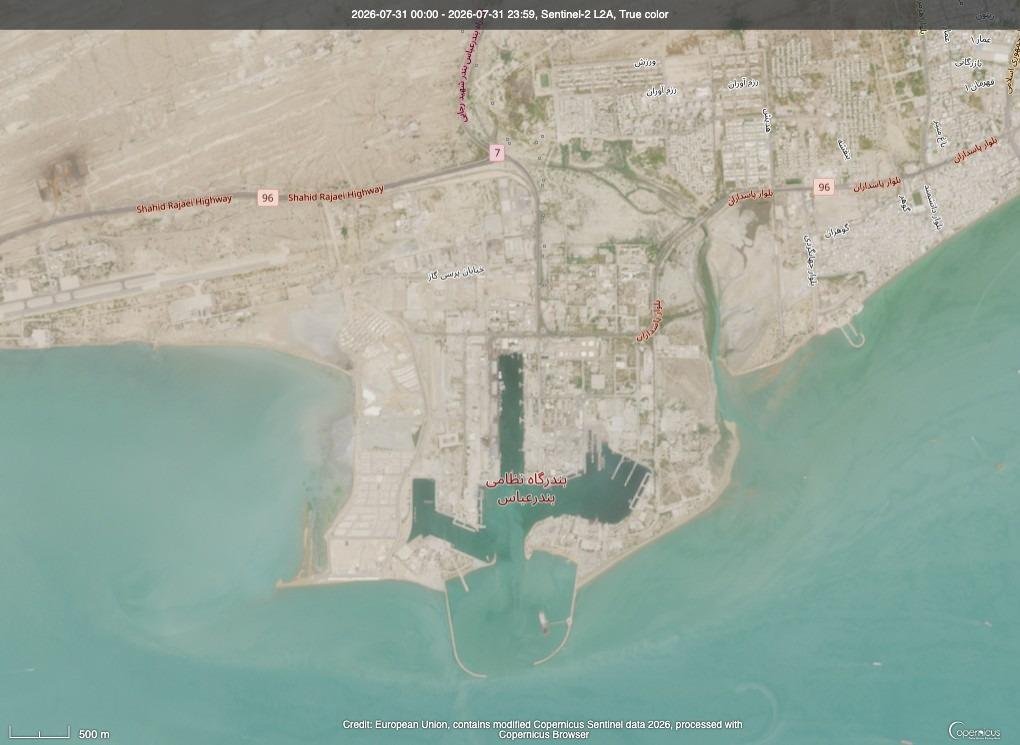
U.S. Sea Drones Strike Iran marked the first confirmed combat use of American unmanned surface vessels (USVs), according to U.S. Central Command (CENTCOM). The operation targeted a submarine and ship maintenance facility at Iran’s Bandar Abbas Naval Base, highlighting the growing role of autonomous maritime systems in modern warfare.
According to CENTCOM, the strike was designed to degrade Iran’s ability to threaten commercial shipping and maritime traffic in the Strait of Hormuz, one of the world’s most strategically important waterways.
The sea drone strike did not occur in isolation. It came as part of a broader wave of U.S. offensive strikes against Iranian air defense systems, coastal radar sites, and missile and drone capabilities, after the ceasefire between the two nations — in place since April 8 — was declared over. The Corsair vessels used in the operation had previously supported the rescue of two U.S. Army helicopter crew members after their AH-64 Apache was shot down over the Strait of Hormuz the previous month.
Table of Contents
What Happened During the U.S. Sea Drones Strike Iran Operation?
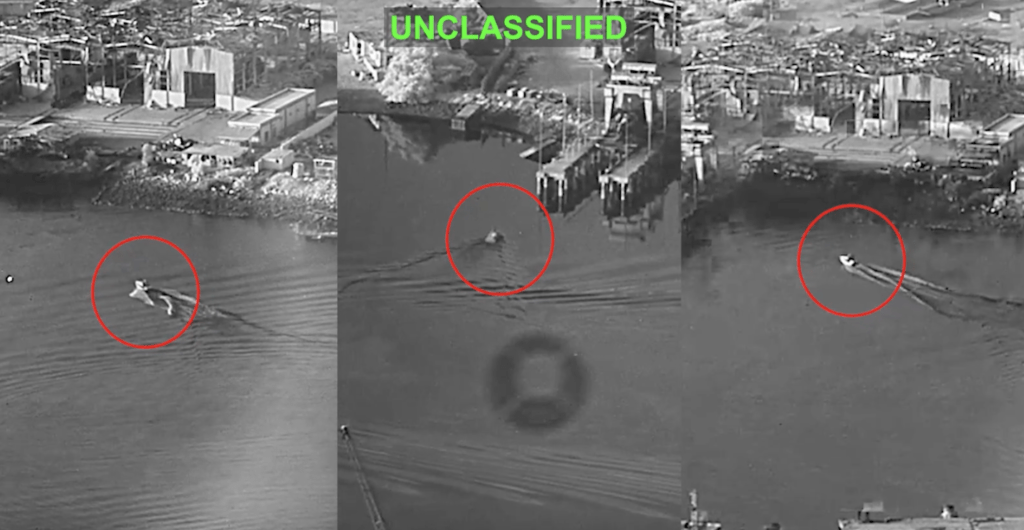
CENTCOM released official footage showing three Corsair unmanned surface vessels traveling across the water before striking their intended targets inside Bandar Abbas Naval Base.
Unlike conventional missiles or aircraft-delivered weapons, these sea drones navigated directly toward their objectives before detonating on impact. The operation represents the first publicly acknowledged combat deployment of U.S. unmanned surface vessels in an offensive mission.
The strike targeted facilities used to maintain Iranian submarines and naval vessels, infrastructure considered critical to Iran’s maritime operations.
Why Bandar Abbas Matters
Bandar Abbas is Iran’s largest naval port and serves as a major operating base for both the Iranian Navy and the Islamic Revolutionary Guard Corps Navy (IRGCN).
Located along the Strait of Hormuz, the base supports:
- Submarine maintenance
- Surface warship repairs
- Naval logistics
- Maritime patrol operations
- Fast attack craft deployments
Because nearly one-fifth of the world’s seaborne oil passes through the Strait of Hormuz, military activity around Bandar Abbas is closely monitored by governments and commercial shipping companies worldwide.
A New Era of Naval Warfare
The U.S. Sea Drones Strike Iran mission demonstrates how autonomous technology is reshaping naval combat.
For years, unmanned aerial vehicles have dominated modern battlefields. Now, unmanned surface vessels are beginning to play a similar role at sea.
Sea drones offer several operational advantages:
- Reduced risk to personnel
- Lower operating costs
- Long-range autonomous navigation
- High precision against maritime targets
- Difficult detection compared to larger vessels
Military analysts believe autonomous maritime systems will increasingly complement traditional warships rather than replace them.
CENTCOM’s Objective
According to CENTCOM, the purpose of the U.S. Sea Drones Strike Iran mission was to reduce Iran’s ability to continue attacks against commercial shipping operating in and around the Strait of Hormuz.
The command emphasized that U.S. forces remain committed to protecting freedom of navigation and ensuring the safe movement of international maritime commerce throughout the region.
No official assessment has yet been released regarding the full extent of damage to the targeted facilities.
Why This Strike Is Significant
The U.S. Sea Drones Strike Iran operation is significant for several reasons:
- It marks the first confirmed combat use of American sea drones.
- It demonstrates the growing role of autonomous naval technology.
- It targeted one of Iran’s most important naval maintenance facilities.
- It highlights evolving U.S. military strategy in the Middle East.
- It could influence how future naval operations are conducted around the world.
As unmanned systems continue to evolve, operations like this may become increasingly common in future maritime conflicts.
The Corsair Sea Drone
The operation also highlighted the growing role of the Saronic Corsair unmanned surface vessel, a next-generation autonomous maritime platform developed for the U.S. military. The Corsair is designed to operate without a crew and is designed to support intelligence, surveillance, reconnaissance (ISR), logistics, and strike missions.
With a range exceeding 1,000 miles and the ability to carry substantial payloads, the Corsair provides commanders with a flexible platform capable of operating in high-risk environments without placing sailors in danger. As autonomous naval systems continue to evolve, vessels like the Corsair are expected to become an increasingly important part of future maritime operations.
As autonomous maritime technology continues to evolve, the combat debut of the Corsair unmanned surface vessel marks an important milestone for the U.S. military. Whether sea drones become a routine feature of future naval operations remains to be seen, but this operation demonstrates the increasing role of unmanned systems in modern warfare.
FAQ: U.S. Sea Drones Strike Iran
Was this the first time the U.S. has used sea drones in combat?
Yes. CENTCOM confirmed this marked the first time American forces have employed unmanned surface vessels in a combat operation.
What is the Saronic Corsair?
The Corsair is a 24-foot autonomous surface vessel built by Saronic Technologies, capable of carrying substantial payloads over a range exceeding 1,000 miles for ISR, logistics, and strike missions without a crew aboard.
Was this strike part of a larger military operation?
Yes. The sea drone strike on Bandar Abbas was part of a broader wave of U.S. offensive strikes against Iranian air defense, coastal radar, and missile and drone capabilities, following the collapse of the ceasefire between the two nations that had been in place since April 8.
Sources
For additional information about this story:
- U.S. Central Command (CENTCOM)
- Defense Visual Information Distribution Service (DVIDS)
- Saronic Technologies