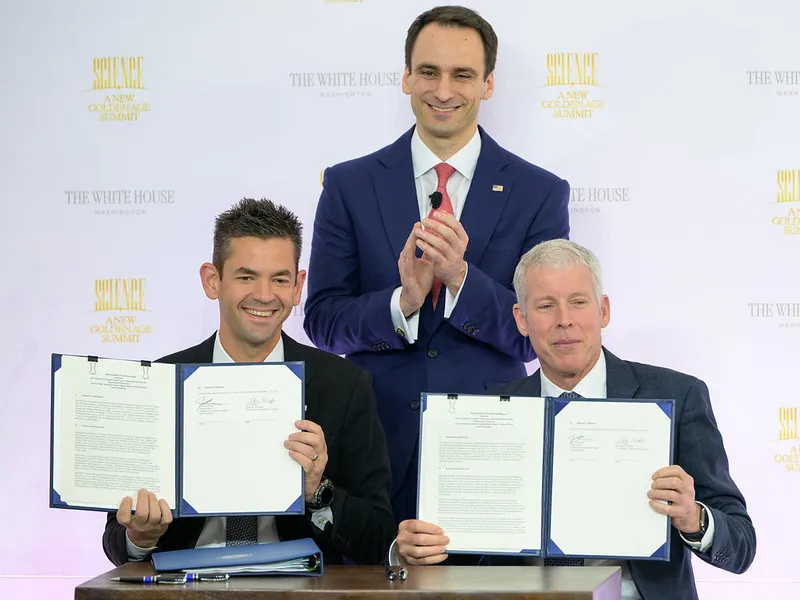
NASA nuclear power development gained a new coordination agreement on October 8 when NASA and the Department of Energy signed a memorandum of understanding covering space nuclear power and propulsion. The agreement establishes a framework for joint work, not proof that a newly announced reactor or propulsion system is already operating in space.
NASA said the arrangement spans research, fuel production, testing, launch integration and operations. The agency tied the agreement to plans for power systems supporting lunar exploration and spacecraft intended to operate beyond Earth orbit.
The document matters because deep-space electricity and propulsion require collaboration between spacecraft engineers and organizations experienced in nuclear materials, fuels and safety. A framework can organize that work, but schedules and technical milestones still require independent demonstrations. The NASA nuclear power agreement covers several technologies at different stages of technical maturity.
Table of Contents
NASA nuclear power partnership defines its scope
The NASA release identified a new memorandum, signed by Administrator Jared Isaacman and Energy Secretary Chris Wright at a Washington event. It said the agreement takes effect on November 1 and is intended to coordinate activities from basic research through eventual flight operations.
This scope includes elements that can be easily confused. Nuclear electrical power supplies energy to instruments or spacecraft systems; nuclear propulsion would use reactor-generated energy to change a spacecraft’s motion. Radioisotope devices, meanwhile, create heat or electricity through natural radioactive decay rather than the operation of a fission reactor.
Each technology brings separate engineering, licensing, handling and operational questions. NASA’s agreement addresses collaboration across several areas; it is not an announcement that every proposed application has completed qualification.
NASA nuclear power: moon systems and deep-space missions in the plan
NASA connected the agreement with a government target for a launch-ready lunar surface reactor by 2030. That objective remains a target, not an achieved deployment. The agency also described a 2028 launch goal for Space Reactor-1 Freedom and a later lunar surface power concept.
NASA nuclear power research includes radioisotope technologies as well as future fission systems. The release identified planetary-science uses of radioisotope systems, including the Dragonfly mission to Saturn’s moon Titan and heater units planned to support the European Rosalind Franklin Mars rover. These references describe different systems and missions, not one reactor installation.
A lunar surface system must provide power through periods when sunlight is unavailable and support equipment ranging from communications to instruments. At greater distances, sustained electrical generation can reduce the dependence of missions on solar arrays, depending on mission architecture.
What remains unproven after the signing
The announcement did not include a completed reactor launch, demonstrated flight propulsion performance or a final regulatory decision for a new nuclear payload. References to planned launch years should be attributed to NASA’s schedule at the time of the announcement.
Among the harder implementation questions are fuel availability, component testing, launch safety and how equipment will be operated once it reaches its destination. The agencies described safety as part of the agreement but did not publish a mission-specific completed safety case in the release.
The next useful reporting step is to distinguish program statements from funded hardware contracts and laboratory milestones. A coordination pact can accelerate work only if subsequent program actions translate its broad objectives into specific deliverables.
FAQ: Nasa Nuclear Power
Has the NASA nuclear power agreement launched a reactor?
No. The October 8 news concerns an interagency cooperation agreement.
What does the agreement cover?
NASA lists research, fuel production, testing, launch integration and space operations.
When does the agreement take effect?
NASA says the memorandum becomes effective on November 1, 2026.
Looking Ahead
Future NASA nuclear power program updates will need to connect broad cooperation to testable hardware and mission-specific safety reviews. Watch for released program milestones, qualification test results and updates to the 2028 spacecraft and 2030 lunar reactor targets. Both dates remain stated goals rather than completed achievements.
Sources