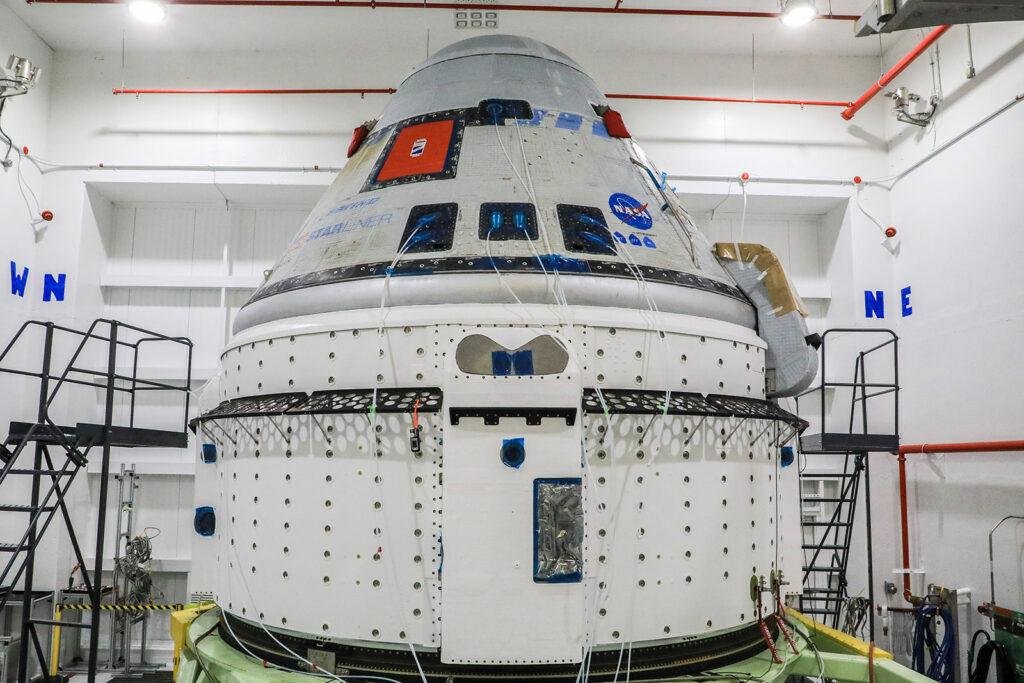
The Starliner return to flight plan now calls for an uncrewed mission before Boeing’s capsule carries astronauts again, NASA said in a Sept. 28 update.
NASA said Starliner-1 could fly in December 2026 or January 2027 to validate improvements from the postflight investigation. A crewed Starliner-2 mission is targeted no earlier than 2028.
The phased approach follows the 2024 crewed test flight, after which NASA’s investigation produced 61 recommendations involving the propulsion system and other spacecraft systems.
Table of Contents
Why Starliner Return to Flight Starts Uncrewed
NASA said the next mission will be used to validate improvements before crew certification continues. The agency identified thermal conditions and design factors around service-module reaction-control thrusters as areas addressed after the previous flight.
The update also described planned work on a valve design, crew-module thrusters, batteries and smaller parachute changes. The intent is to retire technical risk through an uncrewed mission before asking astronauts to fly again.
NASA said the service-module thrusters operated outside their engineering qualification during the previous mission. The agency’s corrective work is meant to address the thermal environment and other design conditions identified by the investigation before the next crewed certification step.
The Starliner Schedule Extends Into 2028
For the Starliner return to flight schedule, NASA said Starliner-1 could launch in December 2026 or January 2027, making the date a target window rather than a firm launch day. The crewed Starliner-2 mission would follow no earlier than 2028.
The Associated Press reported through NY1 that astronaut Woody Hoburg is expected to command the next crewed Starliner mission. That crew assignment was not stated in the NASA release reviewed for this article.
NASA Adds Work for Vulcan Certification
NASA’s plan also includes certification work for United Launch Alliance’s Vulcan rocket after the final Atlas V missions. The agency said the contract path would preserve two additional Starliner flights while transitioning launch vehicles.
AP reported that NASA estimated another $359 million for Starliner upgrades and new-rocket certification work. Because that figure was found in one outlet, it should be read as AP’s reported estimate rather than money already spent.
NASA also intends to exercise options for the fifth and sixth Starliner flights. The agency’s plan links that additional mission work to completing spacecraft fixes and qualifying Vulcan for crewed launches, rather than treating the rocket transition as a separate schedule.
FAQ: Starliner Return to Flight
When is the Starliner return to flight?
NASA says the uncrewed Starliner-1 mission could launch in December 2026 or January 2027.
When will Starliner carry astronauts again?
NASA targets Starliner-2 no earlier than 2028 after an uncrewed validation mission and remaining certification work.
Why is the next Starliner mission uncrewed?
NASA wants to validate propulsion and spacecraft improvements before returning astronauts to Starliner.
Looking Ahead
The next milestone is Starliner-1, targeted for December 2026 or January 2027. Its results will determine whether NASA can close remaining certification work and hold the crewed mission on the 2028 path.
Sources
- NASA — Boeing Starliner development plans update
- Associated Press via NY1 — NASA ramps up Starliner support