Sierra Space has secured its Dream Chaser inaugural flight customers, announcing September 2 that undisclosed national security and commercial payload contracts will fly alongside NASA cargo when the long-delayed spaceplane finally launches. It’s the first time a single U.S. spacecraft mission has been built to serve national security, civil and commercial customers simultaneously.
The Dream Chaser inaugural flight announcement is a genuine milestone for a program that has slipped for years. It arrives, however, while the rocket meant to carry Dream Chaser to orbit, United Launch Alliance’s Vulcan Centaur, remains grounded following a booster anomaly in February.
Table of Contents
Table of Contents
What Sierra Space Just Announced
Sierra Space said it has secured contracts with undisclosed national security and commercial customers to fly payloads aboard Dream Chaser on its inaugural mission, alongside NASA cargo flown under the Commercial Resupply Services program. The company is still finalizing the full manifest.
“As the space domain has become increasingly contested, Dream Chaser has evolved into exactly what America needs, a strategic national capability built on commercial innovation and investment. We’re establishing a new operational model in which the same platform serves national security, civil, and commercial customers on a single mission. We’re not just talking about the multi-use space economy, we’re operating it. Dream Chaser is truly America’s Spaceplane.”
Dan Jablonsky, CEO, Sierra Space
Neither the customers nor contract values were disclosed. Sierra Space has not said whether the national security payload comes from the Department of War, the Space Force, or another agency.
What Is Dream Chaser?
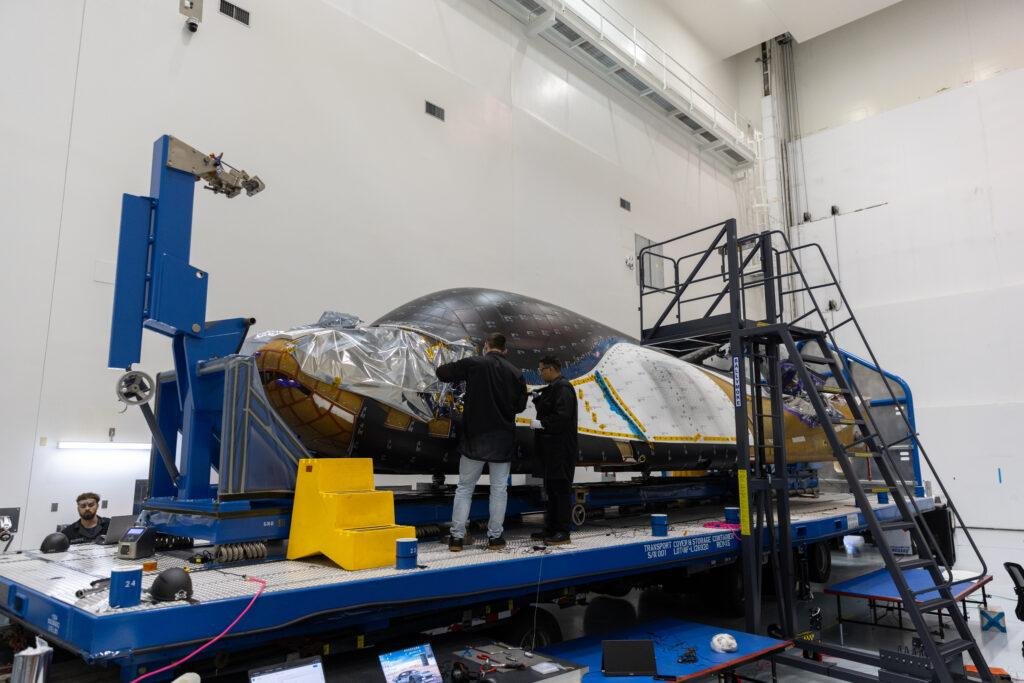
Dream Chaser is a lifting-body spaceplane, roughly a quarter the size of a retired NASA space shuttle orbiter, that launches inside a rocket fairing with its wings stowed and returns to Earth with a runway landing rather than a splashdown. Sierra Space markets it as the only commercial, reusable, runway-capable spaceplane, though the Space Force’s X-37B is also reusable and runway-landing capable as a government-owned, government-operated vehicle rather than a commercial one.
- The first vehicle, named Tenacity, is about 30 feet long
- Deployable wings let it fit inside a standard rocket fairing
- Returns cargo from orbit at less than 1.5g, gentler than a capsule splashdown
- Its detachable Shooting Star cargo module can carry up to 12,000 pounds of pressurized and unpressurized cargo
- Lands on any runway rated for a Boeing 737, rather than a specialized spaceport
“We spent years solving the hardest engineering challenges: deployable wings so we could maximize our payload capacity in a standard rocket fairing, hypersonic flight control providing unparalleled maneuverability and mission flexibility, autonomous reentry, and less than 1.5g runway landing. The result is a multi-use space transportation system with operational capabilities no other vehicle offers.”
Dan Polis, Senior Vice President of Engineering and Dream Chaser, Sierra Space
A Program That Keeps Slipping
Dream Chaser was originally contracted under NASA’s Commercial Resupply Services-2 (CRS-2) award, which called for a minimum of seven cargo missions to the International Space Station. In September 2025, NASA and Sierra Space restructured that agreement: the guaranteed seven-mission commitment was dropped, and the debut flight was changed from an ISS docking mission to a free-flying demonstration instead. NASA said it is no longer obligated to order a specific number of future resupply flights.
The restructuring followed years of delay. Dream Chaser’s first flight was originally expected around 2021 and has slipped repeatedly since, through 2024, 2025, and now into late 2026. The vehicle, Tenacity, arrived at NASA’s Kennedy Space Center in spring 2024 and has since completed environmental testing, electromagnetic interference testing, acoustic testing, command and telemetry validation, and post-landing recovery rehearsals.
The mission plan has also changed. Dream Chaser was originally set to launch from Cape Canaveral and return to a runway landing at Kennedy Space Center. Under the current plan, it will instead land at Vandenberg Space Force Base in California, with modifications for national security applications explored and performed in Colorado between test campaigns.
The Rocket Problem: Vulcan Centaur’s Grounding
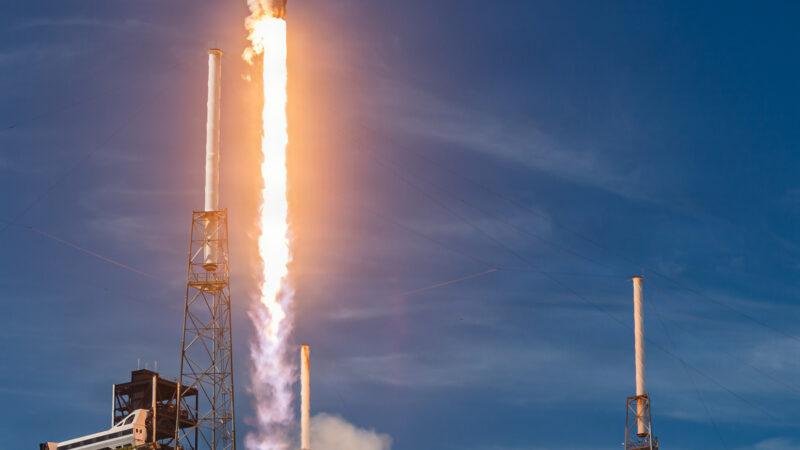
Payload customers are one thing; a working ride to orbit is another. Dream Chaser is manifested to launch on United Launch Alliance’s Vulcan Centaur rocket, which has not flown since a February 2026 mission, when a solid rocket booster experienced an anomaly. It was the second time a Vulcan booster had malfunctioned in flight, after a similar issue during the rocket’s October 2024 national security certification launch, and the Space Force responded by pausing all national security missions on the vehicle pending investigation.
United Launch Alliance has said it is working toward returning Vulcan to flight before the end of 2026, including proactive modifications to the BE-4 engines supplied by Blue Origin. As of this month, Vulcan has not yet flown again, which means Dream Chaser’s own “late 2026” launch target is tied to a rocket that itself doesn’t yet have a confirmed return-to-flight date.
FAQ: Dream Chaser Inaugural Flight
Will Dream Chaser still dock with the ISS on this flight?
No. NASA and Sierra Space restructured the mission in September 2025 from an ISS resupply docking to a free-flying demonstration in low Earth orbit, in part to validate the vehicle’s performance before committing to station operations.
Who are the national security and commercial customers?
Sierra Space has not disclosed the customers, contract values, or specific payloads. The company says it is still finalizing the full manifest.
When will Dream Chaser actually launch?
Sierra Space is targeting late 2026, but the launch depends on United Launch Alliance returning the Vulcan Centaur rocket to flight after a February 2026 booster anomaly. ULA has said it aims to fly Vulcan again before year’s end, but no confirmed date has been set.
Looking Ahead
Two separate clocks are now running on this story: Sierra Space finalizing its payload manifest and completing the last of Dream Chaser’s pre-flight work, and United Launch Alliance’s effort to return Vulcan Centaur to flight after its most recent booster anomaly. Both have to land on the same date before the Dream Chaser inaugural flight can actually happen. Watch for the Vulcan return-to-flight mission first; that will effectively set the earliest possible date the Dream Chaser inaugural flight can follow.
Sources