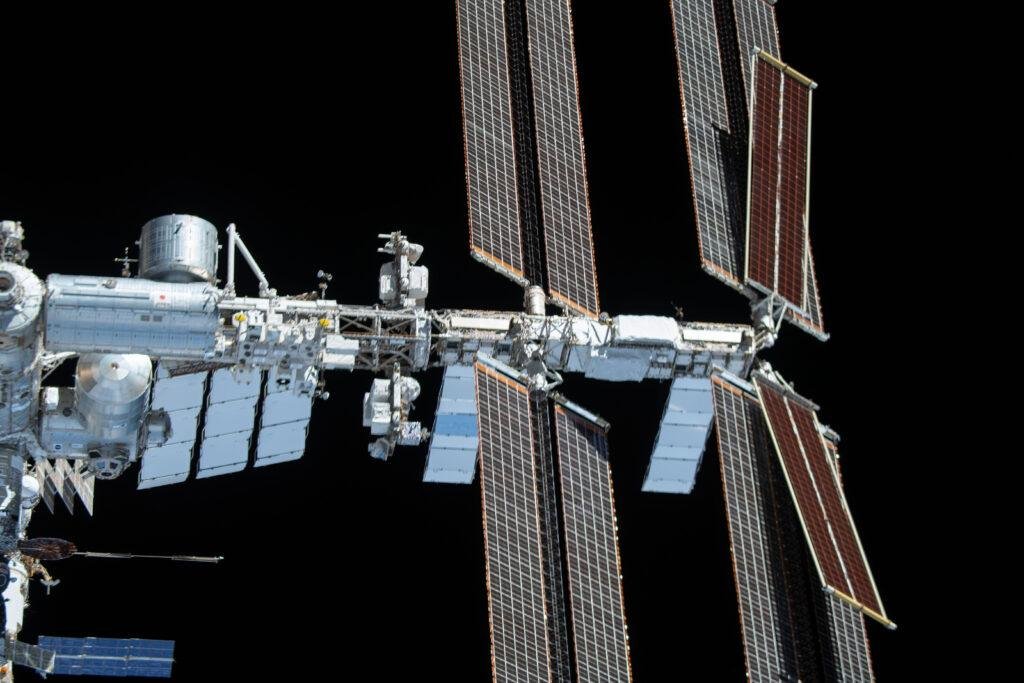
NASA released its final request for proposals for commercial space stations on Oct. 9, 2026, asking U.S. companies to submit plans by Dec. 8 for privately owned outposts that would succeed the International Space Station in low Earth orbit.
The Johnson Space Center solicitation, formally the Commercial Low Earth Orbit Destination Contract, would create multiple firm-fixed-price contracts with a guaranteed minimum order of $100 million each. NASA expects to award them on April 15, 2027.
The final terms also address one of the most closely watched questions for would-be station operators. The RFP says NASA will, on request, furnish crew and cargo transportation for the first four guaranteed NASA missions to stations that win the development and certification stage, so bidders do not have to secure every ride on their own first.
What the Commercial Space Station RFP Asks For
NASA wants companies to design, build, test, certify and operate commercial low Earth orbit destinations that can provide end-to-end destination and transportation services for human spaceflight, according to the agency’s announcement.
The contracting officer’s cover letter describes the purpose as acquiring services from a commercially owned and operated station that can succeed the space station and ensure NASA has a sustained human presence in low Earth orbit for science and exploration. NASA is also offering contractors access to agency personnel and expertise through a Government Collaboration Agreement.
The acquisition is a full and open competition. It will result in multi-award indefinite-delivery/indefinite-quantity contracts under which NASA issues firm-fixed-price task orders, with an eight-year ordering period and two options that could extend ordering to 15 years. Each contract carries a guaranteed minimum of $100 million and a not-to-exceed ordering limit of $34.063 billion. That ceiling is an upper limit on what NASA may order, not funding the agency has committed.
A Three-Step Path From Development to Missions
NASA said it intends to select two or more contractors for early development, followed by a competitive task order for final design, test, evaluation and certification, and then services from one or more contractors.
In Phase 1, every company that receives a contract gets an initial development task order. In Phase 2, NASA competes the development and certification work among those Phase 1 contractors, judging their progress and maturity. NASA may then order mission services from the Phase 2 winners.
A Phase 2 winner’s guaranteed minimum grows to include four service missions, at least two of them Standard Service Missions. The RFP allows a two-year grace period after a company’s certification commitment date. If a station still cannot provide Standard Service Missions after that, NASA may reduce the guarantee by one mission, or the value of one mission, for each additional year of delay. NASA also reserves the right to remove the minimum guarantee entirely if any mission service type cannot be ordered during the eight-year base ordering period.
NASA Will Furnish Rides for the First Four Missions
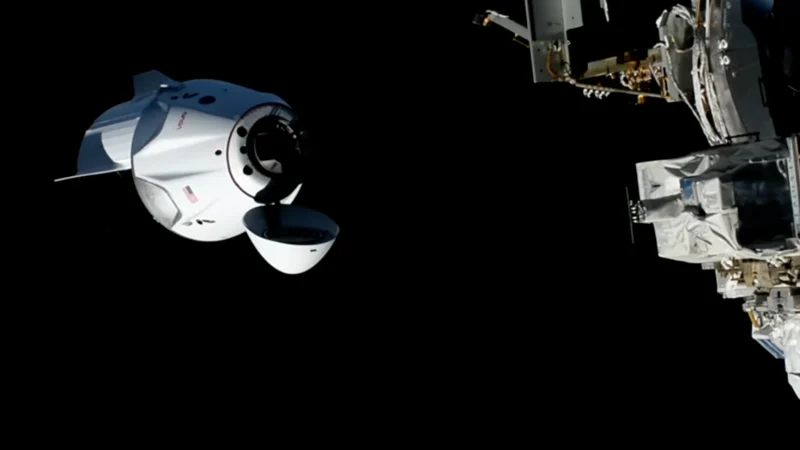
The offer, which covers the first four guaranteed missions only, sits in the RFP’s Government Furnished Transportation and Support Services terms and is open to a bidder that is not proposing its own end-to-end transportation for those missions. The agency’s obligation is capped at one crewed transportation mission and two cargo missions per increment, and NASA may meet it with existing visiting vehicles, newly certified vehicles or vehicles provided by international partners.
NASA also published single-flight prices for those vehicles. A four-seat crew vehicle is priced at $325 million in 2030 and a cargo vehicle at $300 million, rising each year to about $463.4 million for a crew flight in 2042. The RFP uses the table to adjust a contractor’s mission price when NASA-furnished flights also carry the company’s own non-NASA crew.
The final RFP replaced the draft’s letters of commitment from transportation providers with letters of intent, which bidders should provide where possible. A bidder without them must still submit a transportation estimate. Flights beyond the guaranteed allotment must be priced and planned by the bidder, though more NASA-furnished flights can be negotiated at the Phase 2 stage.
Crew access remains a constraint for the wider market: Ars Technica reported that SpaceX plans to retire Crew Dragon and has not offered to sell seats to private station operators. NASA plans to fly Boeing’s Starliner uncrewed before it carries astronauts again, as TAD reported in its coverage of the Starliner return to flight plan.
Isaacman Says the Economics Have to Work
“In alignment with the President’s National Space Policy, NASA is committed to maintaining a sustained American presence in low Earth orbit long after the International Space Station retires,” NASA Administrator Jared Isaacman said in the agency’s announcement.
Isaacman added that commercial stations could let NASA “concentrate more of our resources on the near-impossible missions ahead,” but said bidders must make a business case. “The opportunity is significant, but the economics ultimately have to work,” he said. “We want to see credible plans, strong technical execution, and companies prepared to invest in destinations that can serve NASA while developing additional customers and markets of their own.”
The final RFP follows two Requests for Information in March, a draft RFP in July, an industry day and one-on-one meetings with interested companies, NASA said.
Station Developers React to the Final RFP
NASA has supported station work by Axiom Space, Vast, Voyager’s Starlab team and Blue Origin’s Orbital Reef team, according to its commercial space station updates. Ars Technica reported that Axiom Space, Voyager Space and Vast Space are expected to bid, while questions remain about Blue Origin’s commitment and SpaceX appears unlikely to bid for now.
“The release of the RFP is an important milestone,” Starlab chief executive Marshall Smith said, according to Ars Technica. An Axiom Space spokesperson said the company is “actively reviewing the RFP now and is energized for the next steps in the process.”
FAQ: NASA Commercial Space Station RFP
When are commercial space station proposals due?
Proposals are due by 1 p.m. Central Time on Dec. 8, 2026, under solicitation 80JSC027R0004.
When will NASA choose the companies?
NASA says it expects to award contracts in spring 2027, and the cover letter gives an anticipated award date of April 15, 2027.
Will NASA pay for astronaut transportation?
On request, NASA will furnish transportation for the first four guaranteed missions only, up to one crew flight and two cargo flights per increment. Bidders must price later flights themselves, though NASA may negotiate more.
Looking Ahead
NASA will hold a virtual pre-proposal conference on Oct. 15, followed by one-on-one meetings with prospective prime offerors at Johnson Space Center’s Gilruth Center on Oct. 16. Written questions are due by Oct. 21, and proposals by Dec. 8, before the anticipated contract award on April 15, 2027.
Sources
- NASA — NASA Seeks US Industry Plans for Commercial Space Stations (Release 26-086)
- SAM.gov — Commercial LEO Destination Contract RFP 80JSC027R0004, cover letter, final RFP and summary of changes
- NASA — Low Earth Orbit Economy and commercial space station updates
- Ars Technica — NASA issues long-awaited call to industry for private space stations