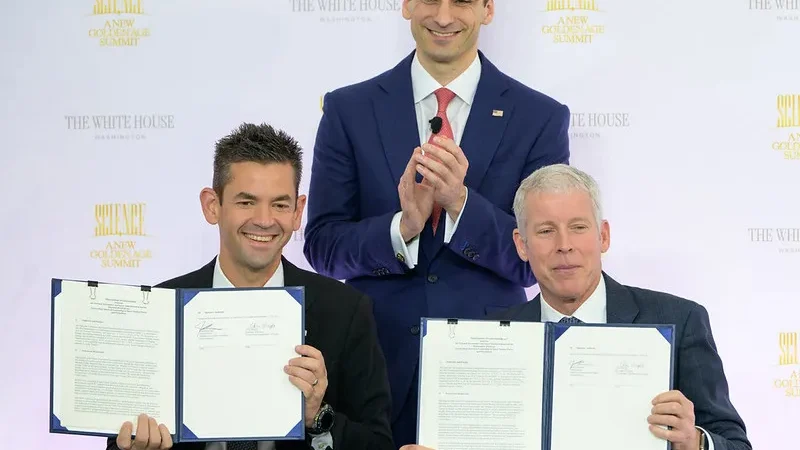
NASA nuclear agreement plans gained a new federal cooperation framework on Thursday, Oct. 8, when NASA and the U.S. Department of Energy signed a memorandum covering space nuclear power and propulsion. NASA said the agreement is scheduled to become effective Nov. 1.
NASA Administrator Jared Isaacman and Energy Secretary Chris Wright signed the memorandum during the Science: A Golden Age Summit in Washington. NASA described the document as spanning research, nuclear fuel supply, testing, launch integration and later operations.
The signing establishes an interagency framework; it is not proof that a nuclear-powered spacecraft has launched or that a lunar fission reactor is operating. NASA attached future targets to the agreement, but those targets remain plans until engineering and flight milestones are independently confirmed.
Table of Contents
Table of Contents
NASA Nuclear Agreement Covers Fuel and Testing
NASA calls the memorandum “Accelerating American Leadership in Space Nuclear Power and Propulsion.” Its announced scope ranges from advanced scientific work and fuel production to testing, launch preparation and operational planning, bringing together NASA’s mission requirements and the Energy Department’s nuclear expertise.
In the NASA nuclear agreement, the agency said safety must remain central through the entire process. The announcement describes collaboration and an organizational foundation but gives no signed spacecraft purchase price, test-completion certificate or completed launch authorization.
The agreement takes effect Nov. 1, according to NASA’s Oct. 8 release. That date establishes when the framework begins; it should not be read as the startup date for a reactor or a guarantee that an operating mission will be ready next month.
NASA Names Ambitious Future Reactor Milestones
Alongside the NASA nuclear agreement, NASA cited Space Reactor-1 Freedom, described as a nuclear-powered spacecraft being targeted for launch in 2028, and Lunar Reactor-1, a fission surface power system intended to support future lunar operations. Both milestones are program plans, not vehicles or installations already operating.
The agency also referred to a December 2025 executive order setting a goal for a launch-ready lunar surface reactor by 2030. A launch-ready target is distinct from actual deployment, commissioning, reliable surface service or sustained output under lunar operating conditions.
NASA said fission systems could provide power through the long lunar night for habitats, communications, rovers and scientific instruments. The immediate October development, however, is an institutional cooperation agreement rather than a new measured performance result.
The Plan Also Builds on Radioisotope Technology
The NASA nuclear agreement release also discussed its established use of radioisotope power technology for missions where sunlight alone may not meet thermal and electrical requirements. It said the planned Dragonfly mission to Saturn’s moon Titan, targeted for launch in 2028, will use a Multi-Mission Radioisotope Thermoelectric Generator and 24 heater units.
The agency additionally said it plans to provide 24 heater units to support the European Space Agency’s Rosalind Franklin Mars rover instruments. These are separate planned mission contributions, not part of a newly launched nuclear-electric propulsion system.
Radioisotope systems and fission reactors should not be treated as interchangeable: the NASA announcement discusses both as part of its broader nuclear-space portfolio, with different tasks and mission applications. The latest agreement is aimed at improving coordination across those efforts.
FAQ: NASA Nuclear Agreement and Future Missions
When does the NASA nuclear agreement take effect?
NASA says the October 8 memorandum takes effect November 1, 2026.
Has NASA launched its new space reactor?
No. NASA names a 2028 launch target for Space Reactor-1 Freedom; the release does not describe a completed mission.
Does the agreement involve the Moon?
Yes. NASA describes planned lunar fission power work and a goal for a launch-ready surface reactor by 2030.
Looking Ahead
For the NASA nuclear agreement, next is the memorandum’s Nov. 1 effective date. Future checkpoints include NASA’s stated 2028 Space Reactor-1 Freedom target and the goal for launch-ready lunar surface power by 2030. Each will require separate evidence as engineering, licensing, testing, integration and mission schedules progress.
Sources
- NASA — Energy Department Advance New Era of Nuclear-Powered Exploration, Oct. 8
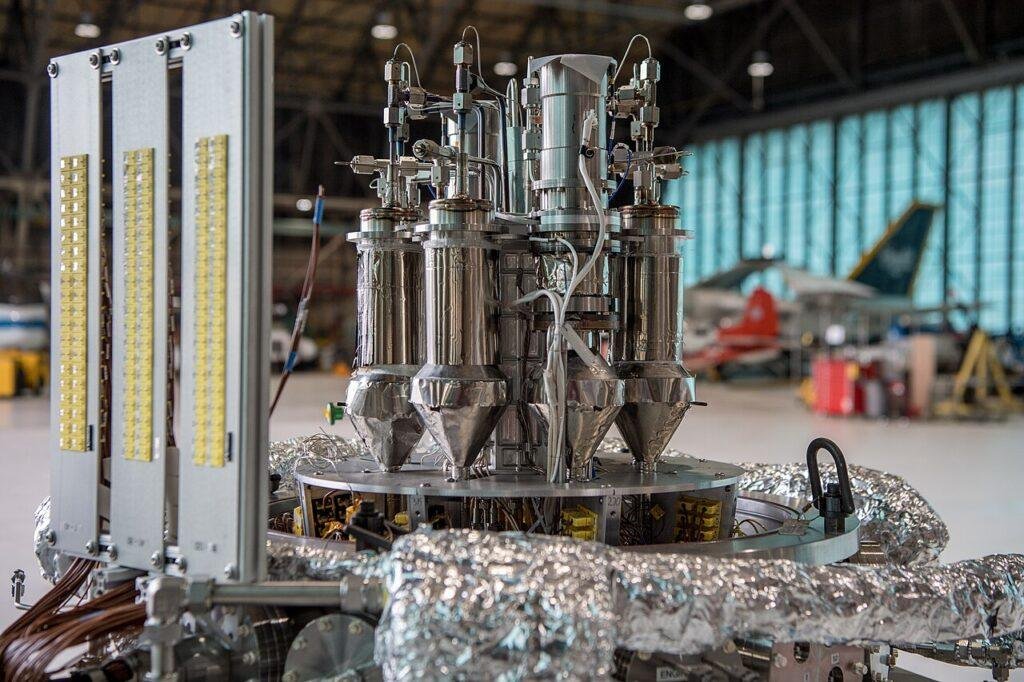
- Featured image (file photo): NASA Glenn Research Center; NASA U.S. public domain. Technical resizing only; historical prototype, not Oct. 2026 event.