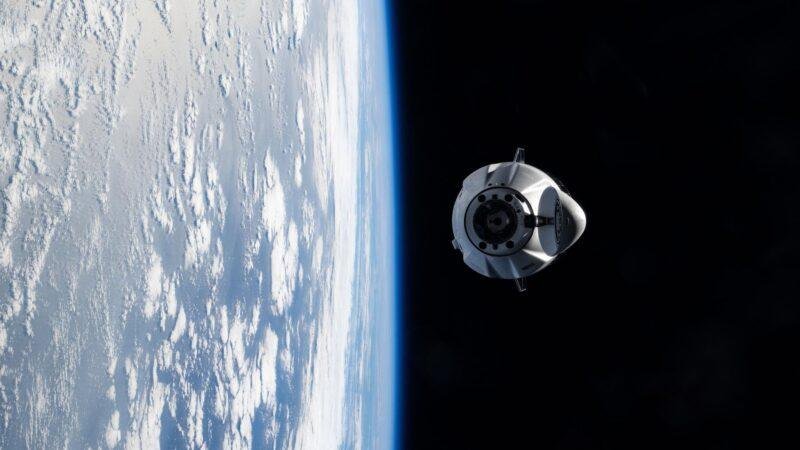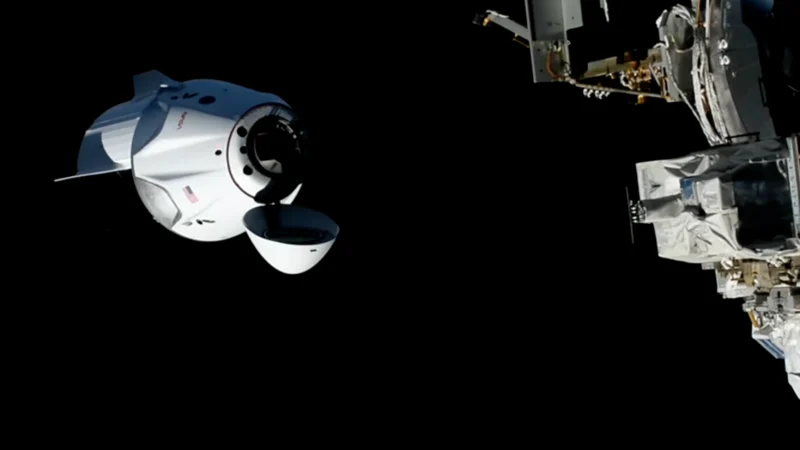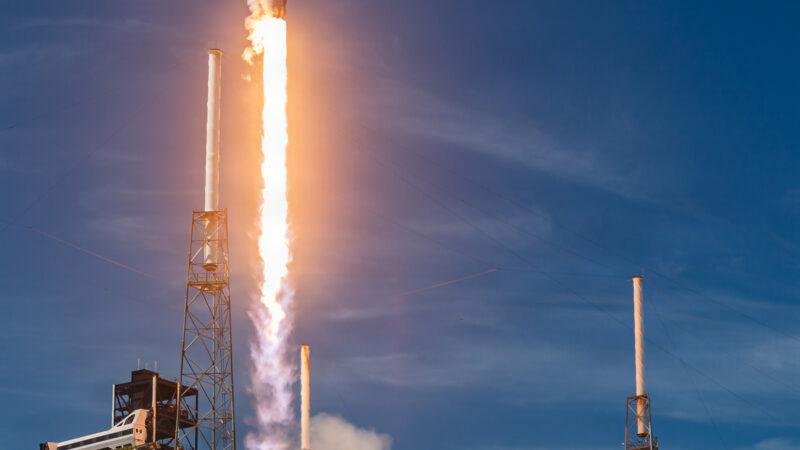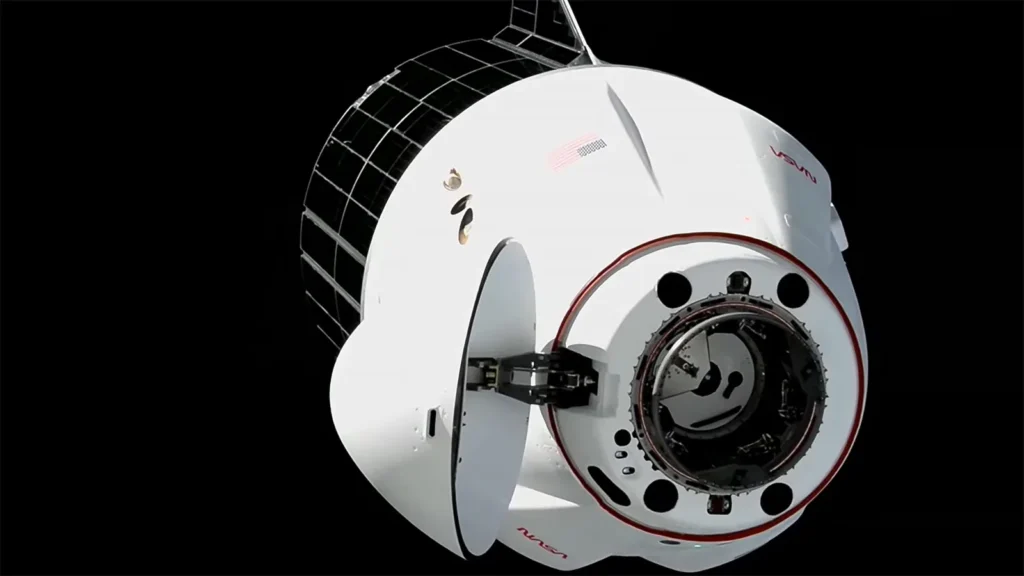
CRS-35 Dragon docking took place on Oct. 15 when a SpaceX cargo spacecraft reached the International Space Station and connected to the space-facing port of the Harmony module, NASA confirmed. The operation followed the mission’s Oct. 13 Falcon 9 launch from Cape Canaveral Space Force Station in Florida.
NASA’s docking update recorded the arrival at 10:27 a.m. Eastern Daylight Time, with more than 6,300 pounds of food, supplies and research-related equipment aboard. The station’s Expedition 75 crew is responsible for unloading and preparing cargo for use, as well as managing the return activities later in the mission.
This is a distinct milestone from the rocket launch. A successfully launched cargo vehicle must still complete orbital rendezvous, approach and docking before crews can receive its payload. NASA’s confirmation establishes that the spacecraft reached the laboratory rather than remaining only in transit.
Table of Contents
CRS-35 Dragon Docking Completes Orbital Rendezvous
The Dragon capsule approached the station after spending roughly two days in orbit. NASA identified the attachment location as Harmony’s space-facing docking port, a station connection point used by compatible visiting spacecraft.
Orbital rendezvous is more complicated than simply flying toward an object. The approaching spacecraft must match the station’s trajectory and comply with defined approach and docking procedures. Controllers and astronauts monitor the operation, and NASA publishes the docking milestone once physical attachment is confirmed.
This mission is SpaceX’s 35th commercial resupply flight to the station for NASA. The mission numbering distinguishes it from other crew and cargo flights and from commercial missions outside the agency’s resupply contract. It does not mean the same Dragon vehicle has flown 35 times.
NASA’s station blog and visiting-vehicle status page both recorded the Oct. 15 arrival. The docking update therefore provides a more specific confirmed event than the earlier timetable describing when Dragon was expected to reach the laboratory.
Cargo Includes Station Power-System Hardware
Among the delivered equipment is the final planned pair of International Space Station Roll-Out Solar Arrays, commonly called IROSAs. NASA said the arrays are intended for installation later in the fall to support the orbital laboratory’s electrical-power system.
Delivering the arrays is not the same as deploying or activating them. Installation requires additional work on the station, and the delivered hardware must still be prepared and placed into its operational configuration before its benefits can be assessed.
The shipment also includes general provisions and other equipment for research and station operations. The cargo mass exceeds 6,300 pounds according to NASA’s docking notice, but individual experiments have their own handling and scientific timelines. The total does not imply that all materials are part of the solar-array system.
Space station logistics depend on periodic visiting vehicles because supplies are consumed and equipment needs replacement or support. Cargo arrivals also create work for astronauts already carrying out scientific investigations, maintenance and Earth-observation duties.
Additional orbital mission reporting is available in The Aviation Diary’s space section.
Docking Begins the Station-Side Work
A docked spacecraft is now accessible through the appropriate station hatch procedures, but the act of docking itself does not mean all packages have been unpacked. Crews follow the station’s cargo handling priorities, safety rules and installation schedules.
The final pair of roll-out arrays offers an especially visible next step. NASA describes the hardware as being delivered for installation later in the fall, without treating the installation as completed in its Oct. 15 docking notice.
The spacecraft’s eventual departure and any return cargo arrangements represent later phases. Exact departure and splashdown dates should be reported only when NASA and SpaceX announce an applicable schedule rather than extrapolated from earlier Dragon missions.
FAQ: CRS-35 Dragon docking
When did CRS-35 Dragon docking occur?
NASA recorded the docking at 10:27 a.m. EDT on Oct. 15, 2026.
What did CRS-35 Dragon docking deliver?
NASA listed more than 6,300 pounds of supplies and equipment, including the final planned pair of roll-out solar arrays.
Had the solar arrays been installed by the docking announcement?
No. NASA said the arrays were delivered for installation later in the fall.
Looking Ahead
The Expedition 75 crew will handle the delivered cargo and prepare hardware for the planned later-season array installation. NASA has not treated the docking as completion of that installation, and subsequent station updates will establish when the new arrays are deployed.
Sources
- NASA Station Blog, October 15: SpaceX Dragon Docks With Science, Supplies and Solar Arrays
- NASA Station Blog, October 15: Dragon Cargo Mission Approaching Station
- NASA: International Space Station Visiting Vehicles