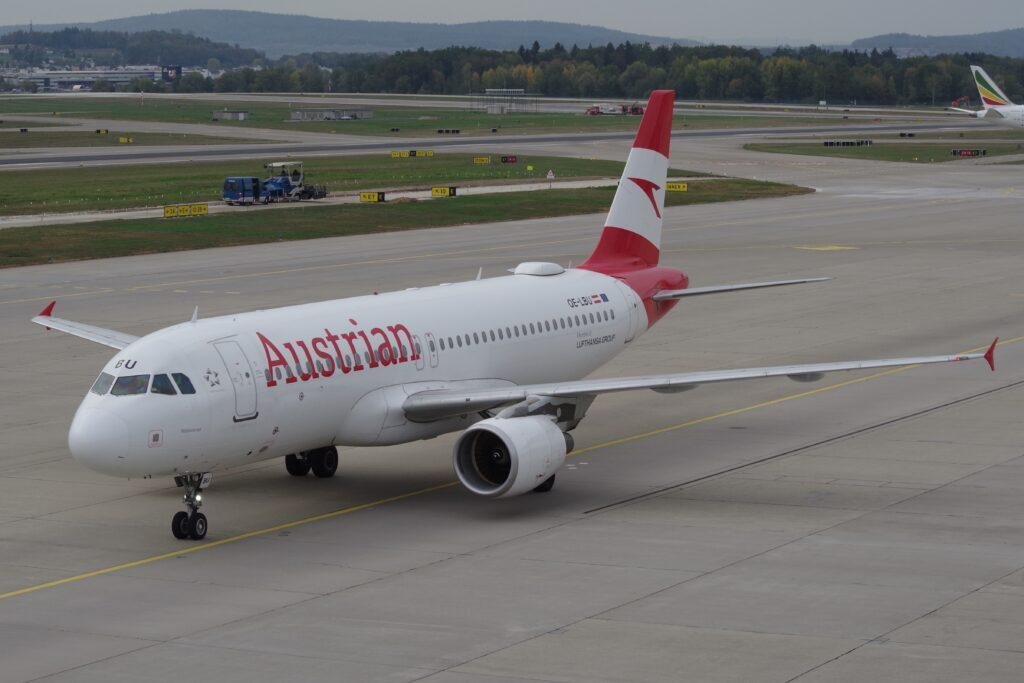
Austrian Flight Diversion brought flight OS82 from Tel Aviv to Sofia, Bulgaria, on Oct. 18 after a reported security threat interrupted its journey to Vienna. Austrian Airlines confirmed the Airbus A320 landed safely, according to international reporting.
Reports citing the carrier listed 51 passengers and six crew members. Bulgarian authorities examined the threat and the aircraft; initial accounts did not establish who issued the threat or whether it was credible. Related context: TAD guide to flight diversions.
Table of Contents
Austrian Flight Diversion Follows Security Alert
Austrian Airlines flight OS82 diverted from its planned Tel Aviv–Vienna route to Sofia, Bulgaria, on Oct. 18 following a reported threat. The Airbus A320 landed safely while security authorities assessed the situation, according to international reporting citing the airline and Bulgarian officials. The initial accounts were published by Associated Press.
An airline account carried by the Financial Times put the number aboard at 51 passengers and six crew members. The aircraft landed in Sofia at approximately 8:42 p.m. local time, the report said. Those details describe the immediate operational response and should not be taken as findings about the source of the threat.
The diversion brought a scheduled international passenger service into another another country airport rather than its intended destination in Austria. A security-related precaution can require steps distinct from a diversion for technical issues or poor weather.
Bulgarian Authorities Respond to Incoming Aircraft
The Associated Press, citing Bulgarian state television and transport authorities, reported that military fighter aircraft escorted the passenger jet toward Sofia. The account said a crew member had received a threatening message during the flight. The specific channel through which that message arrived was not established in the available report.
After landing, authorities began examining the aircraft and the circumstances of the report. Such searches are part of a security response, not evidence that an explosive device or other dangerous item was actually aboard.
Neither the initial aircraft search nor the existence of a threat report establishes who issued the communication or whether it was credible. Any later criminal findings must be attributed to investigating authorities.
Passenger Arrangements Remain Subject to Checks
Austrian Airlines said passengers would be rebooked on alternative travel once the necessary security inspection was completed, according to the Financial Times account. No verified departure time for an onward replacement flight was available in the initial reporting.
Passengers on diverted flights can face immigration, security and ground-handling arrangements that vary with the destination airport. The fact that an aircraft landed safely does not mean its travelers can immediately continue without checks or revised travel documentation.
Authorities had not released a comprehensive timeline covering the original flight departure, receipt of the threat, commencement of the escort and completion of the aircraft inspection. Those points should remain open pending formal releases.
Security Precautions Are Not an Investigation Result
Safety and security responses are based on information available to decision-makers at the time. A diversion and escort may reflect a precautionary response to an uncertain report and should not be framed as proof of an attempted attack.
The Airbus A320 identification is confirmed through reporting, but no technical aircraft defect was described as the reason for landing in Bulgaria. Similarly, the presence of military aircraft does not by itself establish an airborne confrontation.
The available accounts support a clear chronology: a reported threat, diversion to Sofia, safe arrival and security examination. The final disposition of the threat report and the precise onward travel arrangements were unresolved when the reports appeared.
FAQ: Austrian Flight Diversion
Why did the Austrian Flight Diversion reach Sofia?
The Tel Aviv–Vienna flight diverted because of a reported security threat that authorities were investigating.
How many people were aboard the flight?
Reports citing the airline listed 51 passengers and six crew members aboard the Airbus A320.
What was established about the threat?
The nature and credibility of the reported threat had not been publicly established at the time of initial reporting.
Looking Ahead
Further official updates should clarify the final operational outcome, any formal findings and whether additional corrective or follow-up action is required. No specific timetable for a comprehensive public report was established in the reviewed sources.
Sources
https://apnews.com/article/56c58276994e962a940bccd6edfdd806
https://www.ft.com/content/77b859ab-e380-413d-894b-2fe3cf6417c5