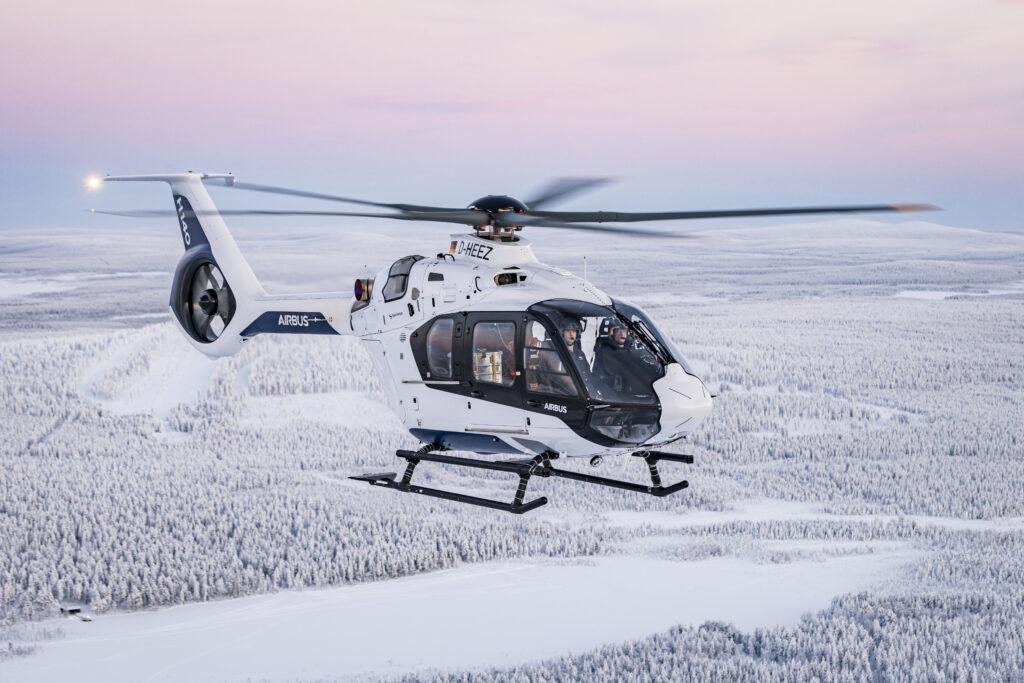
Airbus H140 tests in the United States produced more than 130 flight hours and over 800 landings during a campaign conducted from June 13 through Oct. 8, Airbus Helicopters said in an Oct. 20 engineering update. The flights took place in hot desert conditions and at high-elevation sites to build performance evidence for the helicopter’s continuing certification program.
Airbus identified Lake Havasu City, Arizona, Leadville, Colorado, and Albuquerque, New Mexico, as test locations. Chief engineer Christian Wehle described how the team compared observed aircraft performance with engineering predictions. The campaign has finished, but the H140 itself has not completed certification and is not yet being delivered to customers.
Table of Contents
Where Airbus H140 Tests Took Place
Lake Havasu City provided the high-temperature part of the work. Airbus said ambient temperatures reached or exceeded 45 degrees Celsius during the June and July testing. Engineers wanted to understand the aircraft’s behavior in sustained heat, including preparation on the ground and the effect of heat on performance. Test flights in a desert do not demonstrate that all hot-weather conditions are already approved for routine commercial use.
The team also operated from Leadville, an airport about 10,000 feet above sea level, and conducted work at still higher terrain. Thin air reduces available lift and engine performance margins, making high-altitude hover and takeoff evaluations important for rotorcraft. Albuquerque then provided intermediate high-density-altitude conditions relevant to potential customers. Together, the locations were selected to collect data across different parts of the flight envelope.
The primary announcement is available at the original source.
How Engineers Measured Performance
The H140 program used an incremental approach, according to Wehle. Flight-test crews began at selected aircraft weights and adjusted test points to compare climb, hover and controllability against established prediction models. Rather than relying on a single demonstration, the engineers sought repeatable measurements under defined wind and temperature conditions. Those observations help support the flight manual and the performance information operators will eventually need.
Airbus said a team of about 40 people supported the campaign, including flight testers, mechanics and quality personnel. Some high-altitude work required calm-wind conditions, which meant planning flights around narrow weather windows. The reported 800 landings are a measure of testing activity, not 800 passenger flights or evidence that the type has already entered commercial service.
What Comes Next in Certification
Airbus says two prototypes are currently involved, with another expected to join flight tests early in 2027. The first prototype is being prepared for a ground endurance activity known as a tie-down test, planned for mid-2027. That work is intended to exercise major dynamic systems, including the transmission, rotor and controls, while the aircraft is secured to the ground.
The helicopter previously used in the American campaign has returned to Germany, where Airbus is preparing for further development and cold-weather testing in Finland and Norway. The company continues to target first customer deliveries in 2028. A target delivery year should not be confused with a granted type certificate or a firm promise of operational availability.
Why Hot-and-High Results Matter to Operators
Helicopter performance depends strongly on altitude, temperature and aircraft weight. Operators working in mountainous or hot regions need reliable figures for the load they can lift, the available power margin and the safe conditions for a mission. Test evidence is turned into the limitations and charts used for operational planning only after the certification authority accepts the relevant methods and data.
The H140 update therefore offers a meaningful technical milestone without proving how every eventual customer will use the aircraft. Its significance lies in completing a demanding group of tests and moving the program toward subsequent certification tasks. Airbus’ positive assessment of reliability is a manufacturer’s statement rather than independent fleet-service experience.
FAQ: Airbus H140 tests
How many landings were completed in Airbus H140 tests?
Airbus reported more than 800 landings and 130 flight hours during the U.S. campaign completed Oct. 8, 2026.
Where did the H140 undergo hot-and-high trials?
The program used Lake Havasu City, Leadville and Albuquerque to test high temperatures and different altitude conditions.
Is the Airbus H140 certified for passenger service?
No. Airbus says the helicopter remains in development and certification, with first customer deliveries targeted for 2028.
Looking Ahead
The next published milestones are additional prototype testing, the planned 2027 tie-down campaign and cold-weather work in northern Europe. TAD should track completion and regulatory approval rather than treating planned test dates as accomplished events.
For related TAD reporting, see Bell MV-75 testing.
Sources